
Kiam vi estos maljuna
当你老了Apud la fajro malfermiĝas malnova libro. La poemo de Yeats memorigas pri pasinta beleco kaj amo al la pilgrima animo; ĉi tiu angla kelta balado kunigas la varmon de la hejmo kaj la silenton de malproksimaj montoj.
110 favoratoj por noktaj vojoj kaj ĉiutagaj revenoj. La prezentoj ĉi tie estas en Esperanto; la kantoj konservas siajn originalajn lingvojn.
Apud la fajro malfermiĝas malnova libro. La poemo de Yeats memorigas pri pasinta beleco kaj amo al la pilgrima animo; ĉi tiu angla kelta balado kunigas la varmon de la hejmo kaj la silenton de malproksimaj montoj.

La aŭtolumoj montras nur la sekvan kurbiĝon; la luno akompanas la tutan montaron. La voĉo de Bajiao kunportas foriron, rememoron kaj la deziron reveni al iu amata.

Griza maro, malhela tero, duonluno kaj eta frapo ĉe fenestro: la poemo de Robert Browning fariĝas varma nokta vojaĝo. La angla kantado kondukas nin de la vasta pejzaĝo ĝis la proksimeco de du koroj.
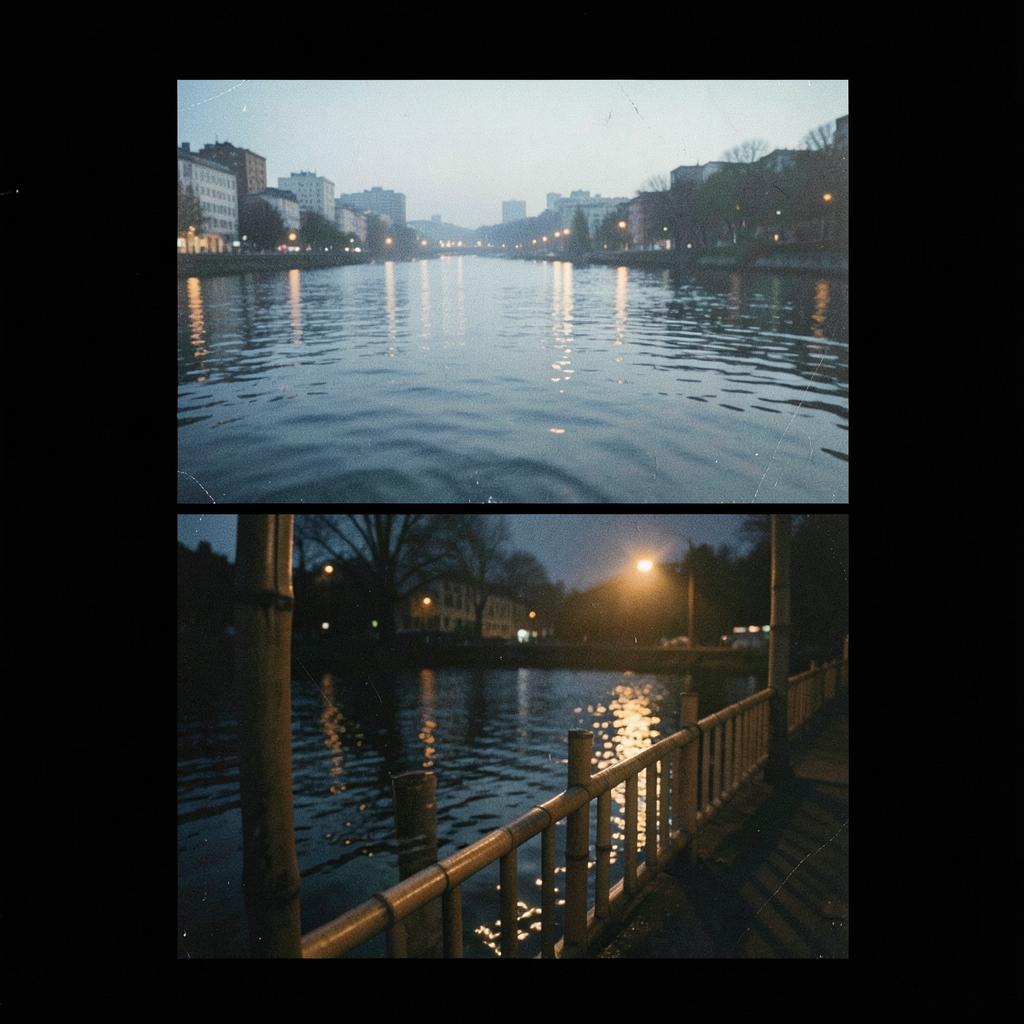
Post longa labortago, inter urba bruo kaj lumoj sur la akvo, subite revenas la memoro pri hejmo. La hela voĉo de Dai Amei donas al tiu sopiro la mildan fluon de rivero.

Post mateno, longa vojo kaj ŝtormo, Cyber ekkantas la tagiĝon. Lia tenoro portas la lastan ĉapitron de kvarvoĉa svito al komuna horizonto: malsamaj vivoj renkontiĝas en unu lumradio.
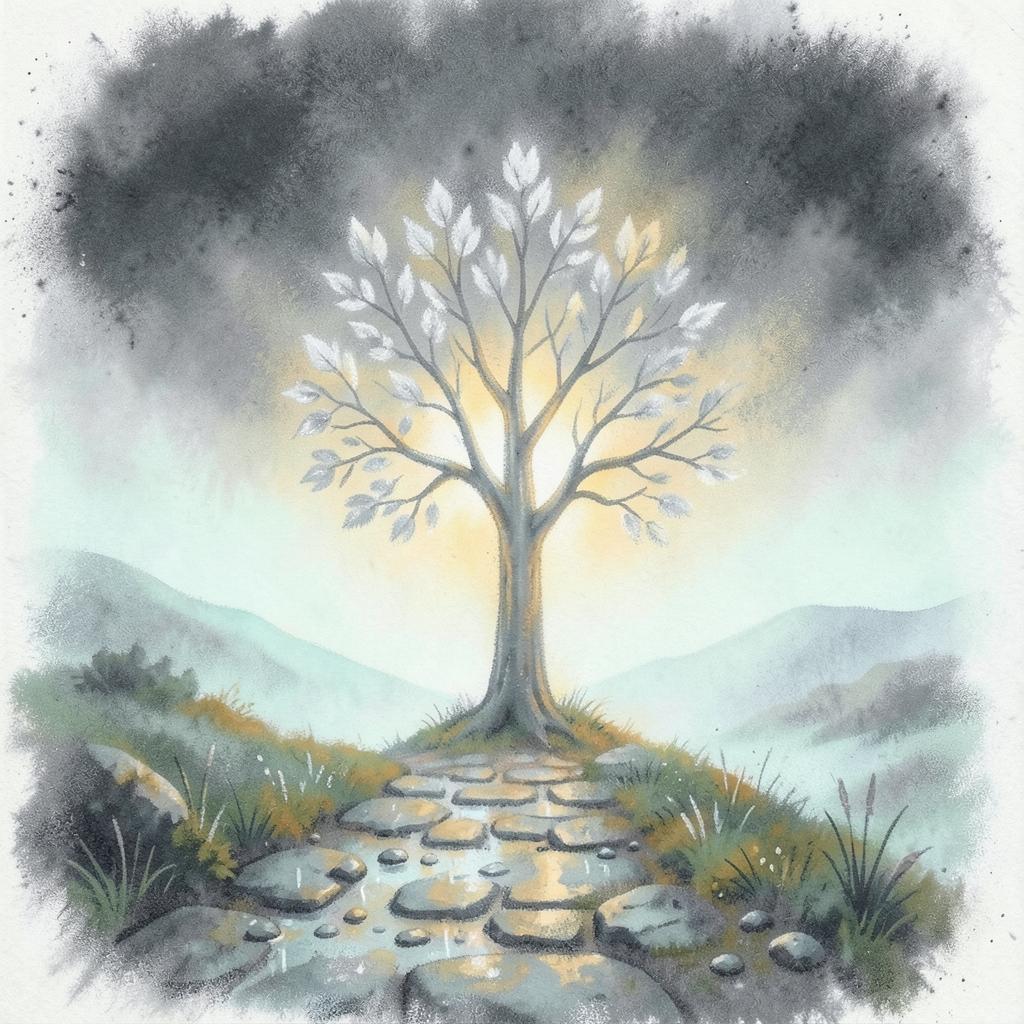
Pluva vojo, rivera vento kaj sorparbo ĉirkaŭas ĉi tiun anglan popolstilan kanton. Lingwan kantas pri atendado kun klareco kaj proksimeco, kvazaŭ la malproksima marbordo troviĝus tuj apud ni.

En la mondo de la Ruĝa Ĉambro, Xichun vidas la pasemon de printempa beleco. Du voĉoj renkontiĝas en kvieto: post la floroj kaj la brilo restas demando pri tio, kio vere daŭras.
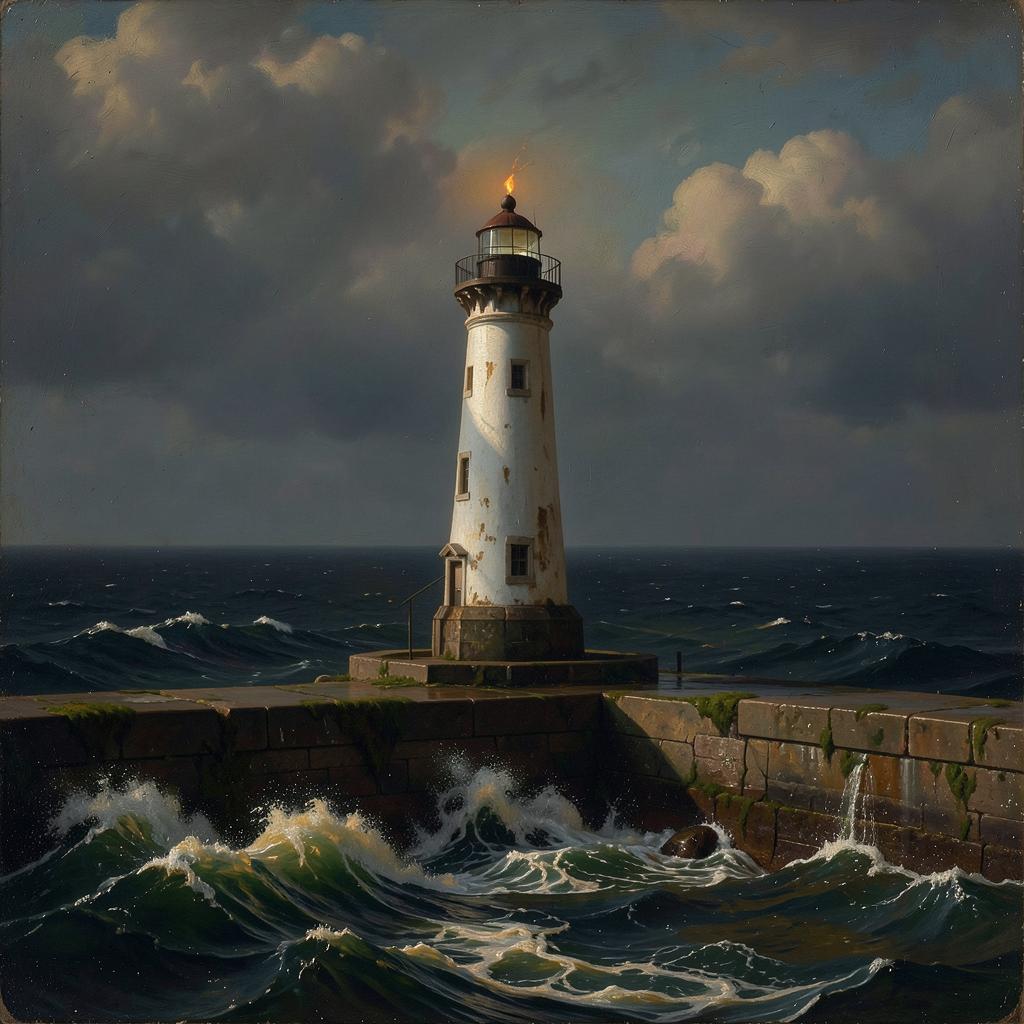
Malnova haveno, lumturo kaj letero en la mantelo de maristo akompanas ĉi tiun anglan kanton. La sopiro de fado renkontas dueton kun barata koloro; gitaroj respondas al la tajdo, dum amo serĉas sian vojon hejmen.

La demando de Andrew Marvell pri tempo fariĝas nova renkontiĝo apud rivero kaj ĝardeno. Barata dueto kaj keltaj popolmuzikaj koloroj portas varman inviton ami nun, sen hasto kaj sen perdi la mildecon de la vortoj.

Vespero plilongigas la ombrojn ĉe malnova stacio, kaj neeldiritaj vortoj transiras en flutan melodion. La varma malalta voĉo de Mary, sitaro kaj milda tabla-ritmo portas ĉinan amkanton al la vespera bordo de Gango.

Pluvo dormas sur la fenestro, kaj la kafo ankoraŭ memorigas pri hieraŭa letero. Mary kantas france kaj ĉine kun varma malalta voĉo; akordiono, piano kaj violonĉelo donas al la adiaŭo iom pli da tempo.

La sopiro de Li Qingzhao renkontas la subitan returnan rigardon de Xin Qiji. Du ĉinaj poemoj fluas tra vira kaj virina dueto kun barata koloro, sitaro, fluto kaj kordoj: de soleca aŭtuno ĝis lanterna nokto.

Ĉiu ruĝa fabo fariĝas eta ardaĵo, kiu memoras amatan nomon. Inspirita de la mondo de la Ruĝa Ĉambro, ĉi tiu angla balado kun la varma voĉo de Mary, gitaro kaj violonĉelo portas sopiron, kiun vortoj apenaŭ povas teni.
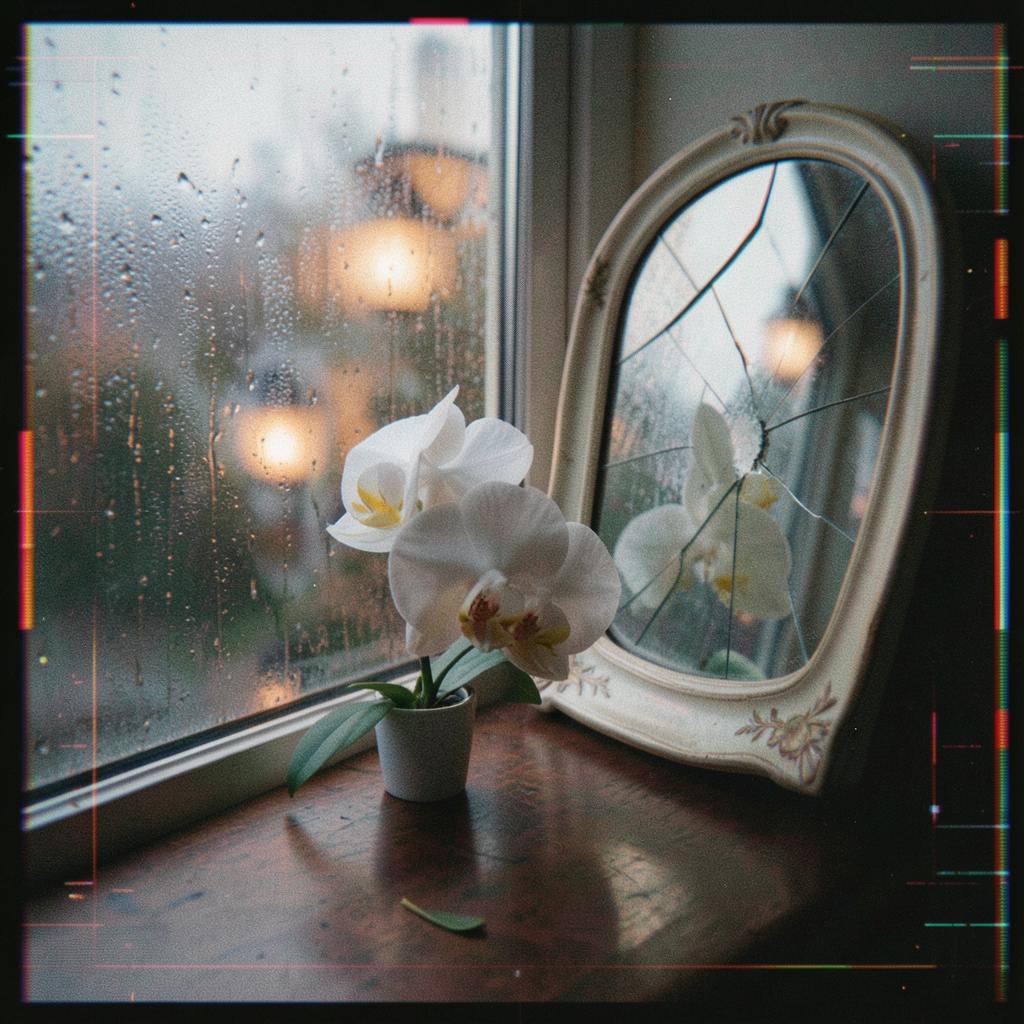
Luno en akvo kaj floro en spegulo rakontas pri amo, kiun la sorto ne lasas resti. La klara voĉo de Lingwan kantas angle kun piano kaj ĉinaj instrumentoj; la larmoj de la Ruĝa Ĉambro fluas tra ĉiuj sezonoj.

Vento de Erhai pasas super blankaj muroj, kaj arĝenta braceleto sonoras en la malnova urbo. Bajiao kunigas sudokcidentajn popolmuzikajn kolorojn kun milda barata nuanco; la luna nokto malrapide fariĝas vojo hejmen.
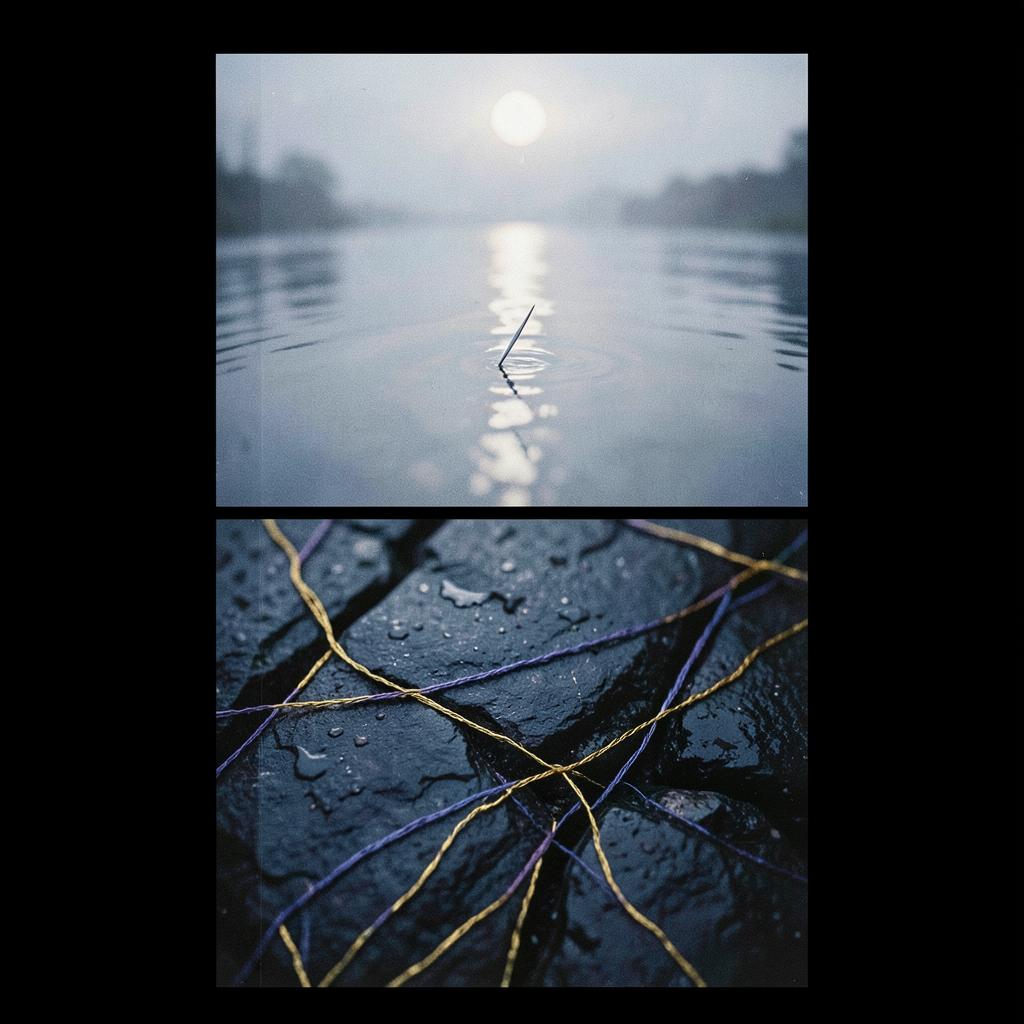
Kudrero da lunlumo kaj fadeno de Jiangnan brodas nomon en fluantan akvon. Guzheng, erhu kaj bambua fluto akompanas la delikatan voĉon de Lingwan. La kanto ne serĉas grandan spektaklon, sed frazon, kiu restas en la koro.

Sub floraj tegmentrandoj kaj apud salikoj, pluvo malsekigas la ŝtonajn stratetojn. Milda virina voĉo kantas en la ĉina lingvo Wu, akompanata de gitaro. La intimeco de la vortoj donas al la amkanto apartan lokan koloron.

Vojo tra pluvarbaro kondukas al la maro kaj al memorata rideto. En ĉi tiu vira versio, varma gitaro kaj trankvila kantado portas la vokon al la akva knabino. La sama sopiro fluas sen hasto, kvazaŭ akvo sub lunlumo.

La sama rakonto pri la akva knabino revenas per virina voĉo. Restas la pluvarbaro, la lunlumo kaj la rideto ĉe la fino de la maro. Ĉi tiu aparta remiksaĵo staras apud la vira versio, por ke konataj vortoj ricevu alian voĉan koloron.

Pokalo da vino kaj hela luno akompanas longan vojon post adiaŭo. Vira voĉo kaj akustika gitaro rakontas pri amo malgraŭ malproksimaj montoj kaj riveroj. La dua versio konservas sian propran lokon kaj sian trankvilan esperon.

Pluvo disigas malnovajn sonĝojn, sed la voĉo denove trovas forton antaŭ la tagiĝo. Bajiao kantas malrapidan rokan baladon kun gitaroj kaj fluto. La refreno respondas al la nokto: mi ankoraŭ kantas, mi ankoraŭ esperas.

Papera ombrelo kaj malseka ŝtona vojo konservas lastan rigardon. Pipa, gitaro kaj milda fluto akompanas klaran virinan voĉon. La pluvo revenas kiel sopiro, kaj la melodio restas apud la vortoj, kiujn estas malfacile diri.

Riverbordo en fremda urbo, malnova stacio kaj bonnokta saluto donas direkton al longa vagado. Sitaro, tabla kaj bambua fluto kolorigas ĉi tiun ĉinan amkanton per barata varmo. La luno ne urĝigas la vojaĝon, sed lumigas la atendadon.

Sur malnova stratangulo, glaso leviĝas por la morgaŭo kaj por la kuraĝo denove ekiri. Raŭka vira voĉo, piano, orgeno kaj respondanta ĥoro varmigas la ĉinlingvan kanton. Malnovaj vundoj restas, sed ankaŭ ili povas fariĝi lumo por la vojo.

Malnova disko ankoraŭ turniĝas, kaj taksio sur la strato vekas la esperon pri reveno. Akordiono, milda trumpeto kaj varma virina voĉo portas francan ĵazan amkanton. La lampo restas ŝaltita, ne por postuli promeson, sed por bonvenigi.

Malvarma kafo, mantelo sur la sofo kaj lumo de preterpasanta aŭto revivigas foreston je la dua matene. Virina voĉo milde balanciĝas kun piano kaj kontrabaso. La pluvo helpas aŭdi adiaŭon, kiu iam estis preskaŭ sensona.

Apud la lago, salikoj kaj papera ombrelo kaŝas teneran proksimiĝon. Klara virina voĉo, gitaro, ĉina liuto kaj bambua fluto akompanas malrapidan promenon en la vespera lumo. Neniu hastas konfesi sian amon; la vento jam parolas por ambaŭ.

Lentugoj, rideto kaj aminda maniero erari plenigas ĉi tiun francan amleteron. Gitaro, ĉina citro kaj varmaj kordoj ĉirkaŭas la virinan voĉon. La rekantaĵo revenas al simpla deziro: ridigi la amatan homon, hodiaŭ kaj ĝis maljuneco.

La tria biciklo apud la stacio restas ŝlosita, dum du sezonoj da pluvo pasas. Klara soprano, gitaro, mandolino kaj dobro rakontas pri atendado tra simpla forlasita objekto. Kiam la vento sonorigas la sonorileton, ŝajnas ke iu finfine respondis.

Malnova sarkilo, pano apud la forno kaj kapsikoj ĉe la pordo faras la hejmon tuŝebla. Tera virina voĉo, ĉinaj kordiloj kaj gitaro portas sesbatan popolmuzikan pulson. Kiel ajn malproksimen oni vojaĝas, la flava tero plu tenas la deziron reveni.

Foririnta ŝipo, patrino atendanta dum kvardek vintroj kaj lampo turnita al la maro. Ĉina rakonto sekvas la liberan spiron de irlanda sean-nós: ornamitaj longaj tonoj, simplaj paŭzoj kaj preskaŭ senakompana voĉo. La atendado ne bezonas rekantaĵon; ĝi daŭras ĝis la lasta spiro.

Post la pluvo, akvo ankoraŭ gutas de la tegmento. La ponto kaj saliko restas, sed la atendata homo ne revenas. Erhuo, bambua fluto kaj ĉina liuto ĉirkaŭas proksiman virinan voĉon. Rompita ombrelo malantaŭ la pordo konservas memoron pli longan ol la pluvo.

La herbejo forlasita je dek ses jaroj ankoraŭ havas la saman venton. Ĉevalo, malnova tendo kaj ŝanĝiĝintaj homoj apud la fajro faras la revenon samtempe konata kaj fremda. Morin-khuur, cimbalo, kordoj kaj tamburoj portas vastan melodion; la herbo kliniĝas kaj denove leviĝas.

Koto post la pluvo, revarmigita teo kaj floroj vendataj ĉe strateto konservas tridek jarojn da atendado. La pordo restas malfermita kaj la lampo lumas. Ĉina citro, erhuo kaj bambua fluto akompanas simplan peton: revenu, ĉar la rivero ankoraŭ estas la sama.
Kelkaj fenestroj ankoraŭ lumas, la bakejo eklaboras antaŭ tagiĝo kaj la nokta buso daŭrigas sian rondiron. Nekonatoj restas vekaj en apartaj ĉambroj, sed la rekantaĵo ofertas kunulecon. Gitaro, kontrabaso, orgeno kaj milda drumaro subtenas varman viran kaj virinan dueton.
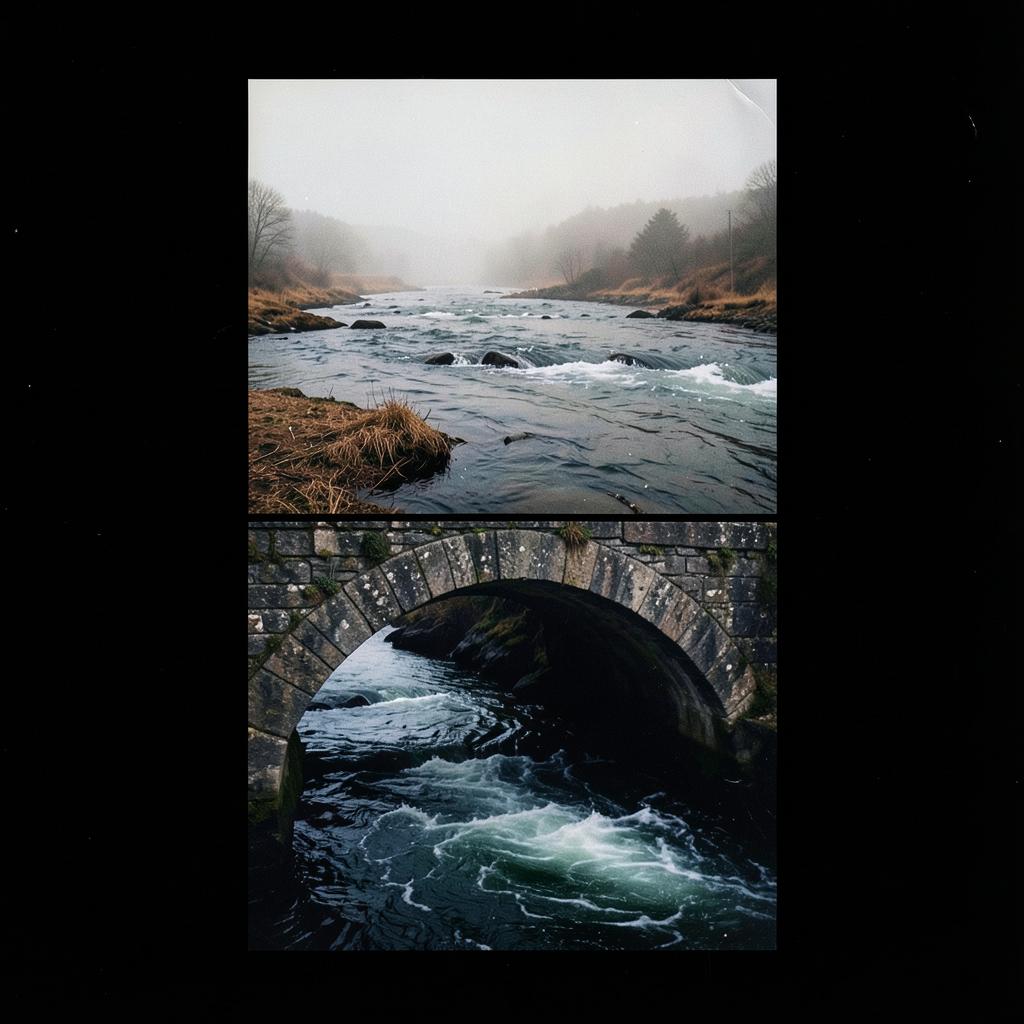
Unu rivero rapidas el la montoj, alia malrapide transiras la ebenaĵon. Sub la ponto ili kuniĝas kaj fluas al la maro. Virina kaj vira voĉoj rakontas siajn devenojn, poste kuniĝas en la rekantaĵo. Barata fluto, sitaro, tabla-tamburoj kaj varmaj kordoj portas la renkontiĝon.

En aprilo ŝi havas okdek unu jarojn kaj ankoraŭ malrapide purigas la fenestrojn per sia propra ŝtupetaro. La kanto trovas dignon en ĉiutaga laboro, kiun ŝi mem komencis kaj daŭrigas. Delikata gitaro kaj maloftaj violonĉelaj respondoj ĉirkaŭas trankvilan virinan voĉon.

Lentugoj, rideto kaj ĉarmaj vorteraroj fariĝas la etaj signoj de amo. Ĉi tiu ĉina kanto parolas pri ĉiutaga ŝato kaj komuna maljuniĝo. Klara virina popolmuzika voĉo, gitaro, ĉina citro, kordoj kaj mildaj tamburoj varmigas la simplan rekantaĵon.

Via feliĉo estas mia feliĉo: simpla promeso de kunestado ricevas la mildan ondiĝon de morna. Malgrandaj kaj nilonkordaj gitaroj, kontrabaso, violono kaj klarneto ĉirkaŭas varman malaltan virinan voĉon. La ĉina amkanto fariĝas trankvila haveno.

La somero paliĝas kaj florpetaloj falas, sed la lumo de amata homo restas. Nova angla kanto portas tiun bildon per piano, solista violonĉelo kaj varma klasike nuancita virina voĉo. La malrapida melodio lasas la vortojn spiri kaj la memoron daŭri.

La piga ponto de Qixi renkontas marbordan nokton. Havaja gitaro kun malstreĉita agordo, ukulelo kaj glita ŝtalgitaro akompanas varman ĉinan virinan kantadon. Post longa vagado, du homoj fine proksimiĝas; eĉ la plej longa vojo povas mallongiĝi per sopiro.

La ŝtormo pasis, sed ankoraŭ ne tagiĝis. Voĉo daŭre kantas pri perdo, amo kaj nova lumo. Kelta harpo, malalta fajfilo, gitaro, violono kaj varmaj kordoj akompanas klaran virinan kantadon. La malrapida ritmo donas tempon al la koro resaniĝi.

Vento ĉe konata stratangulo portas promesojn, kiuj ne plenumiĝis. Klara elektra gitaro komencas kviete; pli pezaj gitaroj, tamburoj kaj kordoj iom post iom levas la tenoran voĉon. La longa roka balado lasas lokon por doloro kaj por la kompreno, ke ellasi povas esti mildeco.

La floroj de majo povas fali kaj la somero finiĝi, sed amata homo daŭre lumas en la poemo. Liuto, kelta harpo, kordoj kaj piano kreas vastan vesperan etoson. La ĉinaj versoj disvolviĝas per sola voĉo; mallongaj anglaj finaj linioj respondas trans la lingvoj.

Ĉevalaj sonoriloj sonas sub la luno, kaj la odoro de teo sekvas la montan vojon. Vojaĝanto venas al vilaĝo por aŭdi voĉon, kiu lumigas la nokton. Harpo, malalta fajfilo, gitaro, violono kaj kordoj ĉirkaŭas klaran virinan kantadon; la milda ritmo lasas la sopiron longe resti.

Vento de Erhai tuŝas blankajn murojn kaj grizajn tegmentojn. Lampoj ekbrilas, arĝenta braceleto sonoras, kaj fora loko fariĝas hejmo. Erhu, pipa, guzheng kaj bambua fluto akompanas klaran virinan voĉon; sudokcidentaj popolmuzikaj koloroj renkontas ornamaĵojn de ĉina opero. La malrapida kanto konservas memoron pri rigardo kaj ŝtona strato.

Blanka velo pasas tra la vespero sen retrorigardi, sed la ŝtupoj de la haveno memoras la silenton de du homoj. Jarojn poste, stratlampoj ankoraŭ vekas tiun adiaŭon. Klara virina voĉo disvolviĝas super harpo, fajfilo kaj gitaro, dum violono kaj varmaj kordoj portas la vortojn ne diritajn. La velo foriras; la kanto restas.

Antaŭ ol la hospitala koridoro heliĝas, ŝi malfermas la unuan fenestron. La kanto memoras Pekinon de la naŭdekaj jaroj kaj la ĉiutagan zorgadon de virino en blanko. Harpo, malalta fajfilo, gitaro kaj milda violono akompanas klaran virinan voĉon. La trankvila ritmo portas respondecon, kompaton kaj varmon.

Ondetoj dispecigas la lunon en memorojn; pavilono atendas homon kun ombrelo. Ŝtona ponto kaj salikoj memoras komunan vesperon. Erhu, pipa kaj guzheng lasas spacon al klara virina voĉo kun klasikaj ornamaĵoj. La albumo konservas du apartajn registraĵojn de la samaj vortoj; ĉi tiu estas la unua versio.

Trans miloj da kilometroj, la luno revenigas vin ĉi tien. La dua aparta registraĵo konfidas sopiron al lunlumo, vento kaj nomo skribita sur la akvo. Erhu, pipa kaj guzheng akompanas virinan voĉon kun klasikaj koloroj. Ĝi restas apud la unua versio: la samaj vortoj ricevas alian kantadon.

La somero finiĝas kaj petaloj falas, sed la lumo de amata homo revenas kun ĉiu kanto. La demando de la dekoka soneto de Shakespeare malfermas anglan amkanton. Liuto, kelta harpo, piano kaj varmaj kordoj ĉirkaŭas du voĉojn. Ĉi tiu aparta registraĵo restas apud la alia Summer Gold, sen anstataŭigi ĝin.
Memoro ne devas alporti nur malĝojon. Ĝi povas esti matena lumo, kiu milde redonas homon al la vivo. La kanto sekvas la spiriton de Remember de Christina Rossetti: amo ne postulas eternan restadon en la pasinteco. Harpo, piano, kordoj kaj milda ĥora koloro portas du voĉojn kaj la inviton rideti.

Ŝafido en matena lumo kaj tigro brilanta en la nokta arbaro renkontiĝas en unu kanto. Versoj de The Lamb kaj The Tyger de William Blake kuniĝas kun novaj refrenoj. Harpo, violono, varmaj kordoj kaj milda ĥoro portas du voĉojn tra senkulpeco, timo kaj miro. La fino ne fermas la demandon; ĝi lasas la miron lumi.

Lampiroj, lotusa lageto kaj pala lunlumo kolorigas la sopiron. Klara virina voĉo sekvas la arpeĝojn de akustika gitaro, dum piano kaj kordoj respondas milde. Tra la sezonoj restas la unua espero pri renkontiĝo. Ĉi tiu mallonga, kompleta balado invitas al plia aŭskulto dum la hejmenvojo.

La somero foriras kaj unu rozo restas en la ĝardeno. Ĝia parfumo gardas memoron pri malnovaj amikoj. La poezio de The Last Rose of Summer de Thomas Moore renkontas novajn refrenojn. Kelta harpo, violono, stana fluto kaj varmaj kordoj ĉirkaŭas du voĉojn: la adiaŭo fariĝas deziro, ke neniu koro floru sola.
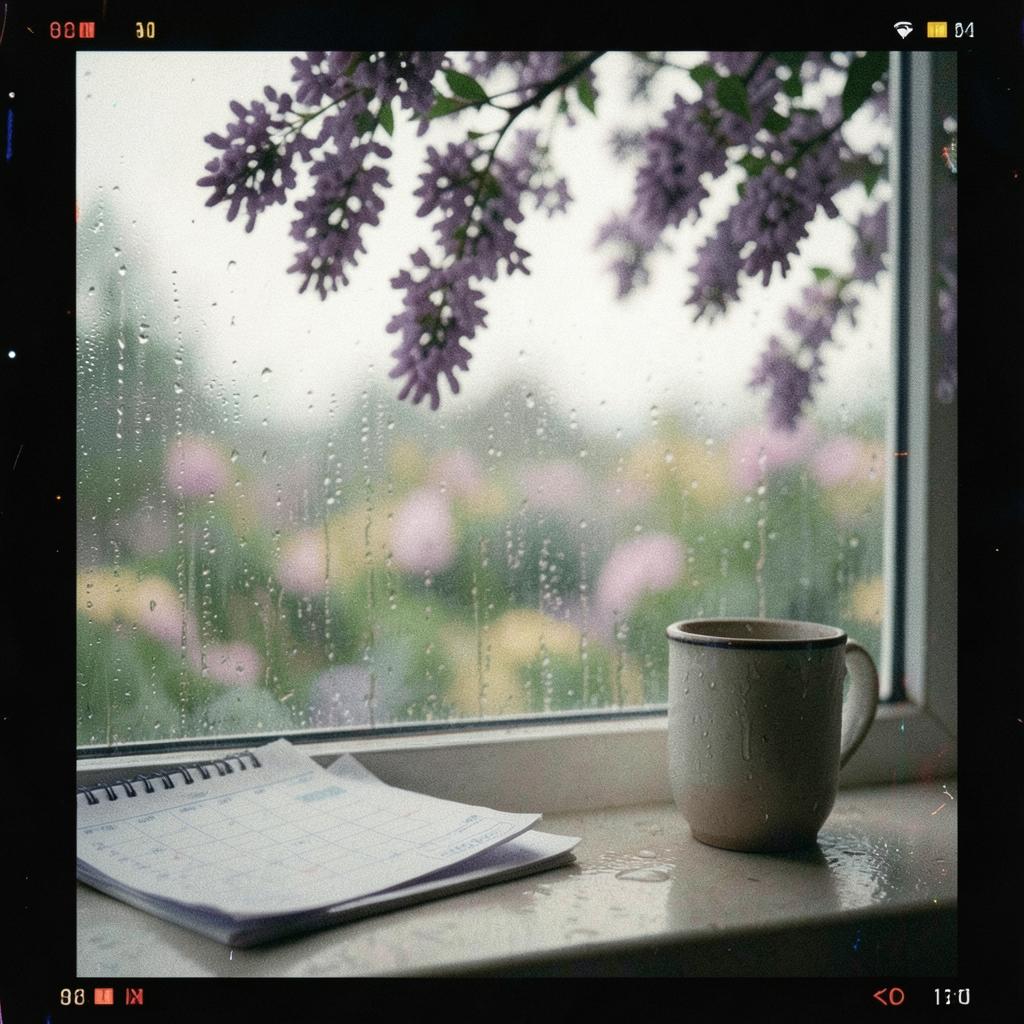
Taso da pluvo, urba horloĝo sen vizaĝo kaj nomoj paliĝantaj sur stacia muro fariĝas aprilaj fragmentoj. Piano, retenitaj kordoj kaj milda klarneto kunigas disajn memorojn ĉirkaŭ du voĉoj. La kanto ne rapidas ripari ĉiun fendon: varma voĉo trairas la urban nokton kaj akompanas nin al la tagiĝo.
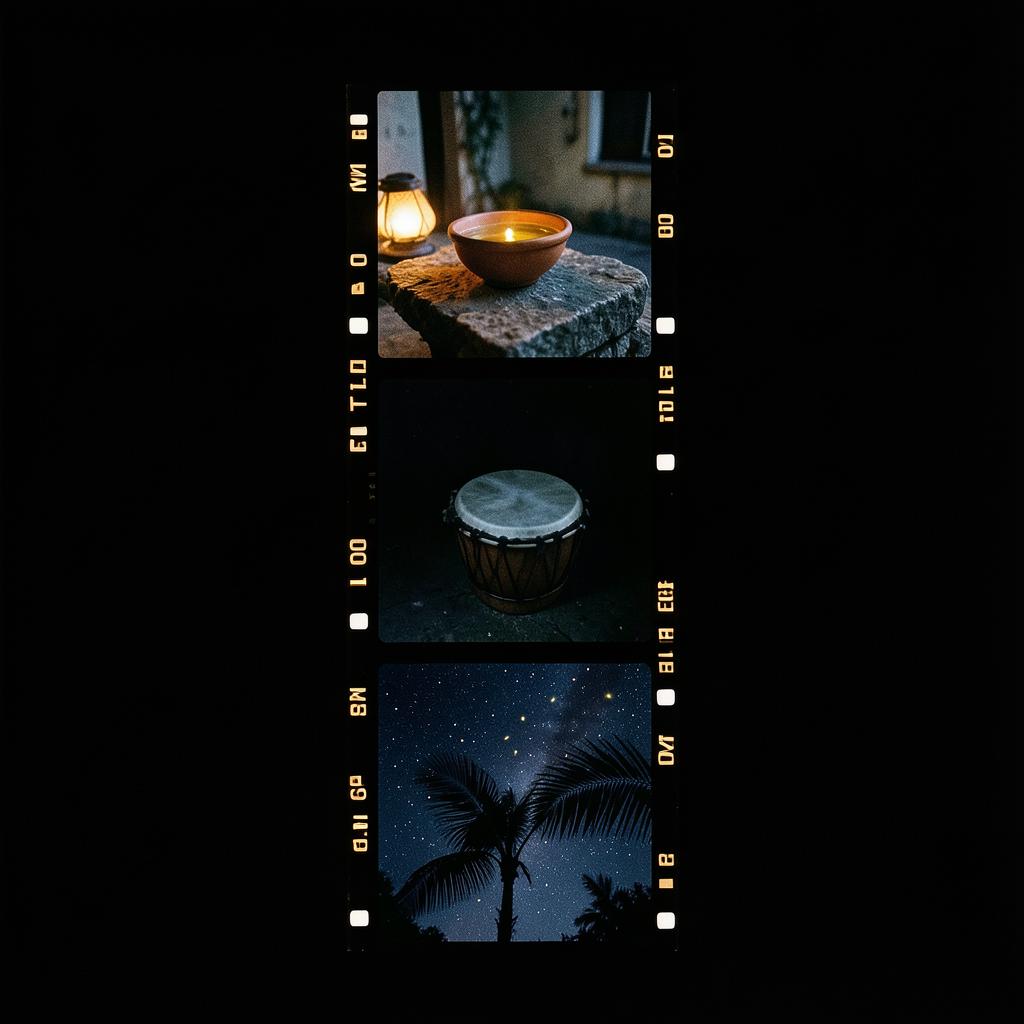
La bazaro fermiĝas, sed lanternoj ankoraŭ lumas. Klaraj gitaroj de okcidentafrika highlife, varma baso kaj milda perkutado renkontas duetajn voĉojn kun Bollywood-koloro. La hejmenvojo ricevas trankvilan dancan pulson. Palma vino, ruĝa polvo kaj lampiroj fariĝas memoroj: ĉiu eta ritmo revenas al vi.
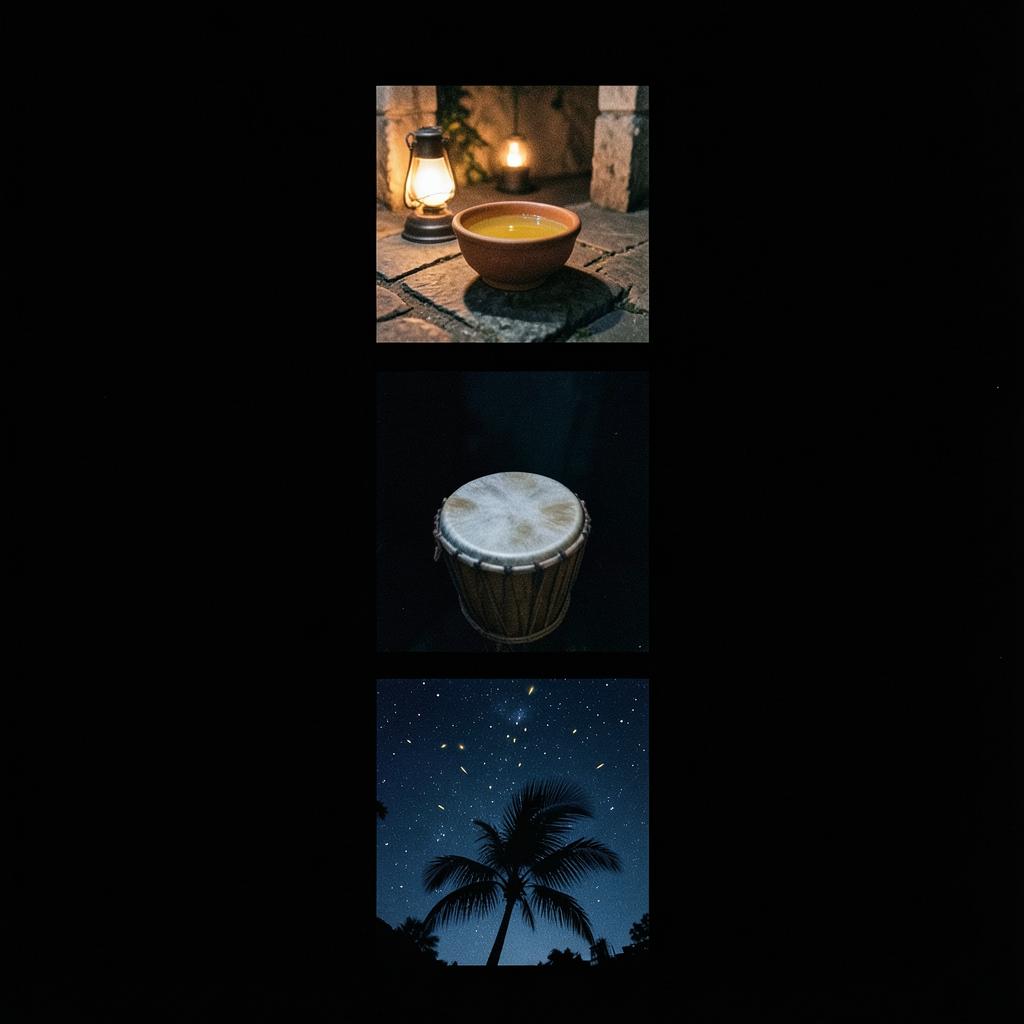
La sama lunluma korto malfermiĝas al alia memstara prezento. Gitaro de highlife kaj retenitaj pluraj ritmoj lasas spacon por la voĉoj kaj melodio. Ne necesas krii aŭ kuri. Kiom ajn da homoj kantas en la urbo, unu konata vizaĝo restas trovebla sub ĉielo plena de lampiroj.

Fajrolumo, malnova libro kaj steloj revivigas la poemon When You Are Old de W. B. Yeats. Kelta harpo, milda piano, varmaj kordoj kaj malalta fluto ĉirkaŭas dueton. La originalaj versoj renkontas novan refrenon pri la pilgrima animo. Beleco ŝanĝiĝas, sed la kanto memoras la malĝojon de ŝanĝiĝanta vizaĝo kaj la animon trairantan tutan vivon.

Malplena stratangulo kaj neeldirita adiaŭo proksimigas la bedaŭron. Arpeĝoj de akustika gitaro kaj piano respondas al milda vira voĉo. Ĉiu refreno leviĝas malrapide, sed ne postulas revenon. Post memoroj kaj ŝanĝiĝantaj sezonoj restas danko pro amo, kiu iam tuŝis la koron.

La plendo de Wordsworth pri la brua mondo direktiĝas al ondoj, lunlumo kaj aŭskultanta animo. Novaj anglaj versoj kantas pri mateno ne vendebla kaj pli trankvila muziko. Kelta harpo, milda tabla, bansuri kaj varmaj kordoj ĉirkaŭas dueton. La mondo povas esti plena; mara vento ankoraŭ lasas vojon por la koro.

La velo ne rigardas malantaŭen, sed la ŝtupoj de la haveno memoras la silenton de du homoj. La varma malalta voĉo de Mary renkontas stanan fluton, violonon, violonĉelon kaj akustikan gitaron. Longaj enkonduko kaj interludo lasas la maran venton pasi malrapide. Jarojn poste stratlumoj ankoraŭ memorigas pri milda adiaŭo. La velo foriris; la kanto restas.

La butikisto ŝanĝiĝis, sed la ventotintilo restas. Ĝia sono revenigas la dezirojn de juneco. Sitaro, tabla kaj bansuri ĉirkaŭas dueton pri malnova fenestro, dolĉa supo kaj ankoraŭ varma teo. Amo ne ĉiam povas reveni hejmen; tamen iu bordo gardas ĝian memoron. Longaj instrumentaj momentoj kondukas al lampo, kiu lumas ĝis tagiĝo.

En la poemo de Lu Xun la donacoj fariĝas ĉiam pli strangaj: koltuko kontraŭ strigo, hirundoj kontraŭ dolĉaĵoj, horloĝĉeno kontraŭ medikamento. La delikata voĉo de Lingwan portas la ironion sen troigo. Gitaro, pipa kaj mallongaj erhu-frazoj akompanas la vojon de monto al urbo kaj riverbordo. Sub la hela melodio kaj la rido restas ankaŭ dolora memoro.

Unu flamo, multaj voĉoj: Lingwan kunigas Esperanton, la anglan, la ĉinan kaj la hispanan en milda kanto de la nacioj. Piano, molaj kordoj, fluto kaj moderaj ceremoniaj tamburoj donas vastan sed intiman etoson. Antaŭ medaloj la vortoj vidas homojn malantaŭ flagoj, malsamajn gepatrajn lingvojn kaj korojn pretajn aŭskulti sub unu ĉielo. Infaneca ĥoro levas la finan esperon.

Floro el senmorta ĝardeno kaj jado en la homa mondo renkontiĝas en anglalingva kanto. Luno en akvo kaj floro en spegulo ne povas reteni la amon. La delikata voĉo de Lingwan, piano, guzheng, xiao kaj molaj kordoj portas suspirojn kaj larmojn tra la sezonoj. La refreno demandas, kiom da malĝojo unu koro povas porti. La lampo memoras, la kurteno aŭskultas, kaj la Ruĝa Ĉambro plu kantas.

La orienta vento malfermas arbojn de lumo, kaj steloj falas kiel pluvo. La lanternfesto de Xin Qiji kondukas de brilo al silenta turniĝo. Lingwan kantas la originalajn ĉinajn versojn kaj poste respondas angle. Piano, guzheng, xiao kaj molaj kordoj lasas la homamason malproksimiĝi. La serĉata homo atendas ne en la plej laŭta brilo, sed ĉe la rando de la paliĝantaj lumoj.

La luno transiras montovojon, arĝentaj ornamaĵoj tintas, kaj bambua domo gardas la sopiron de vojaĝanto. Hulusi, bansuri, sitaro kaj milda tabla renkontas ornamitan virinan voĉon. La lunlumo de Lancang kaj Gango proksimiĝas en la sama kanto. Pli ol ses trankvilaj minutoj donas tempon al fluto kaj kordoj. Duono estas suda hejmlando, duono memoro; amo kantas preter la montoj.

Bluaj nuboj, flavaj floroj, okcidenta vento kaj anseroj portas la adiaŭon el La Okcidenta Ĉambro. La delikata voĉo de Lingwan transiras inter parolo kaj kanto. Qudi-fluto, pipa, guqin kaj mildaj lignaj klapoj akompanas longajn melodifinojn. La veturilo jam iras, sed sopiro volas reteni la vesperan sunon inter la arboj. Mallonga kanto lasas la disiĝon longe resti.

La trankviligaj vortoj “nur onidiro” renkontas respondon: rigardu denove. Distorditaj gitaroj, pezaj tamburoj kaj plurvoĉa kantado kunigas ekranojn, oficejojn, kodon kaj veturilojn sen ŝoforo. La refreno estas rekta: la estonteco piedbatas la pordon, sen frapi kaj sen atendi. Mallaŭta ponto kondukas al kreskantaj finaj krioj. Jen la ĉinlingva roka demando de @liwei antaŭ teknologia ŝanĝiĝo, kun anglalingva kunulo.

“Nur pasema fazo” renkontas estontecon jam en la ĉambro. Forta ĉefvoĉo kaj viraj kaj virinaj harmonioj kreskas kun pezaj gitaroj kaj tamburoj. Vortoj rapide aperas sur ekranoj; oficeja vitro fendetiĝas. La pli trankvila ponto turnas la spegulon al ni: nek monstro nek savanto, sed homa povo plifortigita. Ripetataj finaj krioj respondas angle al La lupo vere venis: du ĉefaj kantoj pri la sama ŝanĝiĝo.

Lampiroj, lotusa lageto kaj malfermita fenestro lumigas mildan someran nokton. La voĉo de Lingwan iras kun akustika gitaro, piano kaj sonorila instrumento; molaj kordoj aldonas iom da lunlumo. La sezonoj pasas, sed sopiro ankoraŭ atendas respondon meze de la akvo. La melodio ne bezonas grandan altecon: ĝi estas eta lumo por la hejmenvojaĝo.

Sur la ekrano la amantoj finfine renkontiĝas; ekster ĝi iu jam foriris. La profunda mezvoĉo de Lin Juyi kantas kantone pri restado, adiaŭo kaj la deziro rebobeni la vivon. Piano, violonĉelo, milda trumpeto kaj la sono de projekciilo donas spiron al la kinejo. La bileto restas en poŝo dum la finaj nomoj supreniras. Unu neeldirita nomo ankoraŭ volas lumigi la tutan salonon.

Pluvo heligas ŝtonan strateton. Ombrelo, blankaj muroj, ligna pordo kaj malnova radio faras la nokton de urbeto aŭdebla. La varma basvoĉo de Male Slow ne rapidas: ĝi konservas la deziron iri kune ĝis la mateno. Kiam la pluvo ĉesas, lunlumo atingas la muron kaj lanternoj ekbrilas unu post alia. La lampo ĉe la enirejo restas por unu returna rigardo.

La demando de la soneto de Ŝekspiro fariĝas milda dueto. Ĉinaj versoj kaj mallonga angla respondo renkontas renesancan liuton, keltan harpon, pianon kaj varmajn kordojn. Majaj floroj kaj mallonga somero kontrastas kun amo, kiu ne volas velki. La lastaj vortoj promesas vivon daŭrigatan de poezio kaj memoro. Ĉi tiu aparta registraĵo restas apud la aliaj versioj de Eterna somero.

Seĝoj staras sur la tabloj; tasoj lasis rondojn, kaj du sidlokoj ankoraŭ memorigas pri la vespero. “Iru antaŭen, mi estingos la lumon” estas kvieta promeso prizorgi tion, kio restas. Proksima malalta voĉo balanciĝas kun maldensa piano, profundaj kordoj kaj mildaj tamburaj brosoj. Kiam la muziko retiriĝas kaj la pordo fermiĝas, ankaŭ la lasta restinto povas iri hejmen.

Testo kun kvindek ok poentoj havas etan surprizon inter la ruĝaj korektoj: simple desegnitan floron anstataŭ riproĉo. Kvar petaloj kaj mallonga tigo diras al infano, ke iu rimarkis lin. Milda dueto portas la rakonton de lerneja tablo ĝis gepatra kunveno multajn jarojn poste. La poentoj ne fariĝas miraklo; la bonkoreco fariĝas io pli daŭra.

Nomo estas skribita sur koro; matenoj, spiro kaj preĝoj kuniĝas ĉirkaŭ unu amo. Ĉinaj amvortoj renkontas sudazian romantikan dueton, kun mildaj melodiaj turnoj kaj hela ritmo. La kanto ne bezonas grandan ĵuron: ĝia centro estas la sento trovi hejmon en la koro de alia homo. Deziro kaj aparteno revenas kune kun ĉiu refreno.

Antaŭ ol la koridoro lumiĝas, ŝi jam malfermis la unuan fenestron. La kanto montras flegantinon en Pekino de la naŭdekaj jaroj: ŝi memoras nomojn, trankviligas timon kaj restas vigla dum la nokto. Varma sola piano kreskas ĝis ĥoro, kun kordoj kaj voĉoj portantaj respondecon kaj kompaton. La miraklo ne falas el la ĉielo: ĝi estas homo, kiu denove ĉeestas tie, kie oni bezonas ŝin.

La lasta metroo, ekrano kiu lumiĝas kaj malheliĝas, vojaĝo neniam farita: ĉiutagaj detaloj fariĝas nesendita letero post disiĝo. “Mi ne ĝenos vian novan vivon” fariĝas pli kvieta, sen ŝajnigi ke memoro malaperis. Milda virina voĉo, gitaraj arpeĝoj kaj maldensaj kordoj lasas spacon por lerni forlasi. Ĉi tiu aparta registraĵo igas distancon formo de tenereco.

Vento malordigas rubandon; granda homamaso kondukas du homojn al la sama brakumo. Ĉina teksto renkontas varman alton, mildan tabla-pulson kaj longajn harmoniumajn tonojn. La mallonga refreno ne rapidas rakonti tutan vivon: ĝi revenas al estonteco vidata en la okuloj de alia homo. Lunlumo, atendado kaj “ne foriru” restas proksime en delikataj koloroj de hinda popolmuziko.

Vespero transiras malnovan muron, kaj unu varma lampo gardas memoron pri ŝultro kaj neeldiritaj vortoj. Ŝtonaj pavimoj, malnova domnumero kaj falintaj floroj faras el hejmo lokon, kie iu konservas la lumon. Ĉi tiu plilongigita versio donas pli da tempo al la reveno. Post malproksimaj vojaĝoj kaj multaj fenestroj, la lampo de la malnova strateto ankoraŭ brilas alimaniere.

Tro blua ĉielo, maro kvazaŭ sonĝo, ondoj skribantaj neeldiritajn vortojn: la horizonto malfermiĝas, sed la kanto revenas al la okuloj kaj silueto de unu homo. Versio 4b donas orkestran vastecon al sunleviĝo, pluvlavita sablo kaj posttagmeza venteto. La grandaj pejzaĝoj de la mondo ne forigas etan persisteman memoron. Unu renkontiĝo ankoraŭ ŝanĝas la lumon sur la akvo.

La sama marbordo ricevas pli intiman koloron. Klara virina voĉo renkontas arpeĝojn de akustika gitaro kaj respondajn frazojn de dizi-fluto. Sunleviĝo, sablo kaj timema rigardo aperas malrapide. La tajdo trankviligas korbaton, sed ne la memoron. La lasta demando restas ĉe la venteto: ĉu novaj pejzaĝoj iam anstataŭos tiujn okulojn? Apud versio 4b, la sama sopiro kaptas alian lumon.

Kiam lunlumo fariĝas pli hela, bovlo da varma supo, la rideto de patrino kaj malnovaj fotoj revenas al la menso. Familia amo ne estas malproksima granda vorto, sed lampo kiu restas ŝaltita. Milda virina voĉo, maldensa gitaro kaj varmaj kordoj memorigas pri la ŝtormoj, kiujn iu helpis nin elteni. Jaroj turniĝas kiel paĝoj; la vojo hejmen restas proksime, bonvenigata de konata aromo.

Urbeto ĉe vesperiĝo, homo apud ligna pordo, vojo montranta norden: mallonga kanto tenas la plej kvietan halton de vojaĝo. Banĝo kaj akustika gitaro ne rapidigas la vojaĝanton; malalta virina voĉo rakontas kvazaŭ de verando. “Kion ni lasas en la lokoj, kiujn ni trapasas?” kunigas teron, konversacion kaj malnovan melodion. La pejzaĝo foriras, sed la kanto plu kantas en ni.

Renkontiĝo en matena lumo transformas malplenan straton en vojon hejmen. Steloj en okuloj, varma teo dum pluva tago kaj konata kanto portas amon en la ordinarajn detalojn de vivo. Kie vi estas, tie senteblas hejmo. Kunestado fariĝas trankvila loko en brua mondo, lumo kiu restas proksima dum printempo cedas al aŭtuno.

Profundo kaj malprofundo, proksimeco kaj distanco: ripetataj vortoj ondetas sur maltrankvila koro. Arpeĝoj de elektra gitaro kaj mildaj kordoj subtenas delikatan virinan voĉon, sen tamburoj kiuj rapidigus ĝin. Vortoj forflugas en vento; ombro maldikiĝas sub la luno. Ĉe la albordiĝejo de tempo, atendado alportas nur nebulon. Lampo ankoraŭ gardas nefinan promeson.

La serĉantaj vortoj de Li Qingzhao aperas inter akustikaj gitarakordoj. Dizi-fluto respondas al milda virina voĉo; delikataj tamburoj kaj baso donas al la poemo de la Song-dinastio nuntempan pulson. Vespero, konataj anseroj, flavaj floroj kaj pluvo sur la arbo alproksimigas krepuskon al la fenestro. Malĝojo pezas en longaj tonoj kaj paŭzoj, kaj la melodio restas kiel pluvo kiu ankoraŭ ne finiĝis.

Mara venteto kaj malnova arbaro ankoraŭ konservas ies voĉon. Klaraj riveroj, kukolo de la sudaj maroj kaj jupo tuŝanta vinberbranĉon renkontiĝas en franca kanto. Varma virina mezregistro, akustika gitaro, mildaj kordoj kaj akordiono portas sopiron intime. La akvoknabino kantas tra arbaro, marbordo kaj foraj montetoj. Nostalgio fariĝas eĥo, ne loknomo.

La pado iras suden kaj la vento de hejmo restas malantaŭe, sed du voĉoj plu turniĝas unu al la alia. Tre malrapida dueto transformas la rifuzon forlasi la alian en pezan atendadon. Alternaj strofoj renkontiĝas en komuna refreno; malaltaj registroj portas la vortojn sen kriego. Amo kaj libereco, reveno kaj destino demandas unu la alian en proksima melodio.

Remiloj ripozas, lamplumo balanciĝas sur akvo, kaj vespera venteto transformas ponteton en pordon al sopiro. Delikata voĉo inspirita de Yue-opero renkontas guzheng kaj arĉajn instrumentojn, sen tamburoj kiuj rapidigus la vortojn. Muskaj ŝtupoj, brodado ĉe lamplumo kaj saliko apud la ponto aperas malrapide. Se sopiro estus ponto, oni revenus ĉiutage, lasante penson ripozi sub la luno.

Anstataŭ promesi la tutan mondon, ĉi tiu kanto lasas iom da lumo en longa nokto. Varma malalta vira voĉo restas proksima al piano, dum milda virina harmonio respondas de malproksime. Sen tamburoj, dankemo kaj kunestado malrapide disvolviĝas. La fino konfidas adiaŭon al la vento kaj lasas al la amata homo kuraĝon pluiri.

Ĉi tiu longa solo ne hastas al refreno: ĉiu frazfino fariĝas loko por resti. Delikata voĉo inspirita de Yue-opero disvolviĝas apud maldensaj arĉaj kordoj, pipa kaj guzheng, sen tamburoj aŭ tavoligitaj voĉoj. Nebula akvo kaj lunlumo donas spacon por spiri. Unu frazo etendiĝas, alia revenas, kunigante teatran delikatecon kaj la intimecon de malrapida kanto.

Resti apud vi unu plian tagon transformas eternecon en iom pli da amo ĉiutage. Arpeĝoj de akustika gitaro kaj varma baso portas viran kaj virinan dueton, kun himneca sindediĉo en intima popolbalado. Dankemo kaj pardono transiras inter la voĉoj, ĝis ili renkontiĝas en promeso de kunestado sub la steloj. Simpla deziro resti profundiĝas sen laŭta deklaro.

Papera pluvombrelo, malseka ŝtono kaj siringo etendas pluvan renkontiĝon tra pli ol sep minutoj. Kantataj partoj de la poemo Pluva Strateto de Dai Wangshu malfermiĝas al novaj strofoj pri memoro post foriro. La melodio donas tempon al la revenantaj bildoj, antaŭ ol la siringa refreno malrapide floras. La kanto ne hastas for de malĝojo: ĝi restas en la pluvo kaj akompanas malnovan revon iom pli longe.

Alia pluva strateto, sed ĉi-foje la lampoj estas varmaj. Pluvo heligas blankan muron, la odoro de vespermanĝo venas tra ligna pordo, kaj malnova radio milde revenigas la pasintecon. Pinĉitaj kordoj kaj klara voĉo sekvas florornamitan pluvombrelon sen hasto. Kiam la luno grimpas sur la muron, iu atendas en la direkto de ŝia retrorigardo. Ĉi tiu malgranda popolkanto estas lampo lasita brulanta ĉe la fino de la hejmenvojo.

La infanoj demandas kial ekzistas muroj kaj kial tiom da mapoj tranĉas la saman teron. La varma profunda voĉo de Male Slow kunigas Esperantajn demandojn kun ĉinaj respondoj. Violonĉelo, malaltaj kordoj kaj piano portas malrapidan pacan himnon, sen kriego aŭ promeso de facila mateno. Ĝi gardas malgrandan fajron, aŭskultas la silenton de maljunuloj kaj petas, ke la revoj de junuloj ne rompiĝu: por infanoj, por morgaŭ, por mondo kiu ankoraŭ povas elekti.

En urbeto ĉe la arĝenta maro, knabino dancas kun la vento. Juneco iam igis ĉiun promeson brili kiel oro; poste la tajdo forportis piedsignojn kaj instruis ŝin rekomenci post korrompo. Piano, kordoj kaj violonĉelo donas kinematografian amplekson al Esperantaj versoj pri amo, tempo kaj kreskado. La titolo restas angla, sed la kantata rakonto estas Esperanta. Beleco vivas ne nur en la unua hela momento, sed ankaŭ en la kuraĝo rideti al nova revo.

Ondeto dispecigas la lunon en memorojn. Pavilono, ŝtona ponto kaj salikoj en la pluvo memoras du homojn, kiuj iam kune rigardis la lunon. Gracia solkanto laŭ la ĉina Yue-opero lasas ĉiun demandon resti super la akvo, kun delikataj erhuo, pipao kaj guĝengo. Nomo skribita en la lago flosas al iu malproksima. Kiam la vento fine alportas konatan voĉon, distanco cedas al rekuniĝo: la plena luno fariĝas promeso de hejmenveno.

Ĉi-nokte la steloj estas proksimaj: la fora legendo de Qixi revenas al ordinara vespero, kiam du homoj fine renkontiĝas. Post longa vojo tra la homamaso, perdita pluvo trovas eĥon kaj fenestra lumo atingas jarojn da soleco. Ĉi tiu am-balado ne hastas fari el amo miraklon. La ponto trans la Lakta Vojo fariĝas pacienca iro al alia homo, kaj eterneco fariĝas volo dividi ĉiutagan vivon. Kia ajn estos la morgaŭa vetero, kunestado proponas hejmenvojon.

En bonveniga tago, novulo tiras valizon en la homamason. La kampuso ekfariĝas konata per simpla propono helpi. Rido en komuna ĉambro, nova mapo sub la arboj kaj estonteco ankoraŭ sen tuja respondo donas ĉiutagan varmon al ĉi tiu country-pop-kanto. Juneco ne devas tuj fariĝi saĝa: ĝi povas gardi scivolemon kaj teni la hodiaŭon proksime. La mondo estas vasta, sed restas tempo por malrapide iri tra ĝi.

Lamplumo super flikita maniko kaj vaporo de vespermanĝo sur fenestro estas la ordinaraj aferoj, kiujn infano iam opiniis senfinaj. Valizo, distanco kaj hospitala koridoro poste transformas la peton, ke patrino restu, en nefineblajn vortojn. Ĉi tiu malrapida kanto milde iras tra memoro. Ĝi ne solvas perdon per facila adiaŭo: ĝi lernas vivi sen ŝi, kun ŝiaj vortoj plu en la koro. Doloro restas, kune kun mildeco, kiun tempo ne povas forpreni.

Post pluvo la platana vojo brilas per akvo. Presinka odoro venas de la lerneja pordego, kaj iu sub blua pluvombrelo milde vokas vian nomon. La delikata voĉo de Lingwan kunigas gitaron, pianon, malpezajn kordojn kaj fluton en atmosfero de lernejaj memoroj el la 1980-aj jaroj. Lampeto ĉe la pordisto, gazetoj sur fenestro kaj eseo pri revoj apartenas al tempo, kiam la estonteco estis ankoraŭ nebula horizonto. Jarojn poste, pluvo ĉe fenestro revenigas tiun vojon kaj juneco denove brilas en la sono de nomo.

Kamelaj sonoriloj, sablo kaj lampo sub urba pordego akompanas sopiron laŭ longa vojo. Koloroj de udo, santuro, nej-fluto kaj kadrotamburo malfermas vastan noktan ĉielon ĉirkaŭ ĉina balado. Longa enkonduko kaj instrumenta interludo lasas la vojaĝon spiri. La teksto imagas renkontiĝon trans montoj kaj riveroj; amo ne estas laŭta deklaro, sed kvieta flamo kaj deziro sekvi lunlumon reen al ies flanko.

Varma supo, la rideto de patrino kaj malnovaj fotoj fariĝas lumoj, kiuj restas post foriro de hejmo. Piano kaj arĉataj kordoj iras malrapide kaj firme; fojaj malaltaj violonĉelaj tonoj lasas spacon al sindetena ĉefvoĉo kaj foraj harmonioj. La kanto ne rapidas al grandioza kulmino. Ĝi gardas hejmon en la koro kaj trovas direkton en la homoj, kiuj portis nin tra malfacila vetero.

La lasta metroo baldaŭ forveturos. Telefono eklumas kaj denove malheliĝas; nefarita vojaĝo restas inter du homoj. Malmultaj pianotonoj, renversitaj elektragitaraj supertonoj kaj malrapida basa pulso transformas perdon en intiman revpopmuzikon. Spireca mezosoprano ĉesas postuli respondojn, sen ŝajnigi facilan liberiĝon. Ĝi malrapide lernas konservi mildecon sen ĝenado. Nebulecaj harmonioj vastigas la ĉambron, dum adiaŭo restas en mesaĝfenestro sen respondo.

La boatisto formetas sian remilon, lamplumo balanciĝas sur la akvo, kaj muskaj ŝtupoj kaj kandelluma fenestro mildigas la nokton. Arĉa instrumento, pipo kaj guĝengo ĉirkaŭas solan voĉon. Frazoj kun Yueju-koloro lasas lokon al silento kaj al la intimeco de malgranda teatro. Ĉi tiu versio ne postulas respondon de sopiro: ĝi ĵetas penson en la akvon, aŭskultas la lunon memori sian junecon kaj revenas al ponto, kiu ankoraŭ gardas ridon.

Ĉe vesperiĝo en urbeto leviĝas kuirfumo. Iu apud ligna pordo montras norden: ĉe la fino de la vojo troviĝas la serĉata hejmo. Banĝo kaj sindetena akustika gitaro sekvas malrapidan balancadon, donante al preterpasado la varmon de malnova ligno kaj proksima ĉambro. Koto sub la piedoj, iamaj vortoj kaj nerevena somero milde pasas. Restas malnova kanto plu sonanta interne. Ĉi tiu aparta interpreto konservas sian lokon apud la aliaj versioj.

La deziro resti ankoraŭ unu tagon temas malpli pri haltigo de tempo ol pri pli plena sento de ĉiu brakumo. Varma malalta vira voĉo kaj klara, spireca virina voĉo laŭvice proksimiĝas. Unuopaj pianotonoj, renversitaj gitaraj supertonoj kaj malalta sintezila sono ĉirkaŭas la dueton per kvieta ĉambro. La teksto iras tra atendado de telefonvoko, pardonpetoj kaj reciproka subteno al milde dirita deziro: ke tempo malrapidu kaj amo ne hastu al adiaŭo.
de @liwei · kreita per Suno
Serĉu per kantonomo, virtuala kantisto, lingvo, poeto, kultura fonto aŭ serio. La rezultoj ĉiam ludas la kompletan surlokan dosieron.
368 el 368 kompletaj verkoj videblas.
Aŭskultu rekte ĉi tie. Por pli da rakontoj pri ĉiu kanto, malfermu ĝian anglan aŭ ĉinan verkopaĝon.

After the rain, the lotus does not remain still. One verb—lift—sets early sun, water, round leaves and wind in motion, carrying Zhou Bangyan’s living image into a complete contemporary slow song.
DAI AMEI · Mandarin ChineseThe song does not swear devotion at youth’s brightest moment. It begins beside the fire in old age, then looks back at those who loved beauty and the one who loved the pilgrim soul.
BOLLYWOOD MALE · English-language song
‘Green hills cannot stop it; eastward the river goes.’ The current carries historical pressure forward while allowing a listener in a difficult season to hear persistence without erasing obstruction.
Weiyang Sound · Mandarin Chinese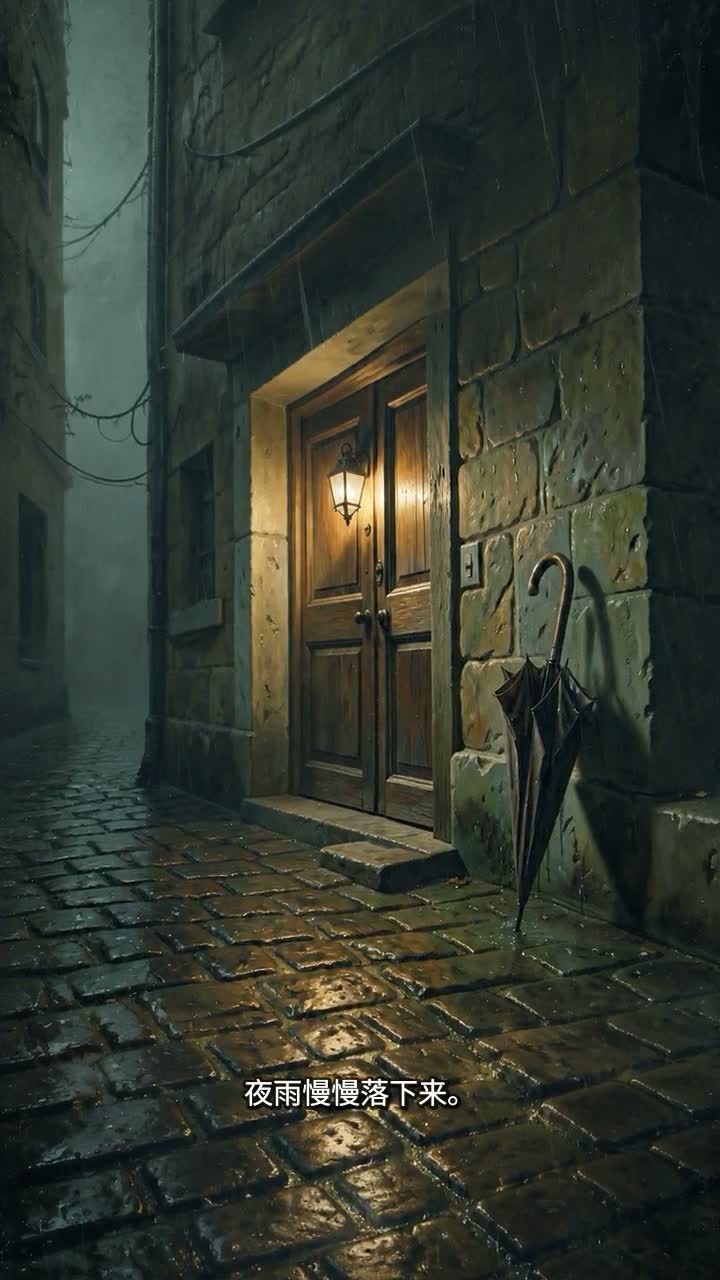
Rain does not wash away the returner’s past; it blurs the old city’s lights across the window. Coming home is neither triumph nor restoration, but a new encounter with everything that changed.
Weiyang Sound · Original Mandarin slow song
Beginning with Qixi without enclosing encounter inside one legend, Mandarin and Esperanto draw toward one another as Chang’an, Paris, the Ganges and the coast share one sky. The complete three-minute-twenty song and film now live on site.
BOLLYWOOD MALE · Mandarin Chinese × Esperanto
Sea wind crosses a rain-lit old town, carrying a name, a rose and an unfinished return into the final credits. Hollywood Female lets piano, strings and a slow French melody relight the closing refrain without mistaking volume for scale.
CINEMATIC FEMALE · French-language song
The sun does not rise over a sea untouched by darkness. It reveals scars before people lend their voices to one another. Cyber’s clear tenor remains at the centre of guitars, choir and cinematic scale without being swallowed by them.
CYBER TENOR · Mandarin Chinese
A small room dimming into night, coffee leaving its bitter trace and a confession that was never sent. Mandarin brings the feeling close while French lengthens the rain; Breathy Female keeps air at the edge of a supported melody rather than mistaking intimacy for weakness.
BREATHY FEMALE · Mandarin Chinese × French
The catalogue calls this version A Soul Reborn, while the sung refrain keeps returning to ‘the stars are near tonight’. The mismatch is not something to erase: it documents a loose re-composition leaving its source melody behind while carrying emotional DNA into a sister song.
LIN JUYI · Mandarin Chinese
The Milky Way and Magpie Bridge do not remain inside legend. They arrive in an ordinary vow: however far tomorrow may be, walk each unremarkable day together until it becomes enduring. A warm female voice, acoustic guitar, piano, cello and soft choir turn a Qixi single into a complete slow song for weddings and long companionship.
FOREVER FEMALE · Mandarin Chinese
Rain falls on banana leaves as drum, flute and distant song find their own depth. Bajiao brings a southwestern rainy night into conversation with South Asian cinematic melody, singing an unfinished longing into the warm, wet darkness.
BAJIAO · Mandarin Chinese
A night driver carries silence into the distance; a convenience-store worker counts change until daylight; a factory window and a lamp at home stand far apart. Mary claims no invented medal for them—she stays beside people without famous names as they keep carrying life forward.
MARY-COUNTRY · Mandarin Chinese
After rain leaves a small town, the first lamp is not a grand declaration. It is an opened window, a warm meal placed on the table, one pair of hands lifting another—and someone still willing to wait for you to look back through a long night.
LINGWAN · Mandarin Chinese
Zhaojun has departed, yet the emperor's carriage must still pass the palace wall, circle the corridor and approach the inner chamber. Each repeated movement enters the same palace more deeply. Male Slow does not enlarge imperial power; his low voice lets loss return in circles.
MALE SLOW · Mandarin Chinese
Magpie Bridge descends from the Milky Way to a moonlit harbour, where water, timber and one lamp give reunion physical weight. Mediterranean Male carries a Mandarin Qixi ballad toward another sea, but the bridge joins creative imaginations rather than pretending two traditions were always one song.
MEDITERRANEAN MALE · Mandarin Chinese‘Waking from the previous storm’ gives this light its weight. Lingwan's prologue, Mary's long road and Lin Juyi's storm are not erased; Cyber Tenor receives the final chapter and carries solitary names, an old playground and people far away into one shared chorus.
CYBER TENOR · Mandarin Chinese
Plum blossom, lotus gathering, a high tower and passing geese turn longing into a chain of actions. At ‘the south wind knows my heart; carry my dream to Xizhou,’ waiting hands reality over to dream. This new interpretation keeps the poem's water route while clearly marking its contemporary refrain.
DAI AMEI · Mandarin Chinese
The Lancang flows south as the Mekong, while one moon gathers stilt houses, ferry landings, boat lights and someone far away into a letter that need not be sent. The song does not invent one voice for six countries; it lets a real transboundary river carry an ordinary human longing.
DAI AMEI · Mandarin Chinese · one Lao greeting
Moonlight falls on a stilt house, water and one lamp waiting for someone. Peacock, silver bell and hulusi are gathered not as a tourism postcard but inside one ordinary plea: if you hear this, do not go farther away.
DAI AMEI · Mandarin Chinese
She arrives a little late with night still on her coat. No one asks what happened during the lost years. A window seat, a lukewarm drink and one restrained ‘I hope life has treated you gently’ are enough to let reunion live inside the rain.
BREATHY FEMALE · Mandarin Chinese
Blue-green sky, yellow flowers, west wind and southbound geese are not decorative autumn scenery. Together they enlarge the plea Yingying cannot openly make. Lingwan does not turn departure into a cry; each long final tone is allowed to release slowly.
LINGWAN · Mandarin Chinese · traditional-character source captions
Red wax weeps before a rain-dark window and the night seems to have no end. Wen Tingyun turns longing into a room that grows colder; Lingwan follows each drop through the wutong leaves until the approach of dawn.
LINGWAN · Mandarin Chinese · source lyric captions
An auspicious day, sounding jade, fragrant plants, cassia wine and drums turn a welcoming rite into sound and scent. Dai Amei brings the gravity of Nine Songs into the intimacy of a contemporary ballad.
DAI AMEI · Mandarin Chinese · traditional-character source captions
A lotus canopy, paired dragons, Kunlun and a purple-shell palace turn companionship into an expanding mythic voyage. At dusk the song returns to a farewell on the southern bank; Dai Amei finds tenderness within the river's sweep.
DAI AMEI · Mandarin Chinese · traditional-character source captions
Orchid-scented bathing, radiant robes, sun, moon and a dragon carriage rise toward clouds above the Four Seas, leaving a sigh after departure. Dai Amei sings both the brightness of arrival and the longing that follows.
DAI AMEI · Mandarin Chinese · traditional-character source captions
A dawn departure beneath coloured clouds compresses a thousand-li journey into one day; the apes still call while the light boat has crossed ten thousand mountains. Dai Amei brings Li Bai's quatrain into a landscape ballad where swift water meets an unhurried voice.
DAI AMEI · Mandarin Chinese · static-image film with the complete song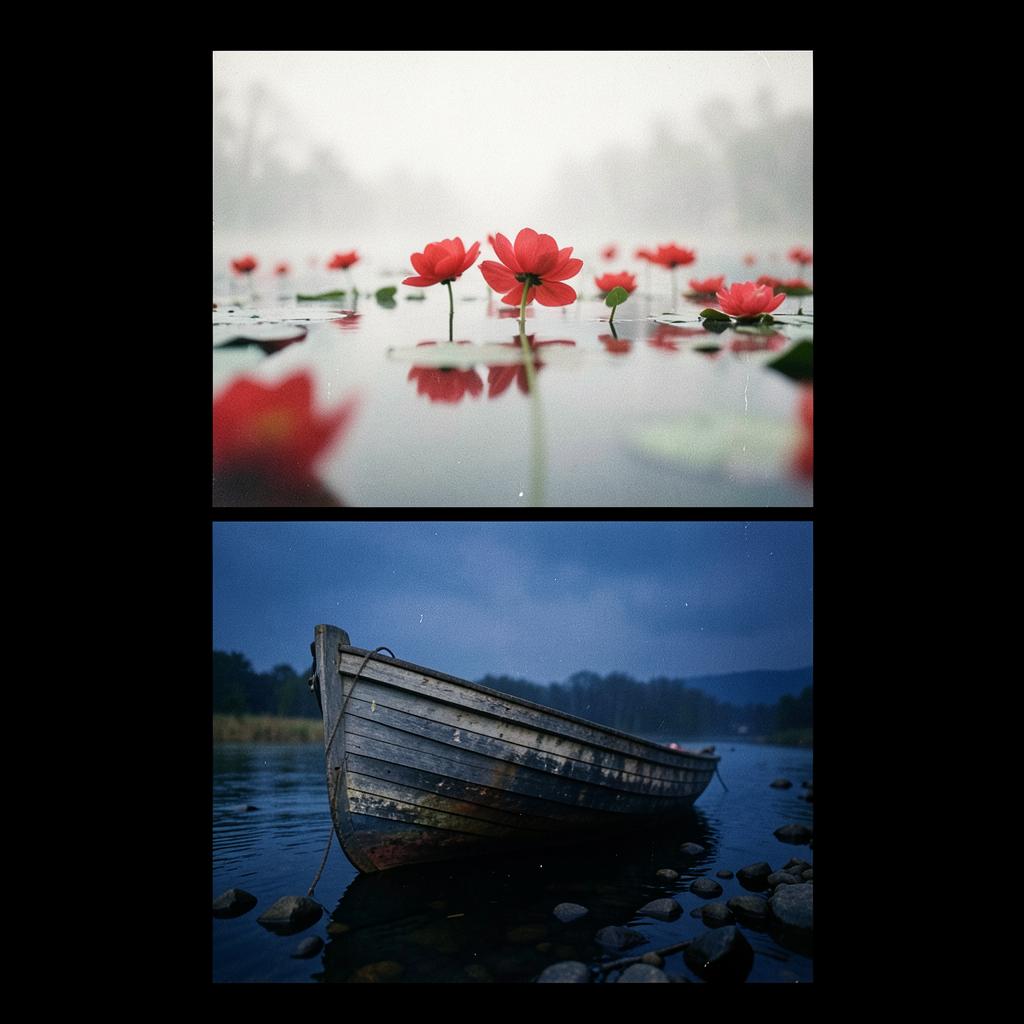
River flowers redder than fire and spring water green as indigo move memory toward Hangzhou's moonlit cassia and tidal sound, then Wu Palace wine and paired dance. Dai Amei sings all three of Bai Juyi's Memories of Jiangnan; the old rhetorical question also becomes the doorway into a present-day refrain of an old boat and a full moon.
DAI AMEI · Mandarin Chinese · traditional-character source captions
A song does not begin only beneath a spotlight. Schoolyard wind, rain against a desk, a paper plane and an unwritten wish are first gathered by one clear female voice. When the last row joins in, private school memory becomes a square in which everyone can stand.
LINGWAN · Mandarin Chinese · source lyric captions
The song does not ask anyone to forget a wound or package tears as victory. Mary begins with a wheatfield, dusk, rain and a lamp left on for someone coming home, letting one person's silence be heard before the choir answers. The wound is not hidden; it slowly becomes a direction by which to travel.
MARY-COUNTRY · Mandarin Chinese · source lyric captions
Dust on a shoe, words hidden in an old pocket and tears before dawn are not scenery for spectacle. Lin Juyi first makes one person's cold night legible; only then do echoes approach from the city's edge. By the time every voice says we are here, fire is no hero's private flame but a light people keep for one another.
LIN JUYI · Mandarin Chinese · source lyric captions
The same romantic core of The Stars Are Near no longer stays inside a whisper when Cyber sings it. Star-like points beyond a window, one small light on the sill and a gradually widening choir carry ‘I finally found you’ from private vow toward a finale others can answer. The cathedral quality is sound design, not a religious event; Cyber is the singer, not an electronic genre.
CYBER TENOR · Mandarin Chinese · source lyric captions
They do not stand at the centre, yet they move ordinary days toward the sun. They are not carved into monuments, yet find names in one another's echo. Cyber first protects one small light with a clear tenor; the choir enters from a distance until nameless no longer means unseen.
CYBER TENOR · Mandarin Chinese · source lyric captions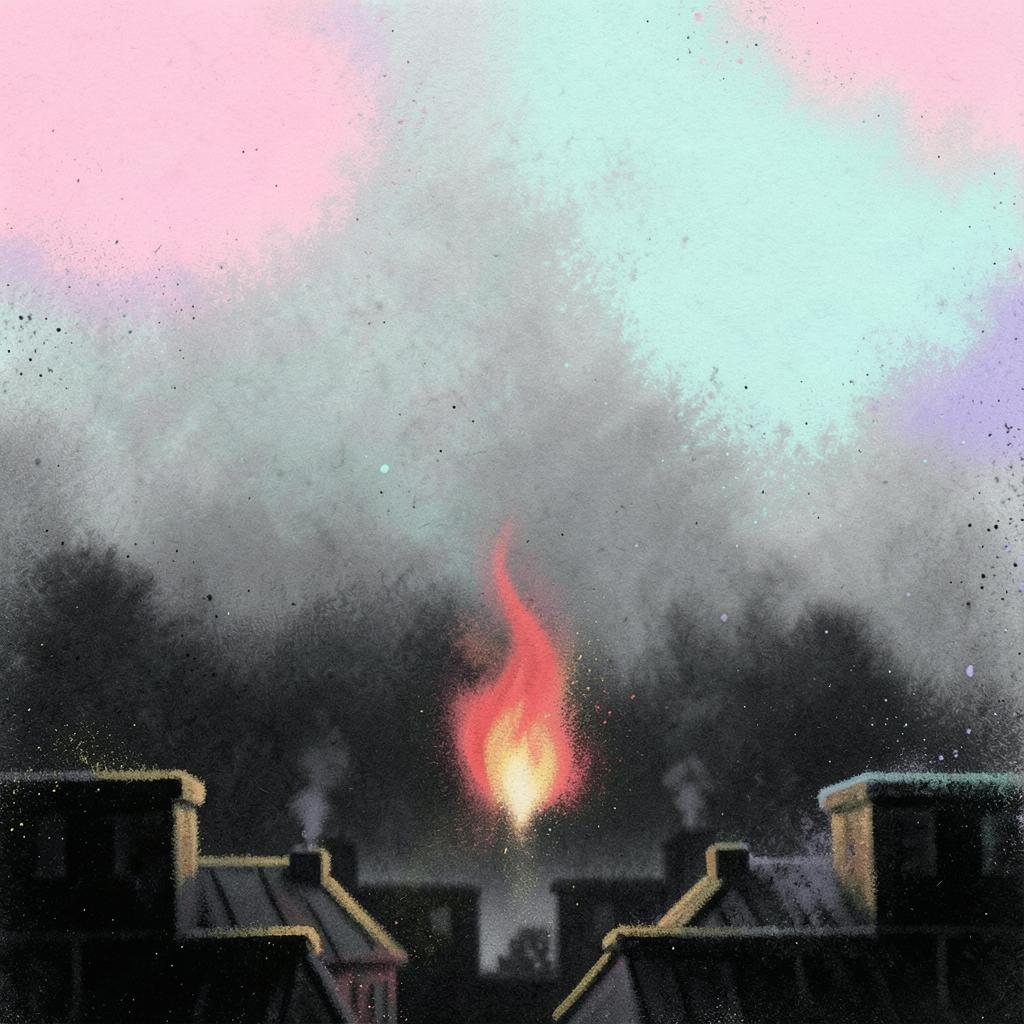
The storm is not erased by a slogan: broken windows, a pale morning and names carried across water remain. Only as a candle, one hand holding another and a child drawing suns by the river appear does the wide-screen female lead turn survival into lights coming on together.
CINEMATIC FEMALE · English · source lyric captions
Wind crosses an old platform from the screen and a name is hidden in sea and afterglow. Mandarin verses keep farewell inside city and memory, while the English chorus opens another distance like end credits. The final dialogue is not an argument exhausted into silence, but a willingness to cross wind and rain and return the heart to love and homecoming.
CINEMATIC FEMALE · Mandarin Chinese × English · source lyric captions
The previous storm is not erased and the town does not recover overnight. Cyber Tenor begins as clouds slowly open, then lets children's laughter, unfinished roads and household lights gather into a public chorus. After daybreak means not forgetting yesterday, but warming tomorrow into life again.
CYBER TENOR · Mandarin Chinese · source lyric captions
The hook The Stars Are Near is not covered again. Beside a rain-lit window, coffee and an old record it grows a new life: waiting becomes not only reunion, but two people learning forgiveness and turning wandering into a quiet yes.
MARY-COUNTRY · Mandarin Chinese × French × one English couplet · source lyric captionsGrey sea, long black land, a low half-moon and little waves leaping in fiery rings: Browning compresses an entire secret journey into a tap at the pane and two hearts louder than a voice. This setting keeps the complete poem, a new refrain and its moonlit crossing audibly distinct.
BOLLYWOOD MALE · English · source lyric captions
The Milky Way and magpie bridge do not remain inside legend. They descend into wandering, waiting, embrace and shared years, turning a distant sky into an ordinary promise: storms may return, but I will keep walking with you. Lin Juyi gives that tenderness the weight of fate.
LIN JUYI · Mandarin Chinese · source lyric captions
The same stars, magpie bridge, missed rain and promise to keep walking change when Lingwan carries them. Her clear, grounded voice brings Qixi legend into ordinary companionship and gives the archive a direct comparison: identical lyric and parent, distinct virtual singer, different route into one promise.
LINGWAN · Mandarin Chinese · source lyric captions
One complete 七夕 lyric and one public parent can now be heard through three lead virtual singers: Bollywood Male 03A, Lingwan 03B and Lin Juyi 03C. A living culture is not reduced to a style button; the comparison asks how vocal character changes the distance, weight and cinematic scale of one Mandarin vow.
BOLLYWOOD MALE · Mandarin Chinese · source lyric captions
A single rain-lit banana leaf fills the window while bansuri, hulusi and soft tabla carry the shared Qixi lyric toward a Southwest–South Asian borderland imagination. Bajiao is a lead virtual singer; instruments and cinematic colour are arrangement cues, not cultural identity papers. This release brings the same-lyric, same-parent study to 14 complete on-site recordings by 11 singers.
BAJIAO · Mandarin Chinese · source lyric captions
The shared Qixi lyric no longer reaches for distance: lamplight, rain and one quiet yes are drawn into a room close to the ear. Breath is a supported texture, not weakness; source parameters document an arrangement, not a human singer or real studio session. 14 recordings by 11 singers in this lineage now play completely on site.
BREATHY FEMALE · Mandarin Chinese · source lyric captions
The shared Qixi lyric moves from a close room into a widescreen end theme. Piano, cello, sweeping strings and a gentle choir lift describe emotional scale—not Hollywood geography. The character name comes from a public Persona; no film, studio, orchestra or second singer is invented. 14 recordings by 11 singers in this lineage now play completely on site.
CINEMATIC FEMALE · Mandarin Chinese · source lyric captions
A rain window, oil lamp and bowl of water bring the stars into an ordinary room. 01F B shares the lyric, 七夕 parent and Lin Juyi Persona of the existing 03C, yet piano, cello, soft strings and a gradual lift create a second cinematic route. The complete source audit verifies 14 recordings by 11 singers; 14 recordings by 11 singers now play completely on site.
LIN JUYI · Mandarin Chinese · source lyric captions
A stone arch frames the full moon while a white crane stands between candlelight and vines. 01E Male slow B lowers the shared stars, magpie bridge, missed rain and lasting promise into a slower, restrained bass inside a verified 11-singer / 14-recording lineage; 14 takes by 11 singers now play in full. Male Slow is the singer, not a slowdown effect.
MALE SLOW · Mandarin Chinese · source lyric captions
Mist-softened stars fill the upper frame; an old window and warm lamp hold the lower one. 01C Lingwan B carries the shared stars, magpie bridge, missed rain and lasting promise as if walking home from a campus memory. It is Lingwan's second entrance inside a verified 11-singer / 14-recording lineage; 14 takes by 11 singers now play here in full.
LINGWAN · Mandarin Chinese · source lyric captions
Moonlight falls across a waterside balcony and an empty wooden chair while stars trace a road between distant hills. 01B Mary-country B places the shared Qixi lyric inside acoustic guitar, cello, soft strings and country-pop warmth. Mary is the lead warm-mezzo singer; country pop is this arrangement's container. The verified lineage holds 11 singers across 14 recordings; 14 takes by 11 singers now play here in full.
MARY-COUNTRY · Mandarin Chinese · source lyric captions
Lilac starlight settles over a bridge at night while reflected lamps pull the shared Qixi promise into another cinematic arc. 01A Plus Bollywood completes the public verified lineage at 14 recordings by 11 singers. Bollywood Male remains the registered lead; the source tag and current caption say Bollywood duet / 异域对唱 but supply no independent second-singer field.
BOLLYWOOD MALE · Mandarin Chinese · source lyric captions
White dew gathers on the reeds while the distant figure remains across the water. Across the Water does more than borrow an ancient title: it sings all three stanzas of Jianjia, then lets a contemporary refrain answer that unreachable waterway from the bank.
DAI AMEI · Mandarin Chinese · Traditional-Chinese source lyric captions
A small boat rests among a pond of lotus leaves as two Tang poems with the same title meet inside one contemporary song. Wang Changling discovers the gatherers through their voices; Li Bai widens the scene through laughter, reflected dress, lifted sleeves and the hesitant watcher on shore.
DAI AMEI · Mandarin Chinese · mixed-script source lyric captions
A lamp comes on in a bamboo house and someone answers from across the river. A female part asks about distance, a male part sings of returning, and the shared refrain carries their exchange over the water. This is a contemporary original—not a recovered traditional song.
DAI AMEI · Mandarin · source-labelled call-and-response
One moon lights a bamboo house; another reaches the Ganges. Silver, banana leaves and a distant river enter one contemporary slow song. This is not a recovered borderland legend or traditional reconstruction, but Bajiao singing difference into an imaginative encounter whose limits remain visible.
BAJIAO · Mandarin Chinese · source lyric captionsHeadlights reveal only a short stretch, while the moon crosses the whole mountain road. Over more than five minutes, Bajiao sings departure, looking back and a heart still willing to love. The Lancang and Ganges face one another across the lyric without being collapsed into one culture.
BAJIAO · Mandarin Chinese · source lyric captions
Someone tilts an umbrella toward another person, someone keeps watch until morning, and someone stands like a bridge. Across twenty-seven contemporary lines, Lin Juyi carries a rough pair of hands toward a row of lights. This is a musical parable of ordinary care—not a documentary claim about real responders or a specific disaster.
LIN JUYI · Mandarin Chinese · source lyric captions
Food remains warm on the stove and moonlight waits by the door. Mary does not make homecoming easy: mud, exhaustion, fallen eaves and names that cannot be forgotten arrive before one lamp finds another. This is a contemporary song about holding one another—not documentary evidence of a particular disaster or family.
MARY-COUNTRY · Mandarin Chinese · source lyric captions
From falling into a storm to passing the beam toward daybreak, Lin Juyi names disorientation, weight and an iron gate before one refusal becomes a row of lamps and an answering horizon. Storm, city and sea are contemporary song images—not records of a real disaster, rally or political event.
LIN JUYI · Mandarin Chinese · source lyric captions
A wheatfield horizon, an old letter, a window lit for someone returning and one heart finding another place the second Same Beam of Light chapter on an ordinary long road. Mary does not turn hurt into a miracle: warm mezzo, cello, acoustic guitar and a slowly approaching choir make room for a tired listener to stop.
MARY-COUNTRY · Mandarin Chinese · source lyric captions
Wind crosses an old schoolyard; a white shirt, desk, sunset and bell bring shared memory back into view. Lingwan lights the first chapter of The Same Beam of Light with a clear, finely drawn voice—one person's recollection opening gradually toward distant voices and the promise that we can still sing together.
LINGWAN · Mandarin Chinese · source lyric captions
The same rainy-night tavern and restrained reunion move from close breath into a wider cinematic space. Cinematic Female does not inflate ‘I hope life has treated you gently’ into a grand declaration. Piano, acoustic guitar and soft strings hold an ordinary wish: however large the city becomes, two people can still sit down and let the rain finish their silence.
CINEMATIC FEMALE · Mandarin Chinese · source lyric captions
The same rainy-night reunion lyric enters a third complete voice. The comparison now moves beyond close breath and widescreen scale toward a steadier singer willing to let an ordinary greeting last. Forever Female does not shout permanence as a slogan; she turns an umbrella, a window seat and one restrained wish into a sense of time that can stay with a listener.
FOREVER FEMALE · Mandarin Chinese · source lyric captions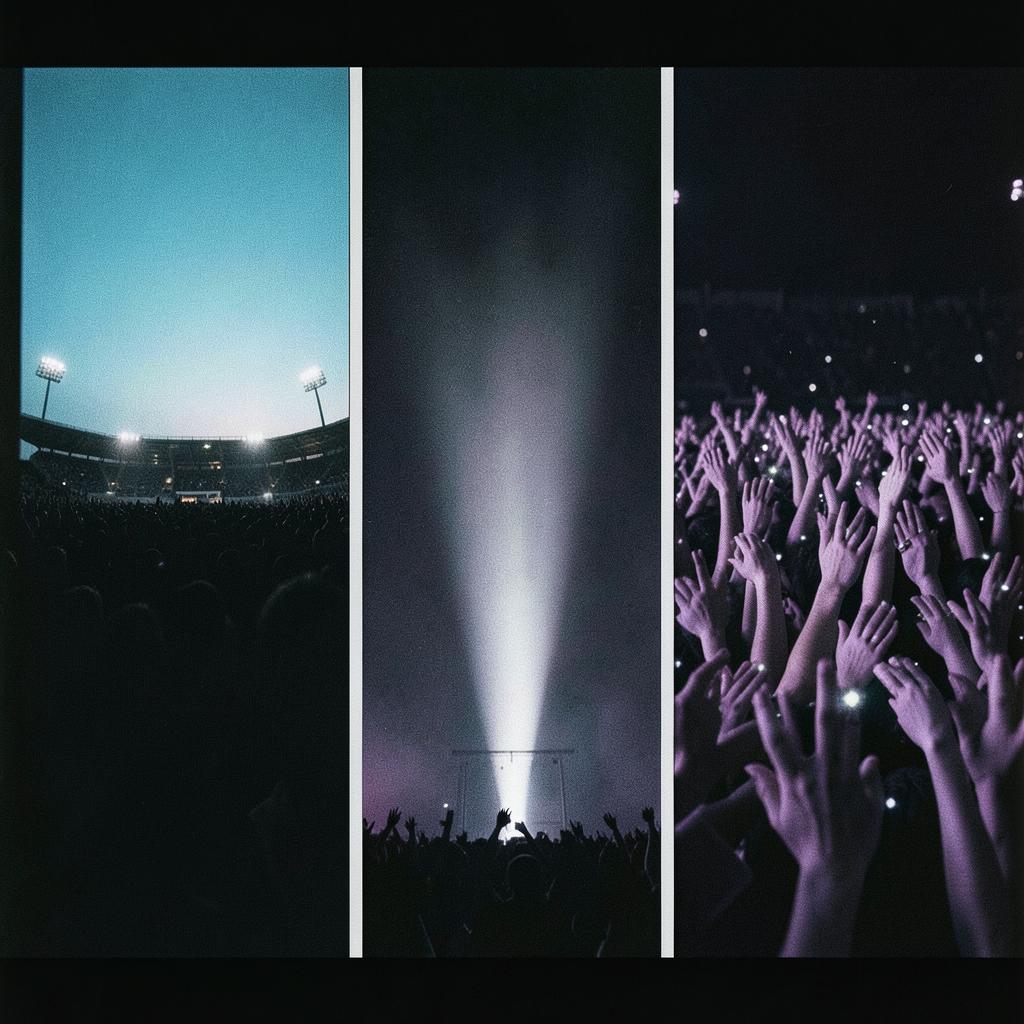
‘The stars are near tonight’ moves from private vow toward row after row of lights. Lin Juyi first carries loneliness, weather and companionship as one person's decision; only then does the choir enter. Ten thousand is not a headcount here, but the scale on which this sister song opens private commitment into collective response.
LIN JUYI · Mandarin Chinese · source lyric captions
Moon, old lattice, embroidery thread, water sleeves and one bridge draw Qixi from grand legend into an intimate air. Lingwan's clear, finely etched character voice makes ‘afraid to meet, afraid not to’ the song's real action: before crossing, the heart is allowed to pause for one beat.
LINGWAN · Mandarin Chinese · source lyric captions
The same sky, yellow flowers and frosted woods return, but 01A leaves the water-polished extended tones of 02A for a longer, more immediately singable narrative line shaped by pipa, guqin and soft strings. The text stays; the speed at which Lingwan lets go changes.
LINGWAN · Mandarin Chinese · traditional-character source captions
Mirror, flowered face, silk jacket and golden partridges are not static palace décor. Delayed rising, delayed dressing and the face caught between two mirrors let a short morning ritual hold a much longer wait. Lingwan sings all eight Wen Tingyun lines, then lets a four-line contemporary refrain enter the old lyric; classical source and present-day answer keep separate identities.
LINGWAN · Mandarin Chinese · mixed-script source captions
Fusang first brightens above a sea of cloud; only then does Dong Jun arrive through dragon carriage, thunder, cloud banners, the Heavenly Wolf and cassia wine. Dai Amei sings no reconstructed ancient rite, but a sun rising again now: twelve classical lines and ten performed contemporary lines illuminate one another while keeping their boundaries.
DAI AMEI · Mandarin Chinese · traditional-character source captions
Heaven's Gate is not scenery but a threshold for questions of long life, early death, parting and reunion. Dai Amei sings through dark clouds, rushing wind, freezing rain and the Nine Provinces: nine of fourteen classical couplet-lines are selected, while four contemporary lines return the ancient question to the present without pretending to reconstruct a rite.
DAI AMEI · Mandarin Chinese · traditional-character source captions
A cassia boat waits between the Yuan and Xiang rivers, but the clear female voice does not invent a reunion for the poem. Fourteen of Xiang Jun's thirty-eight source clauses are sung, with one repeated; six recomposed or new lines bring river, orchid banner and Dongting cloud into the present while keeping the join visible.
DAI AMEI · Mandarin Chinese · traditional-character source captions
Autumn orchids, purple stems, a cloud banner and returning wind arrive and vanish after a single meeting of eyes. The setting sings sixteen of Shao Siming's twenty-six source clauses, repeating the parting-and-new-knowledge couplet once; four recomposed or new lines bring recognition into the present without settling the deity's identity, gender or speaking voices for a long commentary tradition.
DAI AMEI · Mandarin Chinese · simplified-character source captions
Autumn wind raises Dongting waves and leaves fall across the water, but waiting receives no easy answer. The setting sings fourteen distinct clauses from Xiang Furen's forty received clauses, repeats its title clause once and joins them to seven recomposed or contemporary lines while keeping the seam visible.
DAI AMEI · Mandarin Chinese · mixed-script source captions
Pine-like branches, mountain rain, hidden bamboo and an absent traveller keep Mountain Spirit's waiting inside a dark forest. The setting selects twelve distinct clauses from the received text's twenty-seven, repeats three at the close and adds seven recomposed or contemporary lines—without treating a female voice as proof of the spirit's gender, a reconstructed rite or a living community's identity.
DAI AMEI · Mandarin Chinese · simplified-character source captions
New rain, moon among pines, water over stone, returning washerwomen and a fishing boat do not make the mountain uninhabited; quiet and ordinary life arrive together. The setting sings all eight lines of Autumn Evening in the Mountains, then adds five verbatim reprises and nine recomposed or contemporary lines inside a complete slow song.
DAI AMEI · Mandarin Chinese · simplified-character source captions
River water, willow, eastern sun and western rain turn weather into an emotional pun. This setting does not pretend to reproduce the poem verbatim: three source lines remain, 唱歌聲 becomes 踏歌聲 in the second, and nine contemporary lines carry the riverside waiting into a complete slow song.
DAI AMEI · Mandarin Chinese · traditional-character master / simplified source captions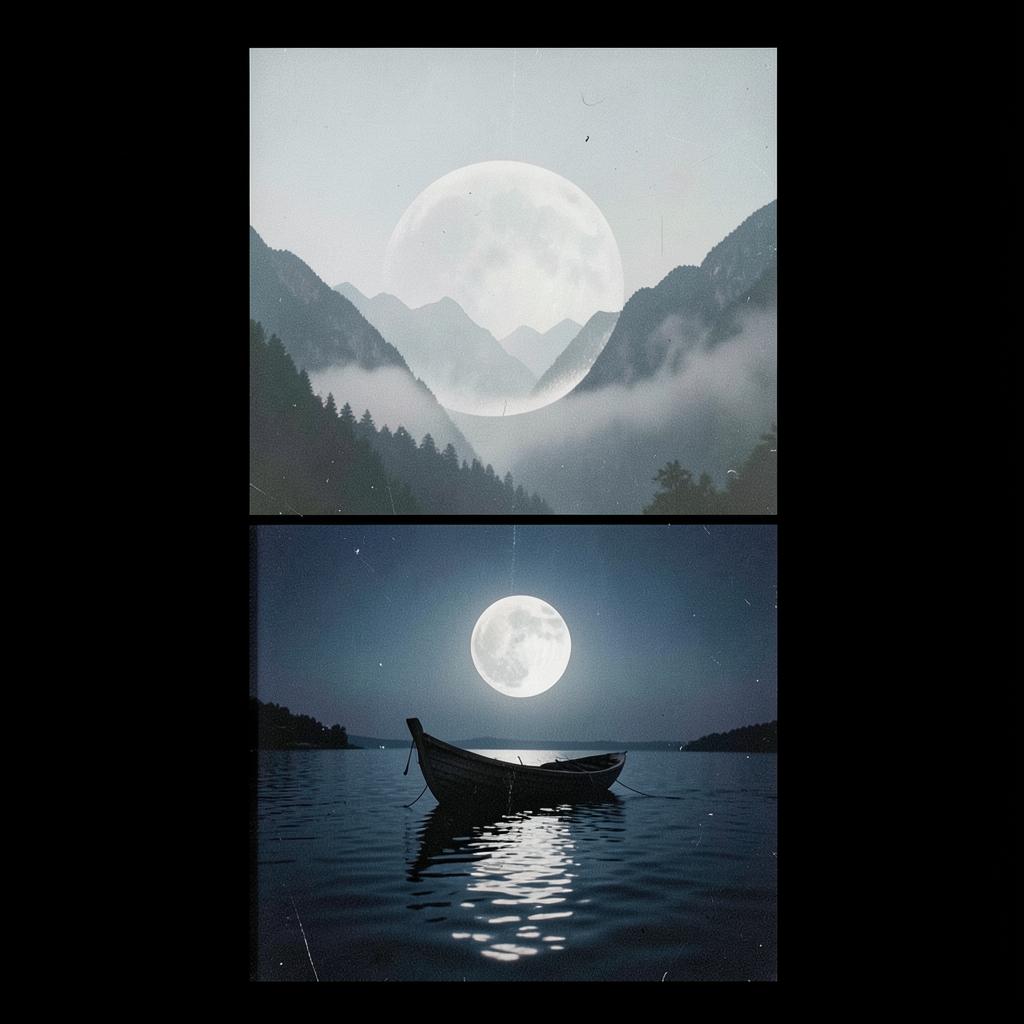
An autumn half-moon enters the Pingqiang River from Emei, then travels through Qingxi, the Three Gorges and Yuzhou. All four of Li Bai's lines remain, but 212 seconds are not disguised as a recovered Tang score: ten contemporary line positions keep boat, voice and distance moving downstream.
DAI AMEI · Mandarin Chinese · traditional-character master / simplified source captions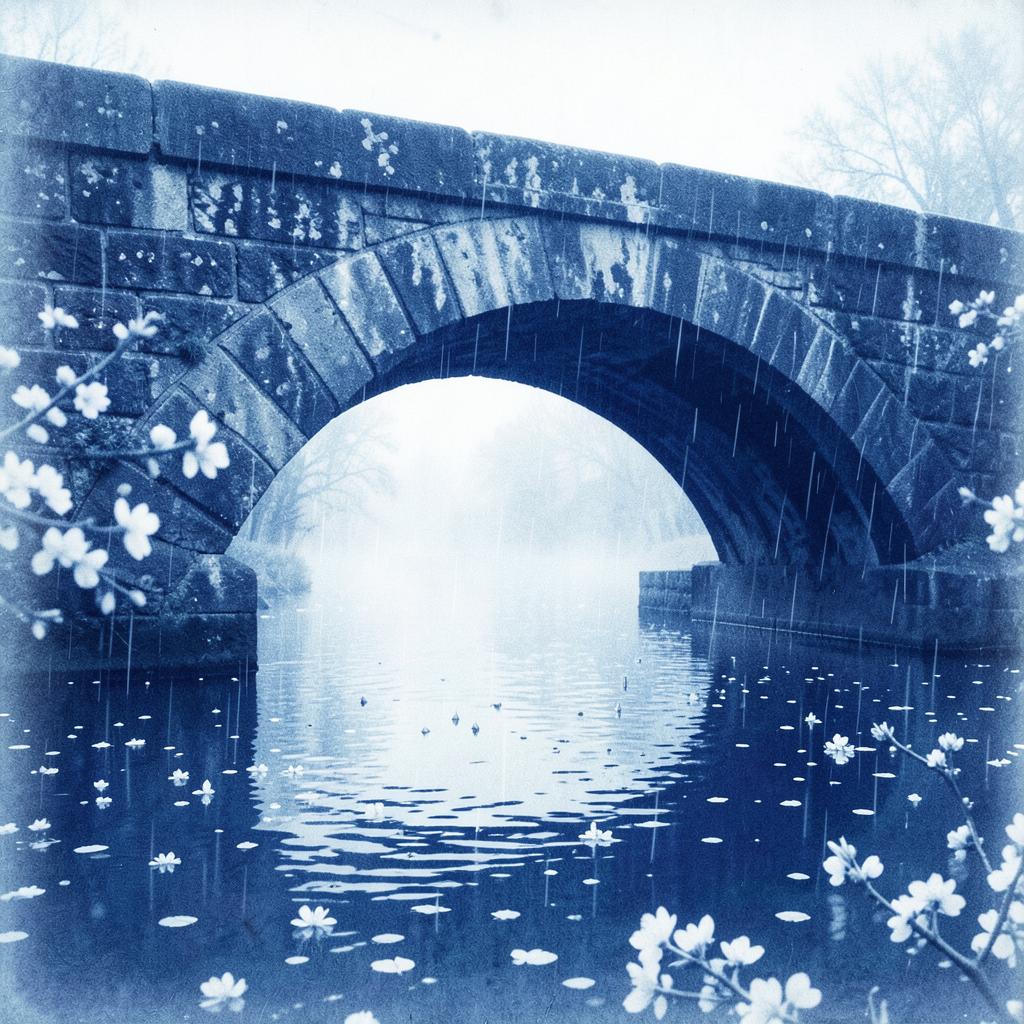
No light step crosses Hengtang; only a gaze, a moon bridge, dusk over the fragrant bank and plum-season rain remain. The song carries He Zhu's celebrated grass, willow floss and rain while separating textual witnesses, alterations and new refrains. Its three minutes thirty-five seconds are a contemporary setting—not a recovered Song score.
DAI AMEI · Mandarin Chinese · traditional-character master / simplified source captions
Under the Chang’an moon, households beat cloth while autumn wind carries longing toward the Jade Gate. The song keeps all six lines of Li Bai’s Autumn Song before adding city walls, clothing and a hoped-for return. Its black-and-white source image mistakes clothes-beating for a mortar and pestle; the AI visual error stays disclosed rather than being passed off as Tang-life reconstruction.
DAI AMEI · Mandarin Chinese · traditional-character master / simplified source captions
Spring tide meets the sea as the moon rises with it; flower woods resemble sleet and white sand vanishes into flowing frost. The song begins with the opening eight lines of Zhang Ruoxu’s Spring River, Flowers, Moon, Night, then gives the water’s edge to a four-line contemporary refrain. A crayon-like giant yellow moon, winding river and pink flowers form a childlike source image—not a Tang landscape or record of living Dai life.
DAI AMEI · Mandarin Chinese · traditional-character master / simplified source-prompt captions
Someone crosses the water for lotus, intending the flower for a distant beloved, then looks back toward home across an immeasurable road. The song carries the full eight-line narrative before moonlight falls on a sleeve and an undelivered flower becomes present-tense longing.
DAI AMEI · Mandarin Chinese · mixed traditional/simplified source-prompt captionsEvening commuters pass a city river as lights fall into the water. Someone who has not looked back for too long removes one earbud and suddenly hears home. Clear Water River is not a named point on a map, but an imagined route from urban hurry toward moonlit stilt-house memory and an inward home.
DAI AMEI · Mandarin Chinese · contemporary urban-homecoming original
‘Lotus picking at Southern Pond in autumn’ enters a small boat from Southern Dynasties yuefu. After four inherited lines, river wind, moonlight, the lotus seed’s faint bitterness and someone still waiting carry the story into the present.
DAI AMEI · Mandarin Chinese · four-line Southern Dynasties yuefu excerpt with contemporary continuation
One moon shines on both frontier passes and a bamboo house. Beginning with one exact Wang Changling line, the song rewrites Qiang flute, willow and the Jade Gate into a contemporary homesickness that hulusi can answer.
DAI AMEI · Mandarin Chinese · one exact Tang line, two recomposed frontier-poetry allusions and contemporary writing
‘The hulusi asks the bamboo grove; the bansuri answers deep in the night.’ Instead of melting two voices into vague exotic colour, the song lets them hear one another across distance and turns that distance into a complete quiet ballad.
DAI AMEI · Mandarin Chinese · contemporary writing and a Dai / South Asian sound collision
‘Not every passionate love must be shouted into the centre of the world.’ The hook lies in that quiet reversal: love grows not through louder drums, but through moonlight resting on a shoulder and breath carrying each word close to the ear.
BREATHY FEMALE · Mandarin Chinese · breathy female intimacy and a South Asian slow sway
‘The light is not out; the song is not over.’ A glass, half a moon and a tavern afraid to speak too loudly keep an unfinished love until morning. Breathy Female does not enlarge the hurt; she lets memory sway almost imperceptibly.
BREATHY FEMALE · Mandarin Chinese · breathy female intimacy and a dim cabaret ballad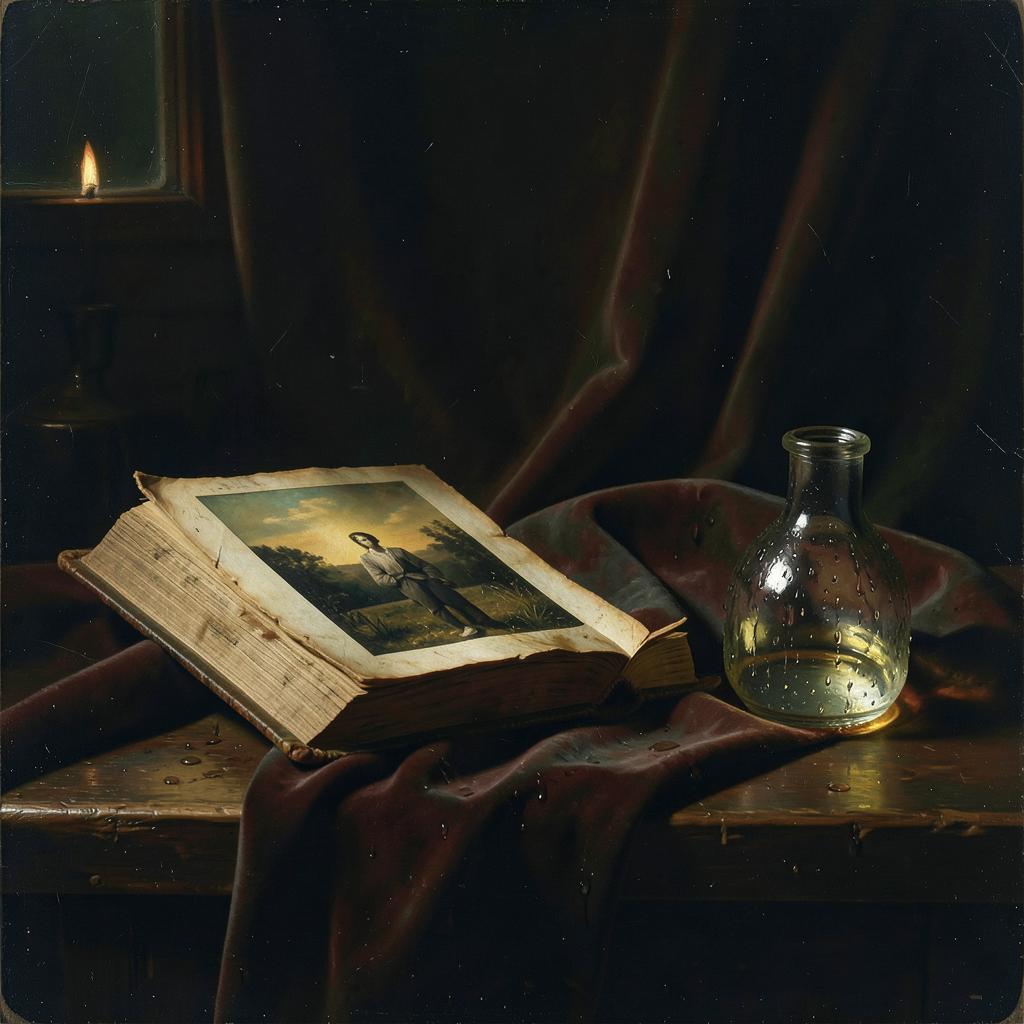
‘The rain is close; so are you.’ An umbrella left by the door and an old photograph pressed between pages bring an unfinished sentence back beside the ear. Breathy Female makes distance feel small without allowing the voice to dissolve.
BREATHY FEMALE · Mandarin Chinese · Breathy Female and a close-mic rain ballad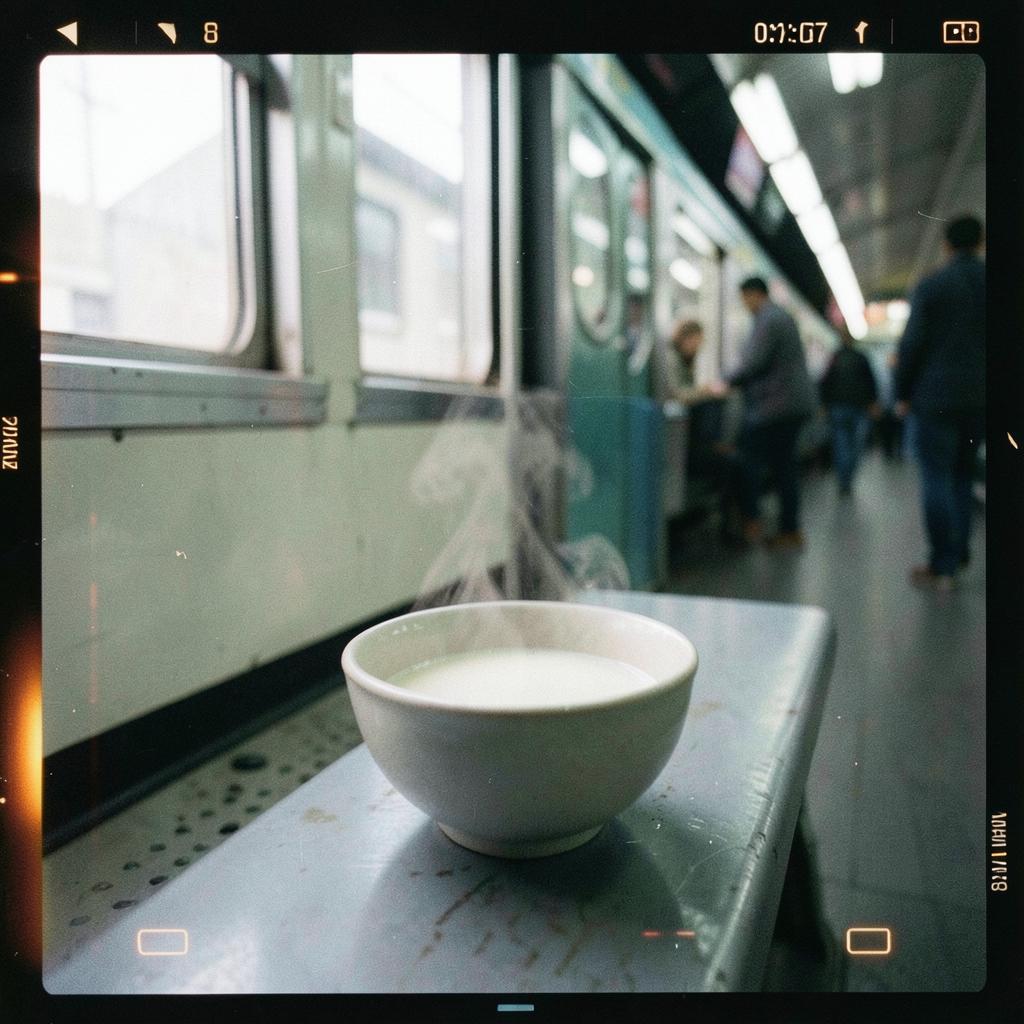
Before daylight fully arrives, a metro entrance, corridor, school gate and one morning bowl are already carrying a city. Lingwan does not turn ordinary people into an inspirational poster. Her clear, grounded voice lets a day without applause possess its own light.
LINGWAN · Mandarin Chinese · Lingwan opens a city-at-morning suite
A lamp, a row of people and an imagined city move from silence into one voice. Lin Juyi first faces the wall alone, then hands the answer to a choir. This third chapter completes Lights of the Human World—and makes all three Four-Lead Suites fully playable, 12 / 12.
LIN JUYI · Mandarin Chinese · Lin Juyi and a choir wave above imagined ruins
“Who is singing by the Peacock River?” A peacock opens its feathers beside moonlit water, silver ornaments and a small fire. Dai Amei sings an unhurried song of waiting: the wind turns cool, and the moon keeps watch in her place.
DAI AMEI · Mandarin Chinese · contemporary writing and Dai peacock imagery
‘One was a date tree, and the other was also a date tree.’ Lingwan does not turn Lu Xun's uncanny repetition into a classroom recitation. Sparse piano, low cello and xiao draw the back garden close before a clearly disclosed contemporary refrain answers its high, cold sky.
LINGWAN · Mandarin Chinese · selected Lu Xun text and a contemporary refrain
Jiangnan snow is moist and beautiful; northern snow turns like powder and sand across a boundless wilderness. Mary does not choose a winner between them. Her grounded mezzo carries the turn from news of youth toward a solitary spirit.
MARY-COUNTRY · Mandarin Chinese · selected text from Lu Xun's Snow
Heaven, hell and the future golden world all contain what the shadow rejects. Male Slow keeps ‘I will not go’ low and recurring until farewell becomes more than leaving a friend: it is a refusal to be absorbed by any ready-made destination.
MALE SLOW · Mandarin Chinese · selected Lu Xun text and a contemporary closing line
Lotus fragrance fades, the jade mat turns autumn-cool, wild geese cross a moonlit western chamber. Dai Amei carries Li Qingzhao's complete lyric into today's headphones, then answers it with one new line—‘Amei softly sings late autumn’—without blurring inheritance and new writing.
DAI AMEI · Mandarin Chinese · Li Qingzhao's complete lyric with a contemporary refrain and variation
A single handkerchief carries what cannot be spoken openly. The female lead keeps tears, verse and illness close while a male echo remains distant; this complete 3:27 master finally joins the character essay and public film to a fully playable work.
Weiyang Sound · Mandarin Chinese · Dream of the Red Chamber character study
Qingwen is not a portrait of passive fragility. She is too truthful, too bright and unwilling to bow; this complete 3:23 lament carries pride, injury and a life destroyed by slander without smoothing away her edge.
Weiyang Sound · Mandarin Chinese · Dream of the Red Chamber character study
Miaoyu chooses purity and is also confined by it. She withdraws from the world, yet the world will not release her. This complete 3:02 lament places temple, solitude and ordeal in a sparse soundscape without reducing her to aloofness.
Weiyang Sound · Mandarin Chinese · Dream of the Red Chamber character study
This is not a clipped preview but a finished one-minute-forty-eight dramatic aria. Mary's deeper mezzo questions heaven and earth through recitative, slow-banned pacing and sparse percussion; Jingkun is a contemporary generation direction, not a claim of traditional-stage performance.
MARY-COUNTRY · Mandarin song and recitative · contemporary Yuan-drama opera experiment
Violin and cello carry the melodic contour, horn opens the horizon, and piano with strings lifts the coast from sunset toward light. Without words, sea air and distance can leave a different image with every listener.
Weiyang Sound · Instrumental · symphonic cinematic-score experiment
Rather than extracting a famous line for a short song, this seven-minute setting carries the full Flower-Burial Song from fallen petals and solitude through its final question. A female lead bears the poem first, a male voice answers from afar, and the fate remains Daiyu's.
Weiyang Sound · Mandarin Chinese · female lead, male response and duet
‘All speak of a golden and jade match; I remember only the wood-and-stone vow.’ The two voices do not argue a winner for Baoyu and Daiyu; they look back from a known ending at attachment, displacement and a peace that never comes.
Weiyang Sound · Mandarin duet · Dream of the Red Chamber character study
Rock is not a singer; Cyber is the tenor. A private conviction grows into many voices becoming an ocean as Celtic hymn colours and a widening choir carry quiet resolve toward a bright horizon.
CYBER TENOR · Mandarin Chinese · Celtic hymn colours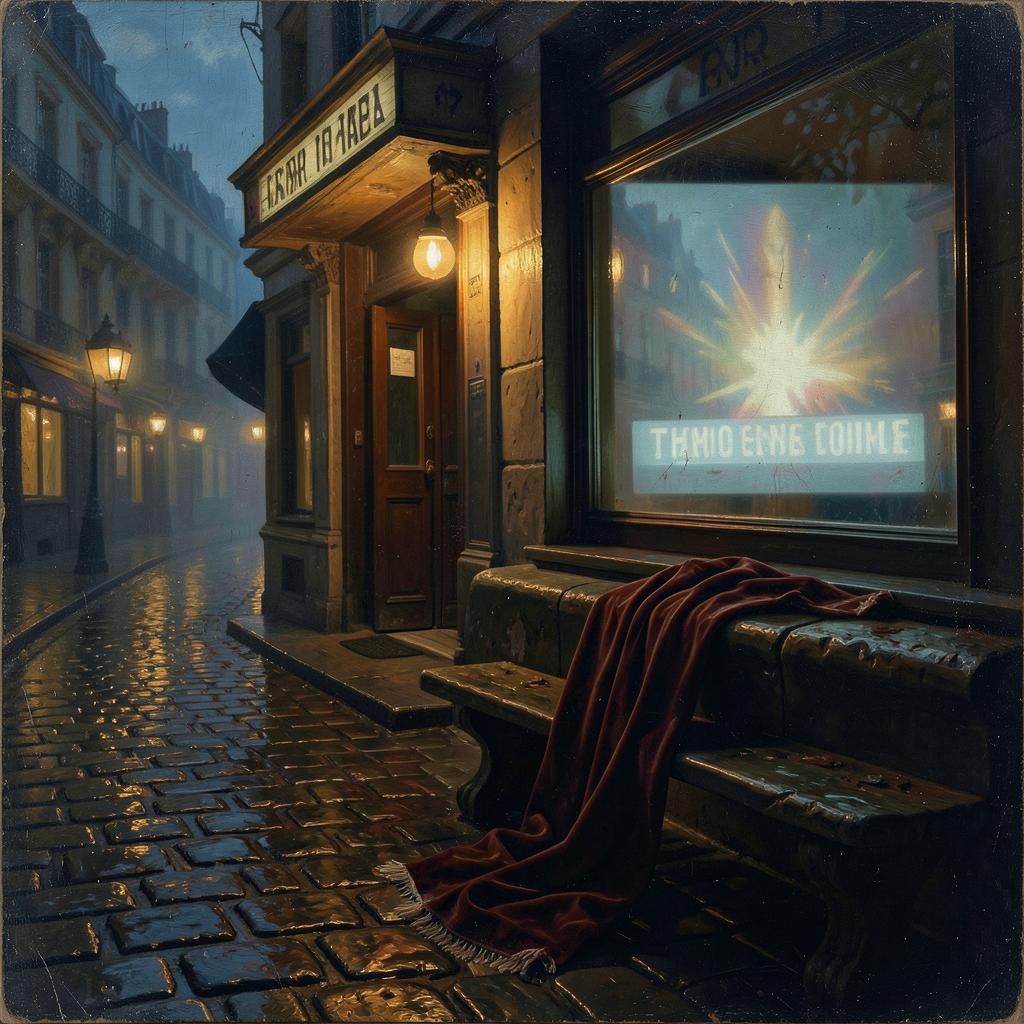
The rain has only half stopped and the old cinema light remains on. Close-miked breath, strings, piano and a trace of accordion hold an unfinished goodbye beyond the screen.
BREATHY FEMALE · Mandarin Chinese · one French phrase
Hulusi and bansuri answer one another while tabla joins bamboo house, rainforest and Ganges into a long road. Bajiao sings an unsent letter between two fields of moonlight.
BAJIAO · Mandarin Chinese · southwestern borderland and South Asian instrumental imagination
A troublesome number becomes the mileage waiting each morning. Brass, claps, funky bass and crowd call-and-response turn home charging into grounded stadium comedy.
CYBER TENOR · Mandarin song and spoken lines · comic stadium rock
Mary's warm mezzo joins passenger seat, rear-view mirror, an old gas station and a slightly open window. Acoustic guitar, harmonica and light strings give an ordinary meeting a road melody worth returning to.
MARY-COUNTRY · Mandarin Chinese · country acoustic live mashup
Tianshan moon, Jade Gate wind and a soldier's longing enter oud, ney, restrained flamenco guitar and warm strings. Mediterranean Male answers a frontier poem from another moonlit shore rather than reconstructing Tang music.
MEDITERRANEAN MALE · Mandarin Chinese · poem by Li Bai
Firelight, grey hair and a soul still recognized after many years enter a new Chinese melody, with Celtic harp, bansuri and gentle tabla carrying Yeats's long gaze into another singable memory.
Weiyang Sound · Mandarin Chinese · Celtic and South Asian duet colours
Meadow, mist and an encounter that resists explanation become a slow cinematic folk ballad, where oud, bansuri and restrained tabla keep beauty and danger side by side.
Weiyang Sound · English · dark romantic folk ballad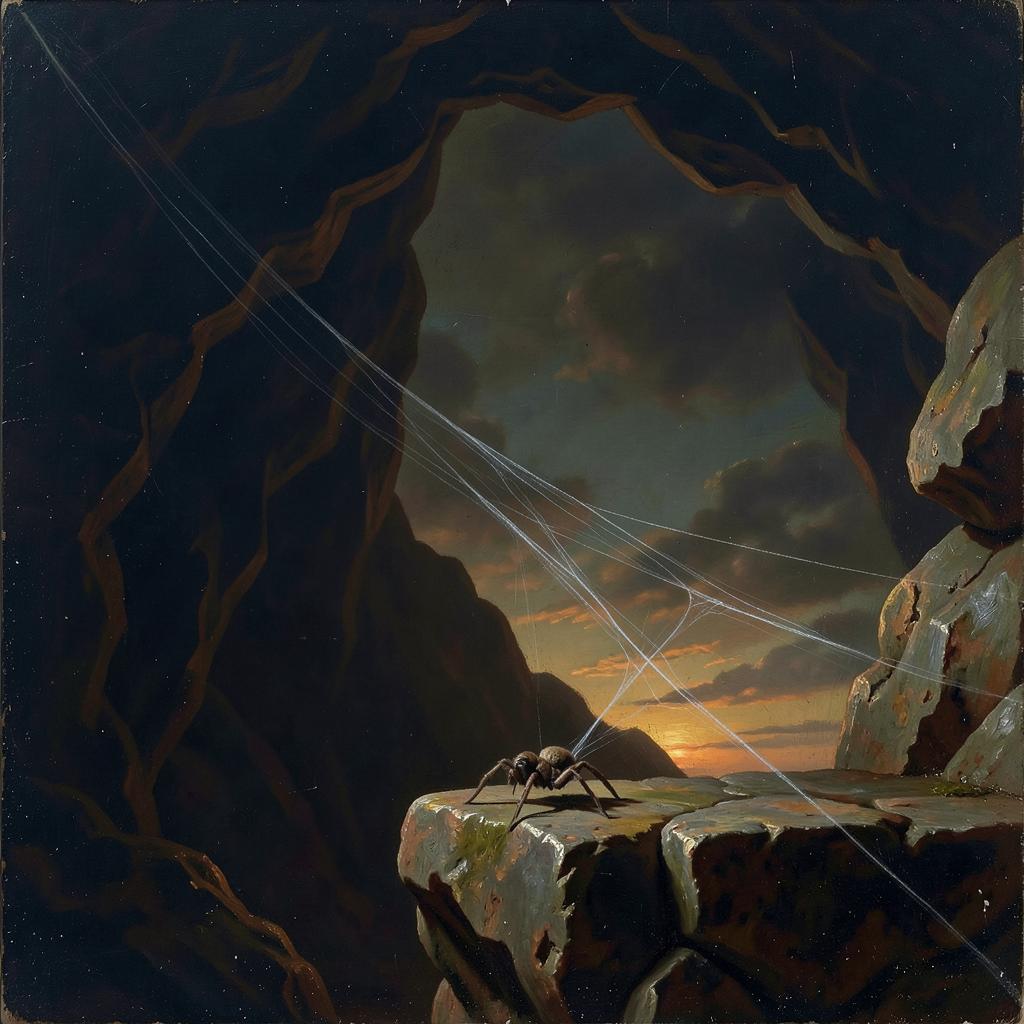
Thread after thread reaches into open space; piano, warm strings and bansuri turn solitude into the continuing act of seeking connection.
Weiyang Sound · English · spacious existential road ballad
Cherry trees bloom because a life is not endless. Acoustic guitar, Celtic harp and warm strings turn youth and time into a spring that must be walked out to meet.
Weiyang Sound · English · spring pastoral ballad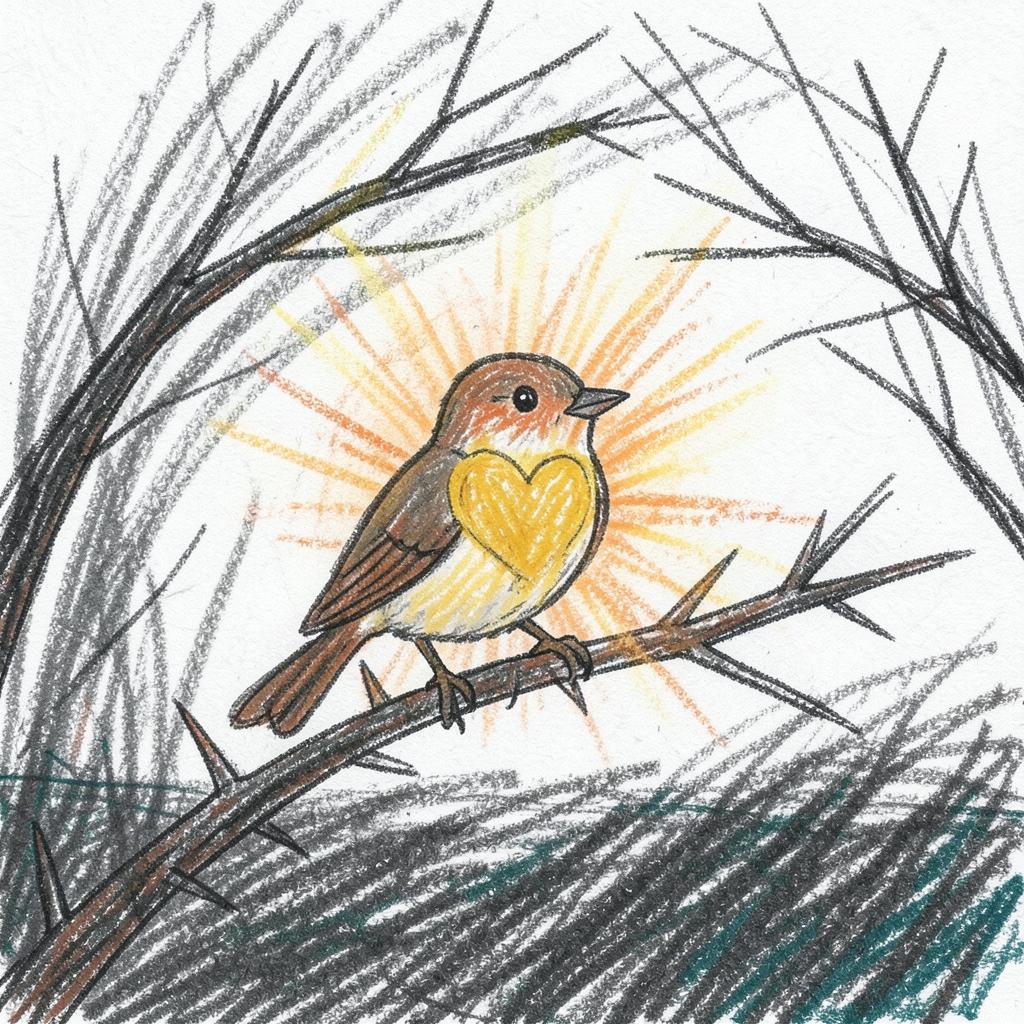
Among bare branches, dusk and the cold of an old century, a bird sings a hope the visible landscape cannot explain; cello and warm strings let that small voice rise slowly.
Weiyang Sound · English · winter-country cinematic ballad
The skylark remains unseen while its song keeps rising. Bansuri, sitar and warm strings make ascent not a stunt but a search for a freer voice.
Weiyang Sound · English · soaring art-pop ballad
Sunset, open water and stars carry the resolve to keep seeking and not yield; age and rough weather give departure more weight rather than ending it.
Weiyang Sound · English · cinematic sea ballad
Mist, orchards, bees and rivers make ripeness abundant, while parting becomes more than decline; autumn completes its own light in song.
Weiyang Sound · English · autumn pastoral ballad
Ruins, wind and empty sky leave imperial boasting in broken stone; what crosses time is not the throne, but the song still heard beyond it.
Weiyang Sound · English · desert narrative ballad
Gold is beaten thinner and one foot of the compass travels while remaining joined to its centre; distance widens love instead of breaking one soul apart.
Weiyang Sound · English · metaphysical love ballad
A relationship that repeatedly pulls close and pushes away loses control through 3 a.m. calls and rain-lit streets; leaving becomes clarity rather than erasure.
Weiyang Sound · Mandarin Chinese · urban relationship ballad
Guzheng, pipa, xiao and river mist carry the three searching stanzas; Lingwan keeps the distance across the water luminous while the modern bridge remains distinct.
LINGWAN · Mandarin Chinese · Lingwan
Autumn lamp, tearful candle, sparse bamboo and night-long rain carry Daiyu's solitude from one window across the Grand View Garden.
Weiyang Sound · Mandarin Chinese · Lament of Emptiness vocal group
Autumn wind scatters red lotus shadows while an unfinished chessboard and sibling farewell leave Purple Caltrop Isle in cold water-light.
Weiyang Sound · Mandarin Chinese · Lament of Emptiness vocal group
Red beans count human longing while green hills place meeting and parting inside a longer measure of time.
Weiyang Sound · Mandarin duet · Emptiness-contemplation vocal group
Beyond a family's rise and fall, one act of grace crosses danger and returns as a late echo.
Weiyang Sound · Mandarin duet · cause-and-consequence contemplation
Late splendour unfolds beside life's edge; the brighter it becomes, the more clearly fate can be heard tightening.
Weiyang Sound · Mandarin duet · Emptiness-contemplation vocal group
The Zhongshan wolf is not a decorative allusion but the violence closing in on Yingchun's marriage and life.
Weiyang Sound · Mandarin duet · Emptiness-contemplation vocal group
Looking back at the blue planet from space, four languages share one window through Lingwan's clear voice instead of competing for the centre.
LINGWAN · Esperanto × English × Mandarin × French · Lingwan
Flags rise overhead while Male Slow lowers the gaze: beyond the names of nations are individual people who still need to be heard.
MALE SLOW · Multilingual · Male Slow bass
After the water recedes, rebuilding is not a victory slogan but the long labour of relighting homes, repairing roofs and recognising neighbours.
MARY-COUNTRY · Esperanto × English × Mandarin × French · Mary
When the sea loses its bearings, the final beam promises no victory—only that someone is still keeping watch.
BOLLYWOOD MALE · Multilingual · Bollywood Male
Esperanto letters cross wars, borders and decades; what survives is not an abstraction but the willingness to answer a stranger.
MARY-COUNTRY · Esperanto × English × Mandarin × French · Mary
Nations enter one by one; Lingwan does not flatten them into one culture, but makes the shared night luminous.
LINGWAN · Esperanto × English × Mandarin × Spanish · Lingwan
The museum is quiet at night, yet return and reconciliation give each stone a place of origin and let memory leave the glass case.
MALE SLOW · Esperanto × English × Mandarin × French · Male Slow bass
Watching Earth rise from the Moon makes borders disappear for a moment, bringing a blue home and human fragility into the same song.
BOLLYWOOD MALE · Esperanto × English × Mandarin × Spanish · Bollywood MaleRain road, river wind and a rowan tree turn waiting into a plainspoken English folk song as Lingwan walks lightly along a northern shore.
LINGWAN · English · Lingwan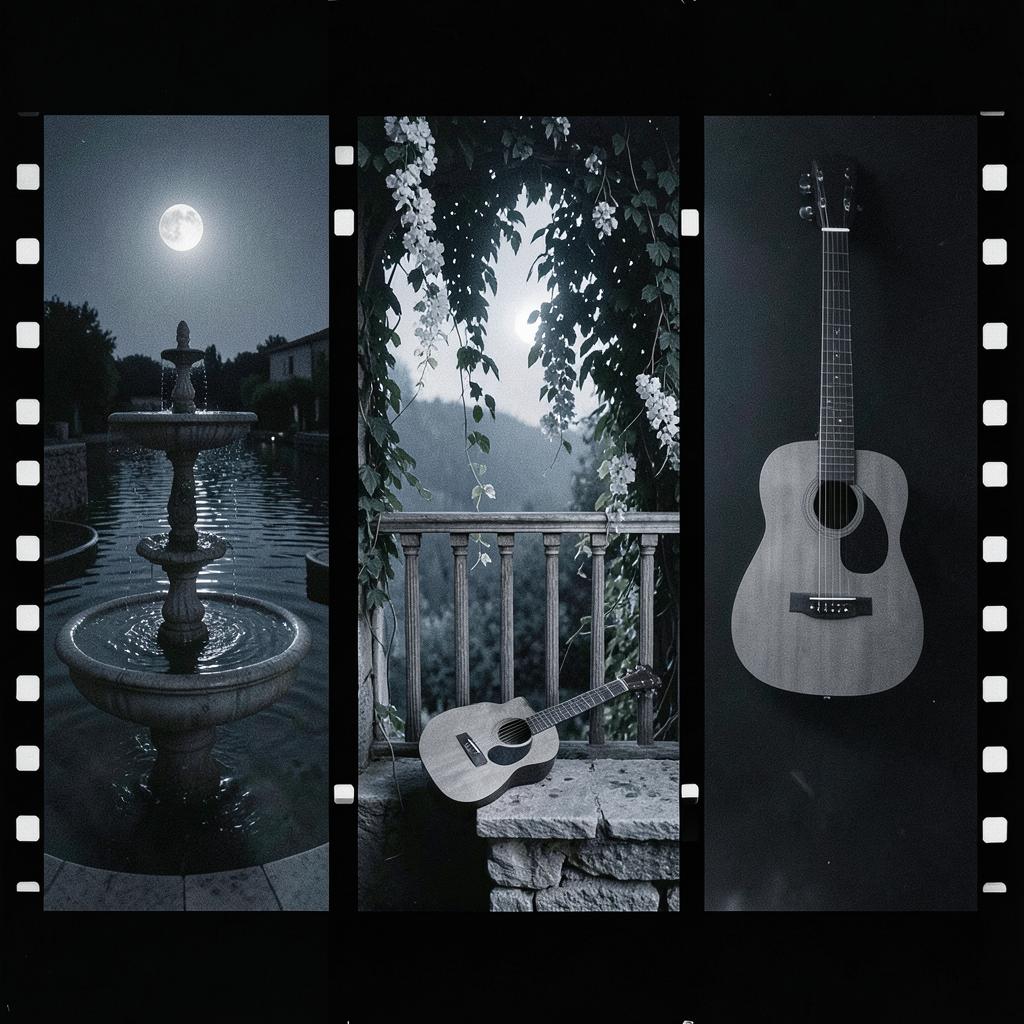
Fountain streets, a questioning guitar and Granada moonlight place a warmer shadow around Lingwan's clear voice in Spanish.
LINGWAN · Spanish · Lingwan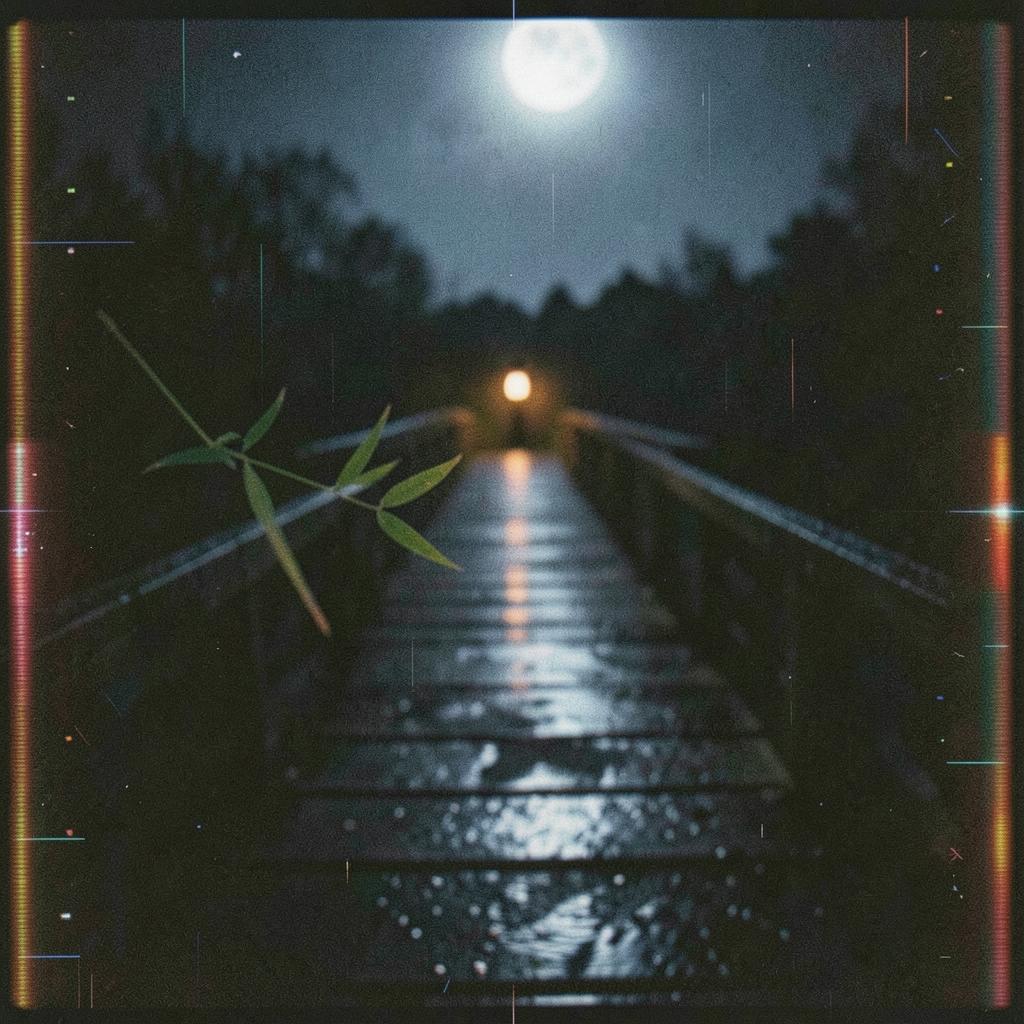
The moon descends to the river and the waiting figure on the bridge hears wind like a small bell; Lingwan makes the Japanese lullaby a restrained night letter.
LINGWAN · Japanese · Lingwan
An old Lisbon street, rain on glass and a name written by the sea let Lingwan entrust memory to the tide in Portuguese.
LINGWAN · Portuguese · Lingwan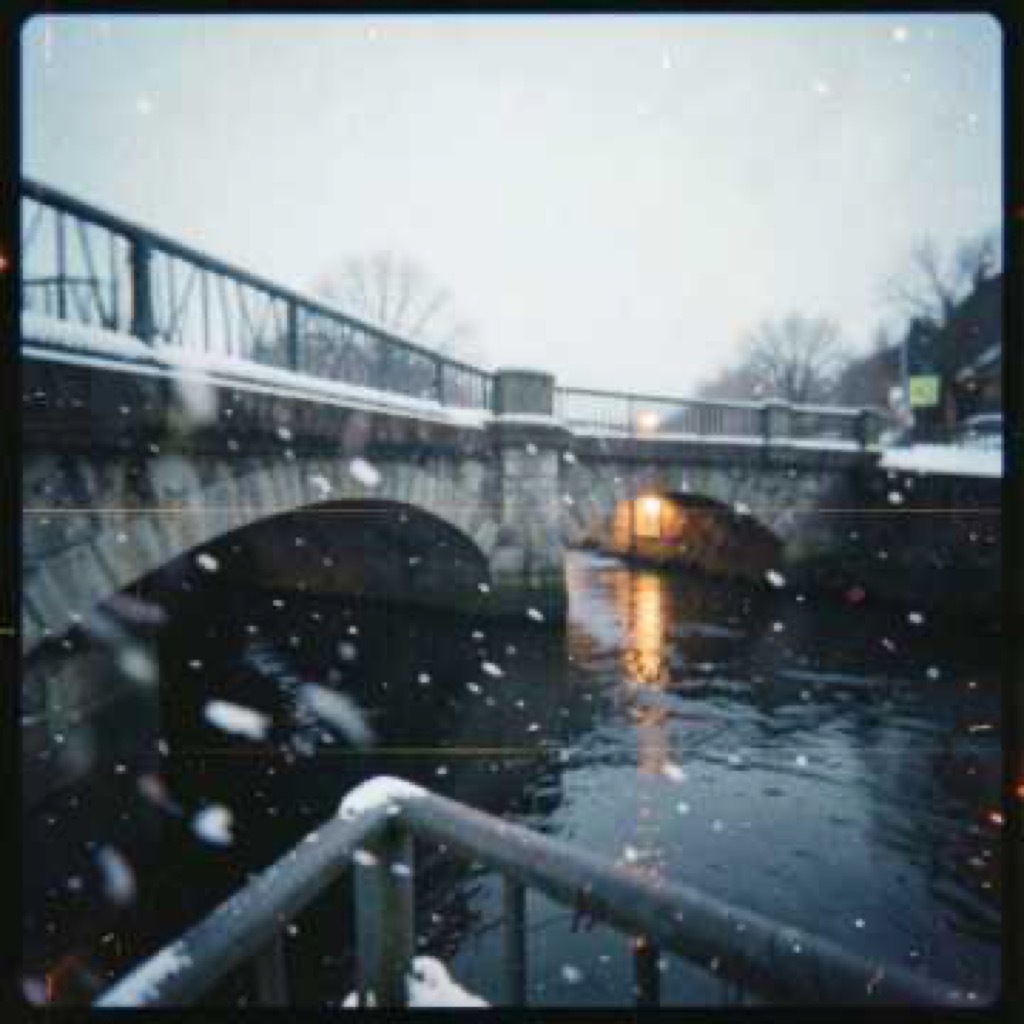
Snow, an old bridge and one lit window let Lingwan follow the slow road of a Russian romance, turning longing into a small light that survives the white night.
LINGWAN · Russian · Lingwan
A star lights the river and someone far away. Lingwan makes Esperanto intimate and clear, like a letter that can find its reader by water.
LINGWAN · Esperanto · Lingwan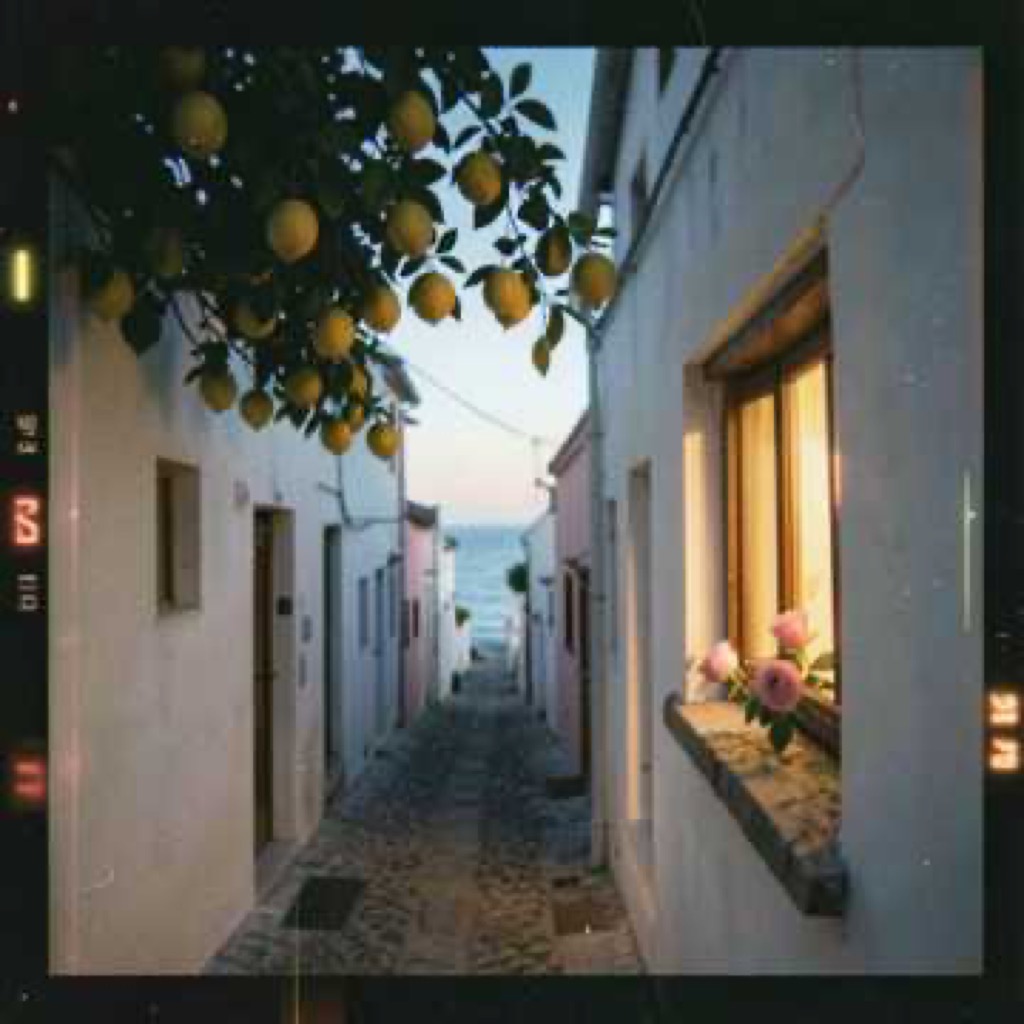
Evening wind, a lit window and the scent of lemons write return into an Italian village road; Lingwan sings without operatic display, keeping romance between people and streets.
LINGWAN · Italian · Lingwan
A white harbour, jasmine at night and Aegean moonlight let Lingwan sing a quiet Greek-language longing across the sea.
LINGWAN · Greek · Lingwan
Yellow River, lone city, Jade Gate and the ancient moon enter Celtic fiddle and low whistle; Mary's warm mezzo turns frontier verse into a cross-cultural old moon.
MARY-COUNTRY · Mandarin · Mary mezzo
Rain falls on an old station and the whistle carries away an unfinished sentence; Mary's warm low voice waits for a train that might bring yesterday back.
MARY-COUNTRY · Mandarin · Mary mezzo
No grand vow—only the everyday request to stay, carried through closeness, waiting and the space where silence can remain.
Weiyang Sound · Mandarin · contemporary original
From loom and conscription scroll to the Yellow River and a return after ten years, Bollywood Male lets courage and tenderness travel in one cinematic arc.
BOLLYWOOD MALE · Mandarin · Bollywood Male
Moonlight, distant mountains and forward-driving drums turn the pursuit of light into an East-Asian cinematic journey.
Weiyang Sound · Mandarin · Eastern cinematic song
Yexi, lotus gathering and laughter on water enter a light female water song; bamboo flute, hulusi and guqin are present-day arrangement paths, not a reconstruction of an ancient performance.
Weiyang Sound · Mandarin · classical verse reimagined
Stone walls, iron bars and a heavy doorway may enclose the body, but not love or freedom; the Mandarin lyric carries the sky from a candlelit chamber into the heart.
Weiyang Sound · Mandarin · a new song inspired by English poetry
When hours, days and nature are all traded away, the sea still breathes beneath the moon; the song seeks a quieter music that can return the heart to the waves.
Weiyang Sound · English · a new song inspired by Wordsworth
The same mountain moon enters an old rainy lane as Lin Juyi presses tenderness and scars into a deeper voice; stone paving, an unsent letter and an old lamp wait through the ending.
LIN JUYI · Mandarin · Lin Juyi's deep voice
Low cello and a distant flute light the old lamp before Male Slow carries distance, home and regret along a slowly returning mountain road.
MALE SLOW · Mandarin · Male Slow bass
Hulusi arrives from the pass and silver bells follow moonlight toward a bamboo house; Bajiao makes the same return lighter, brighter and closer to southern air after rain.
BAJIAO · Mandarin · Bajiao
One lamp lights within the crowd and each line receives an answer; Moon over the Mountain Road grows from private longing into a choir that lifts the road home wave by wave.
Weiyang Sound · Mandarin · solo lead and mixed choir
Night rain strikes the wutong leaves as Male Slow carries an emperor's memory through a restrained Yuan-drama lament.
MALE SLOW · Mandarin · Yuan drama reimagined
Back to Xianyang, past the palace wall and around the corridor: Male Slow follows the empty rooms left after Zhaojun's departure.
MALE SLOW · Mandarin · Yuan drama reimagined
The Nile, Yangtze and Danube flow through memory as Esperanto and Mandarin carry war, reunion and a river toward peace.
MALE SLOW · Esperanto × Mandarin · Male Slow
One star shines over old city and harbour as Lingwan lets longing in a mother tongue meet Esperanto's bridge of light.
LINGWAN · Esperanto × Mandarin · Lingwan
A moonlit harbour, old guitar and empty chair hold an unfinished love; the dark sea does not swallow light—it makes each glimmer clearer.
Weiyang Sound · English · Mediterranean cinematic ballad
The song in the Highland field cannot be understood, yet travels in the heart long after; Bollywood Male keeps the valley, grain and echo at full distance.
BOLLYWOOD MALE · English · Wordsworth reimagined
Two trees rise into a strange high sky; Lingwan turns their unbending outline into the first cold light of a four-part Autumn Night.
LINGWAN · Mandarin · Lu Xun's Autumn Night reimagined
Between cold stares and night birds, a little pink flower keeps dreaming; Mary's mezzo turns fragility into tenderness that will not leave.
MARY-COUNTRY · Mandarin · Lu Xun's Autumn Night reimagined
A strange high sky presses down and dark birds cross the moonlight; Male Slow does not chase fear, letting the night acquire its own weight.
MALE SLOW · Mandarin · Lu Xun's Autumn Night reimagined
The final movement does not rush toward victory. It leaves the flower's dream and the trees' defiance with the heroes, carried by Male Slow as a quiet memorial.
MALE SLOW · Mandarin · Lu Xun's Autumn Night reimagined
The same shadow departs along another bass melody. It stands beside the earlier recording so listeners can hear a different pace, weight and distance in the final turn.
MALE SLOW · Mandarin · alternate complete recording of The Shadow's Farewell
Southern and northern snow meet again in Mary Country's mezzo. This is a short but complete independent recording, not an excerpt from the earlier version.
MARY-COUNTRY · Mandarin · alternate complete voice edition of Snow
Schemes, a scattered household and a collapsing mansion become a sharp, desolate look back at Wang Xifeng's life through two voices.
Weiyang Sound · Mandarin duet · a Red Chamber character fateAfter seeing through the spring seasons, blossoms, grave grass and the tree of release stand together. Xichun's awakening becomes a character's sober path, not decoration.
Weiyang Sound · Mandarin duet · Xichun's Red Chamber song
Spring ends beneath painted beams and fragrant dust falls as the Ning household's splendour and inherited ruin reach their conclusion in a restrained duet.
Weiyang Sound · Mandarin duet · a song text from Dream of the Red Chamber
Households fade, wealth scatters and debts find their ends before the world turns vast and white. This is not a ranking, but the closing of an ensemble of fates.
Weiyang Sound · Mandarin duet · Red Chamber finale
Sunlight reaches the bed, the phone is still charging and clothes remain on the floor. The song lets an ordinary day move a little more slowly.
Weiyang Sound · Mandarin · everyday-life slow song
A half-heard sentence is finally answered between half a glass and years of hesitation. Nangma is a writing and arrangement direction here, not a claim to a real Lhasa performance or living tradition.
Weiyang Sound · Mandarin · a restrained love song with Nangma-inspired generation cues
An English female voice looks back from the coast while Cyber Tenor carries the Mandarin answer upward. The languages do not translate each other; they exchange one unfinished love across the tide.
CYBER TENOR · English × Mandarin · female voice and Cyber Tenor in alternation
A spring afternoon, old streets, letters and a mountain road never taken are opened again by the wind. The song does not rush to recover anyone; it lets one name keep its echo across the years.
Weiyang Sound · Mandarin · piano-and-cello memory ballad
One person receives noise, pain and scattered memories, then weaves them back into warmth. The light here is not a slogan but what feeling becomes after passing through the body.
Weiyang Sound · Mandarin · contemporary soul-and-choral lift
Blue LEDs, mirrored windows, airplane mode and high-definition unreality make a night city that refuses to stop. The pair are not without an address; both keep orbiting the same mistake.
Weiyang Sound · Mandarin · electronic urban relationship song
Red, blue, black glass, gold lines and bone-white seams remain visible. Wholeness does not erase the cracks; it lets every piece finally find its place.
Weiyang Sound · Mandarin · fragments and self-reconstruction
Qixi waits for another meeting while Yeats looks back from old age. Galaxy, firelight and pilgrim soul meet inside one song without losing their different kinds of time.
Weiyang Sound · Mandarin × English · Qixi meets Yeats
Rain moves through dense leaves while silver bells join two distant paths. Bajiao does not hurry to arrive; the song lets each step follow the rainforest breath.
BAJIAO · Mandarin · Bajiao world-music ballad
Boat lights move close to black water while the river wind returns unfinished words to shore. Bajiao holds the night voyage between wide space and close voice.
BAJIAO · Mandarin · Bajiao river-night song
After the flower market closes, an old umbrella remembers the rain once shared. As the crowd fades, Bajiao brings the story back to two people.
BAJIAO · Mandarin · Bajiao city folk
Moonlight opens along the ridge as an old road gathers horse bells, tea fragrance and present-day footsteps into one journey home.
BAJIAO · Mandarin · Bajiao mountain-road narrative
The lantern market is still bright, yet the traveller recognises only the light by one doorway. Noise and quiet alternate until homecoming becomes a concrete act.
BAJIAO · Mandarin · Bajiao homecoming ballad
A little train rounds the mountainside as mist, villages and old station signs pass the window. Bajiao sings departure as movement that remains tied to home.
BAJIAO · Mandarin · Bajiao travel folk
Sea fog hides the far shore while an old letter returns a voice from years ago. Mary's warm mezzo holds the homeward journey that was never fully sent.
MARY-COUNTRY · Mandarin · Mary Celtic-coast ballad
The road does not answer why anyone left; distant hills slowly close behind. Mary sings homecoming as a gradual return, one step at a time.
MARY-COUNTRY · Mandarin · Mary homecoming folk
Rain presses the sea into darkness while fishing lights still cross from afar. Mary leaves a direction that remains visible through weather and night.
MARY-COUNTRY · Mandarin · Mary harbour-night song
Dusk darkens the sea as a white sail passes through the final light. Mary does not chase it; the melody holds farewell and blessing together.
MARY-COUNTRY · Mandarin · Mary coastal folk
The stone house does not say who once lived there, yet moonlight returns to its doorway. Mary draws silent walls, sea wind and waiting close in her lower register.
MARY-COUNTRY · Mandarin · Mary moonlit folk
Wind crosses the blue headland, carrying the old letter, distant hills, fishing lights, white sail and moon from the first five songs into open water. Mary keeps moving in the finale.
MARY-COUNTRY · Mandarin · Mary Celtic-coast finale
After the rain, an old road stretches streetlights, wheat-scent and unfinished words into the distance. Mary's low warm mezzo stays until the night begins to brighten.
MARY-COUNTRY · Mandarin · Mary country-folk ballad
An old letter returns through moonlight on the Ganges as sitar, bansuri and a low mezzo turn distance into an audible echo.
MARY-COUNTRY · Mandarin · Mary South Asian cinematic ballad
Blue paper rests inside a book while a rainy-night accordion returns a late whisper to the table. Mary keeps the smoky city romance clear and grounded.
MARY-COUNTRY · Mandarin · Mary chanson-coloured ballad
Sea wind crosses an old pier while dusk feels like a slow film still playing. Mary sings an unfinished name into Mediterranean-coloured end credits.
MARY-COUNTRY · Mandarin · Mary Mediterranean cinematic ballad
Rain falls on distant hills and a late letter returns on the wind. Mary's warm lower register and Celtic strings turn waiting into renewed approach.
MARY-COUNTRY · Mandarin · Mary Celtic-country ballad
The lighthouse comes on while the sea stays silent. Piano, restrained electric guitar and a late-rising choir lift the horizon as Mary keeps the remaining light without shouting.
MARY-COUNTRY · Mandarin · Mary slow-burn rock ballad
Sea fog hides the end of the cliffs, but a letter returns distance to the hand. Tin whistle, fiddle and Mary's warm mezzo rise gradually into the chorus.
MARY-COUNTRY · English · Mary Celtic literary ballad
Green hills keep appearing beyond the mist like patient waymarks. Mary sings homecoming as something both wide and close to the next footstep.
MARY-COUNTRY · English · Mary Celtic homecoming ballad
After midnight, harbour lanterns remain one by one, lighting the tide and unfinished words. Mary turns darkness into time that is still waiting, not simple solitude.
MARY-COUNTRY · English · Mary Celtic night song
A white sail grows smaller across the dusk. Departure is not sung as rupture, but as a distance that can still look back.
MARY-COUNTRY · English · Mary coastal folk ballad
The stone house gives no answer, but moonlight stays beside the door. Mary brings her lower register close to the night wind and keeps waiting warm.
MARY-COUNTRY · English · Mary moonlit folk ballad
Wind crosses the blue headland, carrying the letter, hills, lanterns, white sail and moonlight of the first five songs toward open water. This English finale is its own complete route.
MARY-COUNTRY · English · Mary Celtic-coast finale
Rain presses down on a city while a called name crosses water and crowds. Bollywood Male turns rescue into a human answer that refuses to go dark.
BOLLYWOOD MALE · Mandarin · Bollywood Male civic ballad
Land and sea routes stretch beneath one sky as Esperanto and Mandarin take turns receiving the traveller. Bollywood Male lets civilisations meet beyond the map.
BOLLYWOOD MALE · Esperanto / Mandarin · Bollywood Male
A mountain road carries moonlight toward a star bridge as two voices illuminate the space between remembered images and a new melody. It stands as an independent derivative work.
Weiyang Sound · Mandarin · duet · mashup-derived
A night train crosses northern darkness and distant lights. Male Slow folds departure, memory and return into the landscape receding beyond the window.
MALE SLOW · Mandarin · Male Slow bass homecoming ballad
Mist gathers along the water as a floral sash becomes memory and a road home in Bajiao's clear voice. The melody stays light while the film keeps the water to the end.
BAJIAO · Mandarin · Bajiao southwest waterside ballad
Birth, death, weeping, laughter, seeking and loss alternate across two languages. Lingwan carries an ancient sense of seasons into present breath.
LINGWAN · English / Mandarin · Lingwan bilingual poetic song
White shirts, an old playground and a camera shutter hold graduation day inside one photograph. Lingwan makes farewell a melody that can return to the same sunlight years later.
LINGWAN · Mandarin · Lingwan campus farewell ballad
Green pastures, still waters and the darkest valley alternate across two languages. Male Slow gives comfort a grounded bass voice that never rushes the listener through darkness.
MALE SLOW · English / Mandarin · Male Slow psalm ballad
An old window, quiet rain and a lamp that has stayed on for years turn return into more than a slogan. Mary's warm mezzo keeps the waiting human and the door open.
MARY-COUNTRY · Mandarin · Mary warm country ballad
The feeling of Moon over the Mountain Road enters Ganges moonlight and a Hindustani-inflected melodic arc. The tenor lifts the vow toward a wide screen while keeping Mandarin breath intact.
BOLLYWOOD MALE · Mandarin · Bollywood Male cinematic love ballad
A solitary moonlit road is received by mixed choir, widening a familiar melody from close confession into a shared echo of thousands.
Weiyang Sound · Mandarin · lead voice and massed choir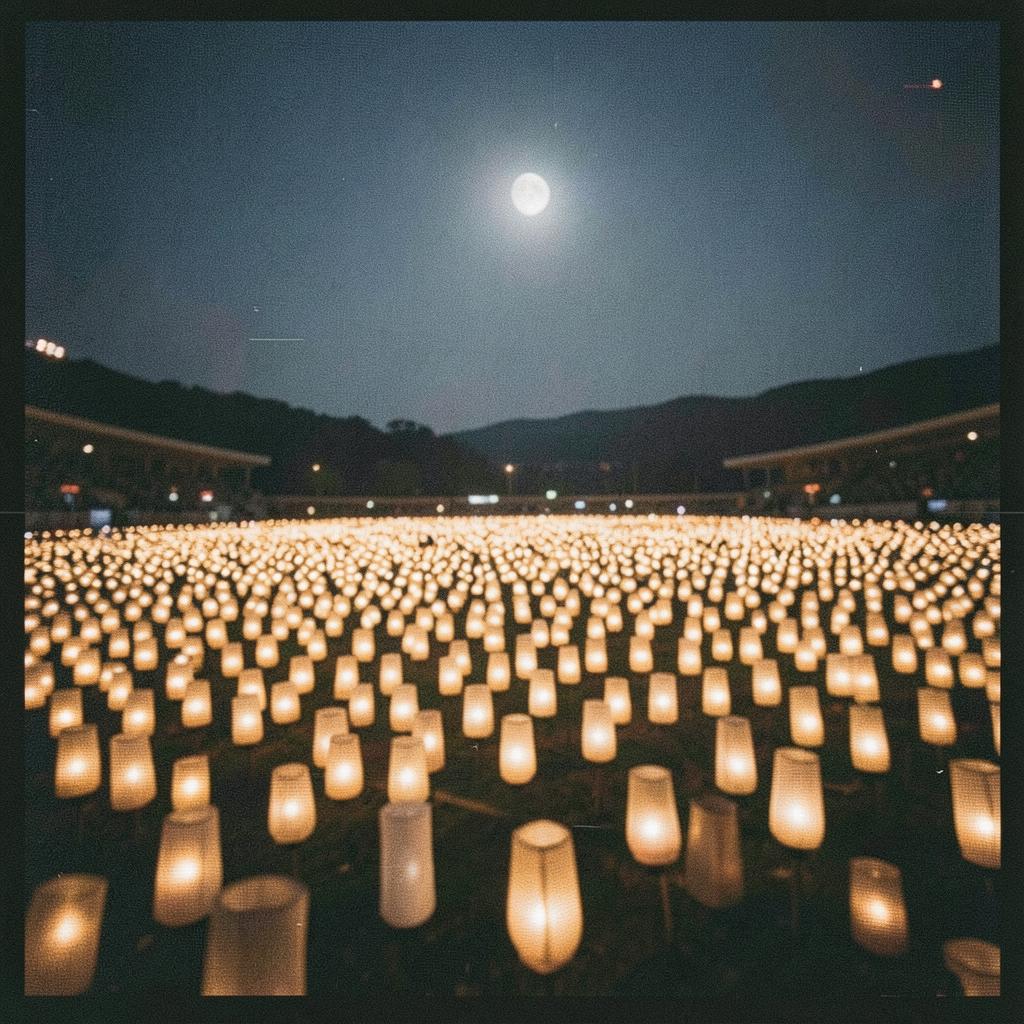
Countless lights rise from darkness. The choir begins without spectacle, letting one person's road home grow into a public space where people illuminate one another.
Weiyang Sound · Mandarin · cinematic choral finale
Lights rise one by one beside the river, revealing years in which a mother folded hardship into meals and stitches. Mary lets gratitude approach through lived warmth rather than a slogan.
MARY-COUNTRY · Mandarin · Mary Celtic literary ballad
After half a lifetime, travel is no longer only departure. Mountain roads, old letters and backward glances share one slow, steady homeward arc in Mary's mezzo.
MARY-COUNTRY · Mandarin · Mary Celtic life-road ballad
Time rings no bell; it passes quietly through windows, hair and familiar objects. Mary's unhurried mezzo holds the almost inaudible changes of autumn.
MARY-COUNTRY · Mandarin · Mary autumn Celtic ballad
A childhood road, the tree by the door and the smell of supper have not vanished; they wake again in the wind. Mary makes homeland a direction remembered by the body.
MARY-COUNTRY · Mandarin · Mary Celtic homecoming ballad
A stone handed down by fate can weigh on the step or become a marker on the road. Mary's grounded restraint turns endurance into hope without spectacle.
MARY-COUNTRY · Mandarin · Mary ballad of restrained hope
At the close, every step no longer needs a verdict. Giving the heart to distant mountains accepts life's breadth and leaves one deep breath for the traveller still moving.
MARY-COUNTRY · Mandarin · finale of Mary's six life chapters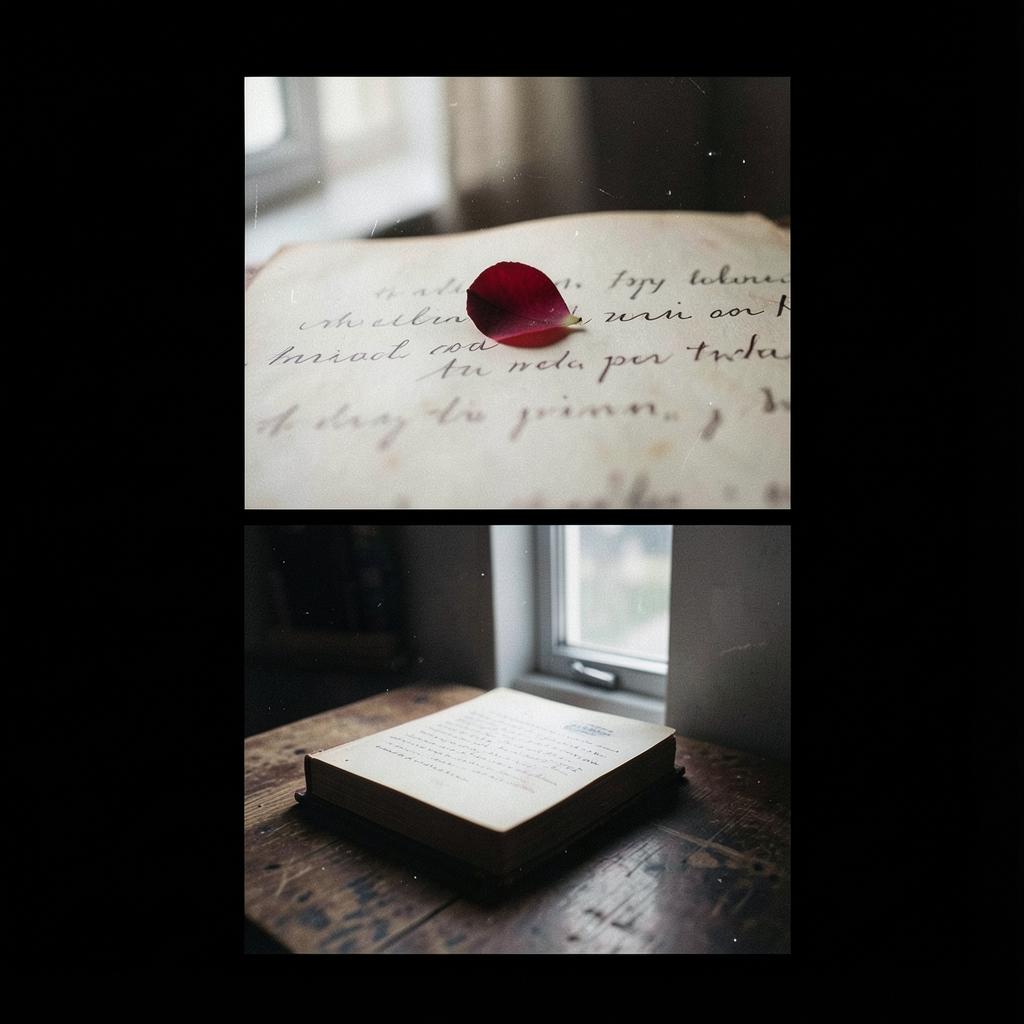
A rose pressed inside an old book keeps one vanished summer alive. Mary lets handwriting, library dust and delayed memory gather their colour again.
MARY-COUNTRY · English · Mary Celtic literary ballad
Across a winter moor where no warm window calls a name, one star refuses to go out. Mary turns an unseen ember into light enough to keep walking.
MARY-COUNTRY · English · Mary winter Celtic ballad
Bells cross the river without announcing a miracle, simply loosening grief. Mary finds quiet among violet roofs, a ferryman's lamp and water that keeps moving.
MARY-COUNTRY · English · Mary Celtic evening ballad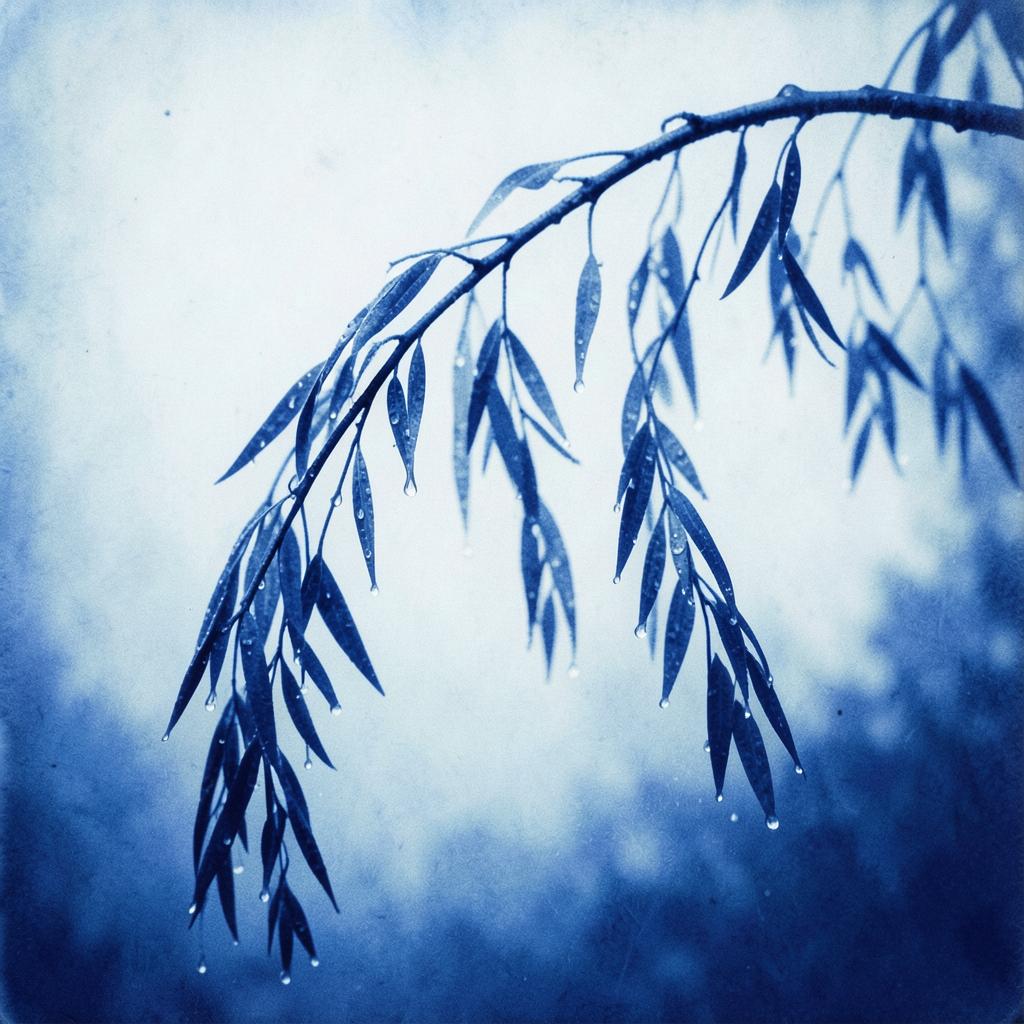
A willow learns rain by bending lower, and a person may take root again inside loss. Mary does not turn resilience into hardness; tears become a river slowly.
MARY-COUNTRY · English · Mary Celtic ballad of resilience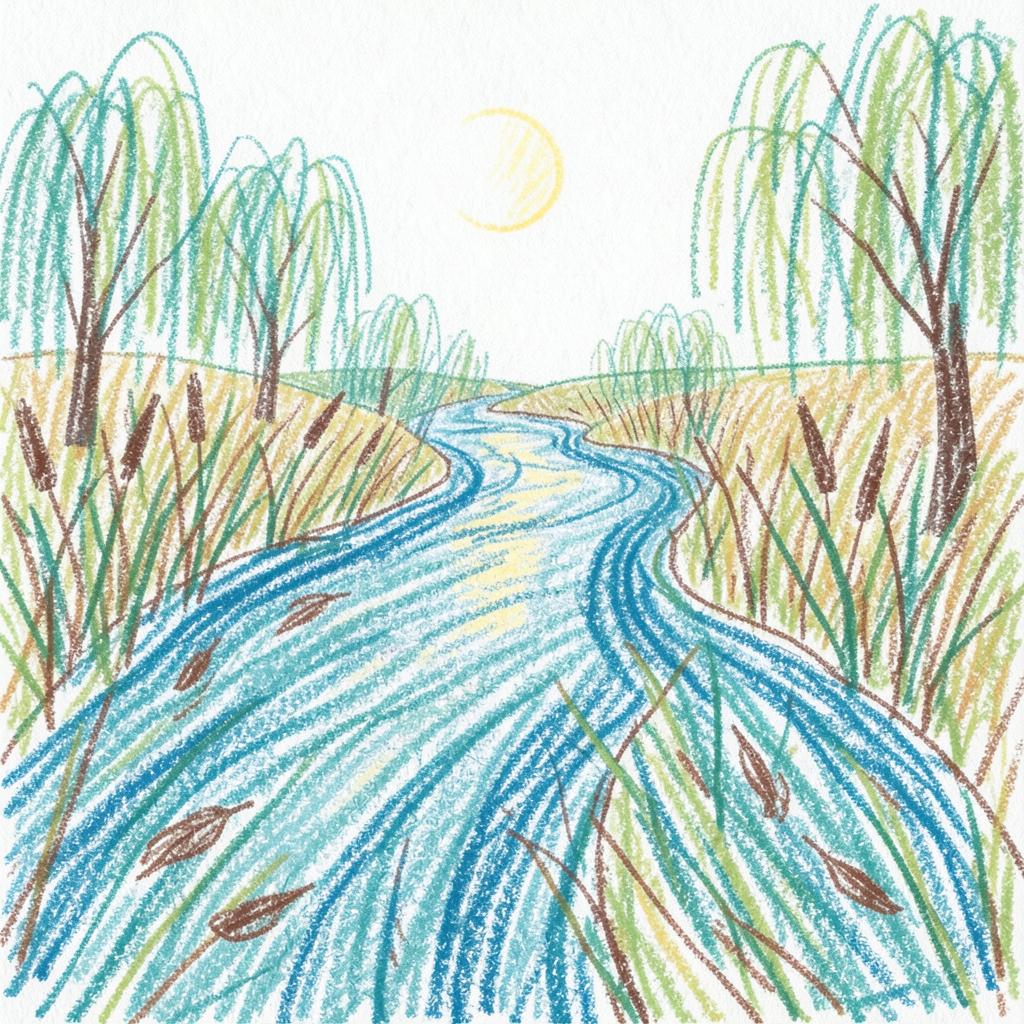
The river asks no praise, yet fields remember where it passes. Mary places pride, loneliness and humility inside a current that neither hurries nor kneels.
MARY-COUNTRY · English · Mary Celtic river ballad
Autumn's last window burns inside the gathering blue. Mary does not beg youth to stay; what time took as brightness returns as music beneath grief.
MARY-COUNTRY · English · Mary Celtic album closer
Silent boats, a night whistle and one lamp that has waited through many tides guide a traveller who stayed away too long back toward shore.
MALE SLOW · Mandarin · Male Slow bass homecoming ballad
A coat once felt too heavy in youth. Only after many distant roads does a son hear the goodnight his father never finished saying.
MALE SLOW · Mandarin · Male Slow ballad of a father's memory
A letter hidden inside an old book begins with 'long time no see' and stops in winter. Words that grew lighter with delay become a belated song.
MALE SLOW · Mandarin · Male Slow late-night letter ballad
The locust tree flowers white again and the key remains in its drawer, yet the person who has finally returned no longer knows whose name to call first.
MALE SLOW · Mandarin · Male Slow homecoming ballad
This song begins away from noise—in late-night tea, old phone numbers and unsaid sighs. Letting go is not defeat; it is pain slowly becoming quiet.
MALE SLOW · Mandarin · Male Slow midlife ballad
An old car pauses beneath a rainy lightbox. Bitter coffee and a song on the radio keep brief company; after loneliness fills the tank, the road continues.
MALE SLOW · Mandarin · Male Slow rainy-road ballad
Morning lights the coast as wind opens the car window and returns a heart trapped in old places to the wide road.
CYBER TENOR · Mandarin · Cyber Tenor coastal-road ballad
A white pier ages in the sunset while someone crosses the night carrying stars that have not gone out.
CYBER TENOR · Mandarin · Cyber Tenor lighthouse-night ballad
Wind crosses the railing and lights the city's glass. A voice that wants to sing clearly does not first need to fly higher.
CYBER TENOR · Mandarin · Cyber Tenor rooftop-city ballad
A white highway beside the salt lake shrinks the city in the mirror. No one waits ahead, yet light rises from the road.
CYBER TENOR · Mandarin · Cyber Tenor road-film ballad
The tide will smooth away two lines of footprints, but tonight's light falling into the sea will stay bright within.
CYBER TENOR · Mandarin · Cyber Tenor seaside love ballad
Farewell does not belong only to shadow: a white shirt becomes a sail, tears dry into waves and a blessing keeps singing toward distance.
CYBER TENOR · Mandarin · Cyber Tenor bright farewell ballad
Rain glows beneath the lamps of an old-city station as two people separated for years recognize each other among hot tea, an old suitcase and a departing whistle.
BOLLYWOOD MALE · Mandarin · Bollywood Male cinematic life ballad
A scarf sent from home carries sunlight in its stitches, letting someone in a northern winter hear a mother call their childhood name.
BOLLYWOOD MALE · Mandarin · Bollywood Male family ballad
The owner has changed but the wind chime has not. Tea, an old window and a faded photograph bring an entire summer back to the riverside.
BOLLYWOOD MALE · Mandarin · Bollywood Male riverside memory ballad
Beneath a rain-washed streetlamp, a life seems to have lost its echo—until a half-open window sends out a song: broken dreams can still grow a morning.
BOLLYWOOD MALE · Mandarin · Bollywood Male turning-point ballad
One ring from a rusted bicycle bell brings back the morning market, a white shirt in the wind and a father's quiet words: take care on the road.
BOLLYWOOD MALE · Mandarin · Bollywood Male song for a father
Bridge lights rise as the river carries a lifetime toward sunset. In later years, life looks less like victory and more like lamps illuminating the way home.
BOLLYWOOD MALE · Mandarin · Bollywood Male late-life reflection
An old road, low clouds and an unsent letter return between dust and moonlight as Lingwan turns distance into a slow homeward passage.
LINGWAN · Mandarin · Lingwan country-road ballad
Rain crosses stone streets while red roses beneath a clock tower remain half in dream and half in the past, keeping the fragrance of what was left unsaid.
LINGWAN · Mandarin · Lingwan old-European-street ballad
White walls, a harbour and an old guitar place foreign land and reunion inside the same sea wind, turning the years ahead into bells at dusk.
LINGWAN · Mandarin · Lingwan Mediterranean cinematic ballad
A midnight radio, rain-lit neon and a departing taxi leave their waiting inside a night song that keeps playing until you return.
LINGWAN · Mandarin · Lingwan Showa-kayokyoku nocturne
Bridge, lantern and umbrella are stitched back into memory by rain threads, while moonlight and farewell drift across the water in Jiangnan chamber colour.
LINGWAN · Mandarin · Lingwan Jiangnan silk-and-bamboo ballad
On a northern snow night, a letter written on glass gives one line to the wind and one to the stars, leaving brief but luminous words in breath.
LINGWAN · Mandarin · Lingwan Nordic ambient folk ballad
Night is not dismissed by a slogan; it slowly brightens across coast, electric piano, clean guitar and widening strings.
CYBER TENOR · Mandarin · Cyber Tenor coastal dawn ballad
An autumn river, distant sky and an unhurried bass leave the breadth and solitude after the climb in the end credits.
MALE SLOW · Mandarin · Male Slow classical-poetry end-credits ballad
Accordion, piano and cello surround the last lamp in a midnight café as Mary turns waiting into an unextinguished letter in French and Mandarin.
MARY-COUNTRY · French × Mandarin · Mary midnight chanson
After the last train leaves, piano, cello, acoustic guitar and strings carry what was left unsaid into the night road.
MALE SLOW · English · Male Slow cinematic end-credits ballad
An old letter places departure and return on one page while Mary's warm mezzo unfolds through French chanson and Russian-romantic colour.
MARY-COUNTRY · French × Mandarin · Mary romantic letter ballad
Rather than a line-by-line translation, the song begins from the shock of an appearance and lets a distant moment return through piano, cello and strings.
MARY-COUNTRY · Mandarin · Mary literary romantic ballad
As the years of a poem enter firelight and distant hills, Mary offers a musical reply about companionship.
MARY-COUNTRY · Mandarin · Mary Celtic ballad
Moonlight and homesickness cross languages in an English-sung encounter with Tang poetry.
LINGWAN · English · Tang poetry
The farewell cup stays within a new song as Mary carries its parting words to listeners in English.
MARY-COUNTRY · English · Tang poetry
Landscape, spring and human longing meet in Male Slow's English-sung Tang-poetry experiment.
MALE SLOW · English · Tang poetry
An English-sung meeting of Tang poetry and a Bollywood voice, beginning with poetry's invitation to drink.
Weiyang Sound · English · Tang poetry
From the Chinese poem to an English response, Male Slow lets ten years of longing echo between two languages.
MALE SLOW · Mandarin × English · Song poetry
The familiar story of Mulan finds another voice. This edition stands beside the existing recording, with complete playback for each.
BOLLYWOOD MALE · Mandarin · classical narrative
A call to night and moon leads to an old doorway and a sandy road. Lingwan opens this world-folk journey with Arabic words and a quiet invitation to listen.
LINGWAN · Arabic · World folk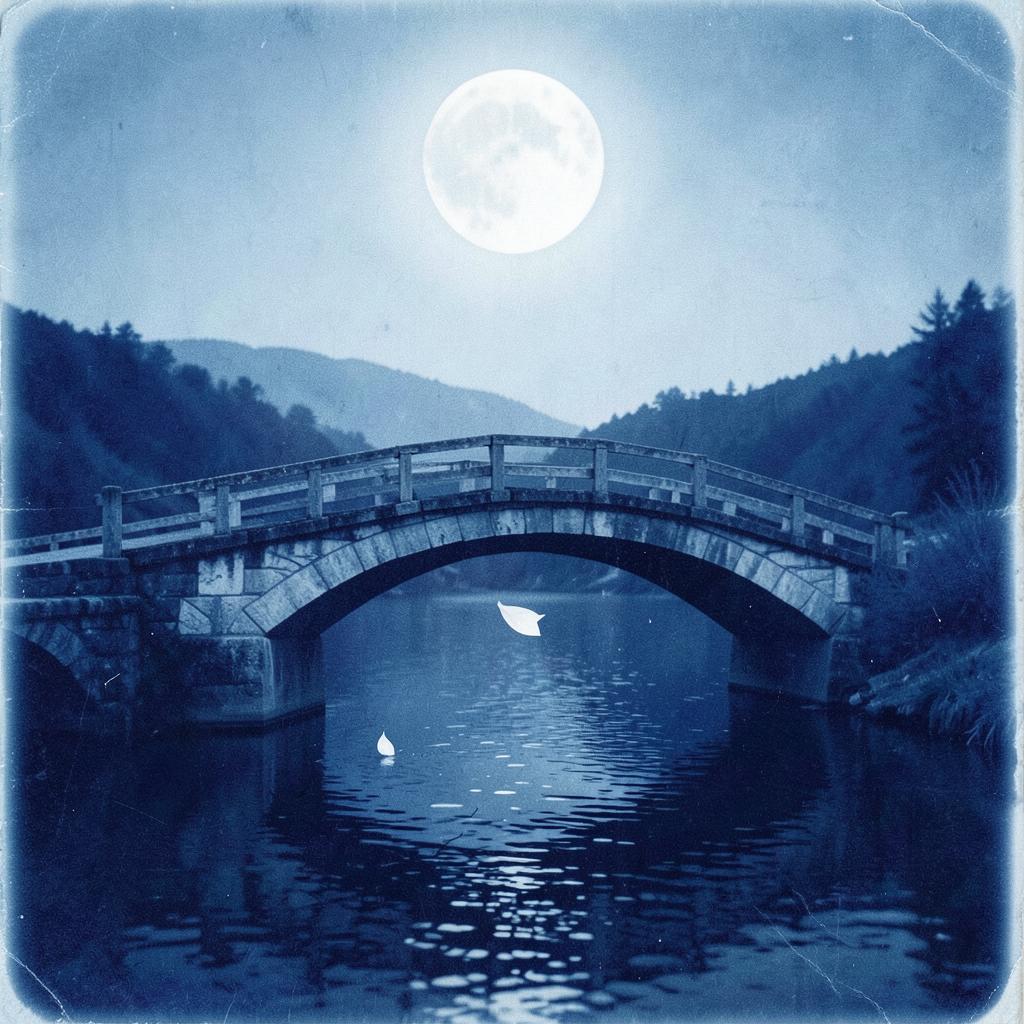
Wind from an old road carries a name once more. In this Turkish-language song, Lingwan brings moonlight, memory and a trembling heart close together.
LINGWAN · Turkish · World folk
A voice calls from a moonlit riverbank, and the water seems to answer. Korean lyrics give Lingwan's journey a quiet place to pause and remember.
LINGWAN · Korean · World folk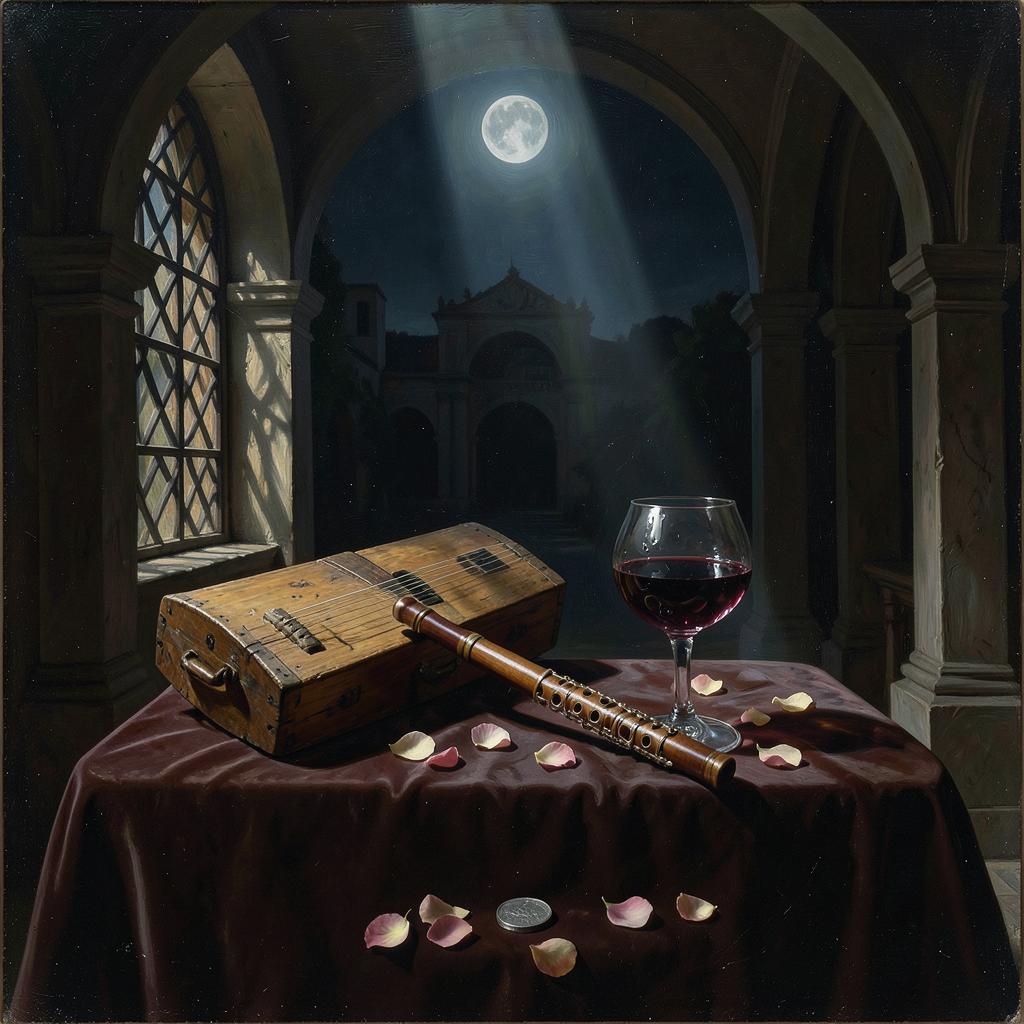
Night settles at the window; a name trembles softly in the rain. This Persian-language world-folk song brings distance close enough for a quiet exchange.
LINGWAN · Persian · World folk
Light rain falls over an old river, where someone waits on the bank. Lingwan follows Vietnamese words through a rain-soaked landscape, leaving a moment of waiting in the river breeze.
LINGWAN · Vietnamese · World folk
A declaration of love keeps company with streetlights still awake in the rain. Lingwan's Thai-language song leaves a little warmth at the end of this journey through moonlight and rain roads.
LINGWAN · Thai · World folkA lighthouse, an old harbor and a letter in a sailor’s coat set longing adrift. English lyrics bring fado-inspired saudade into a Bollywood duet, with guitars answering the tide and a love still finding its way home.
Weiyang Sound · English · duetBeginning with Andrew Marvell’s question of time, river and garden become a singable meeting place. A Bollywood duet, Celtic folk colors and warm strings turn the call to love now into tenderness rather than haste.
Weiyang Sound · English · duetDusk stretches the shadows of an old station, and unfinished words turn into a flute melody. Mary’s warm lower register meets sitar, sarangi and a gentle tabla pulse, carrying a Mandarin love song toward the Ganges at evening.
MARY-COUNTRY · Mandarin · MaryBefore the rain clears, coffee still warms yesterday’s letter. Mary moves between French and Mandarin, letting an unhurried goodbye linger among accordion, piano and cello.
MARY-COUNTRY · French × MandarinLi Qingzhao’s divided longing meets Xin Qiji’s backward glance beyond the lantern crowds. A Bollywood-inspired duet carries the two Song-dynasty poems through sitar, flute and sweeping strings.
BOLLYWOOD MALE · Mandarin · duetEach red bean becomes a small ember holding an unspoken name. This English folk ballad grows from Red Chamber imagery, with Mary’s grounded warmth, acoustic guitar and cello carrying a lifetime of longing.
MARY-COUNTRY · English · MaryA moon in water and a flower in a mirror become an English encounter that cannot be held. Lingwan’s delicate voice meets piano, guzheng and xiao as Red Chamber sorrow passes through the seasons in a new melody.
LINGWAN · English · LingwanWind from Erhai brushes white walls and gray roofs as bracelets ring and the old town lights awaken. Bajiao brings southwestern folk warmth and soft Bollywood colors to a swaying moonlit memory.
BAJIAO · Mandarin · BajiaoA stitch of moonlight and a thread of Jiangnan: a name is embroidered into the river. Guzheng, erhu and bamboo flute cradle Lingwan’s graceful ornaments, choosing lasting tenderness over vocal spectacle.
LINGWAN · Mandarin · LingwanFlowered eaves, willow banks and rain-dark lanes unfold through Wu Chinese. A gentle female voice and fingerpicked guitar turn the closeness of the dialect into a dream scented with Jiangnan rain.
Weiyang Sound · Wu ChineseRainforest paths, the edge of the sea and quiet moonlight gather in a call to Shui Gu Niang. This male-vocal version lets warm acoustic guitar and unhurried singing carry affection like flowing water.
Weiyang Sound · Mandarin · male voiceThe longing for Shui Gu Niang returns through a female voice. Rainforest and moonlight remain, but this separately preserved remix offers another way to hear the familiar words alongside the male-vocal edition.
Weiyang Sound · Mandarin · female voiceA cup of wine and an invitation to the moon turn parting into a long journey. A male voice over acoustic guitar sings across distant mountains, holding moonlight as an answer to enduring love.
Weiyang Sound · Mandarin · male voiceRain scatters old dreams, but a voice finds its footing before dawn. Bajiao brings a folk-ballad warmth to a slow rock anthem, with acoustic guitar, flute and electric guitars lifting the refrain: I am still singing. The scars remain, and so does the road toward light.
BAJIAO · Mandarin · BajiaoA paper umbrella holds a backward glance in a rain-dark lane. Pipa, acoustic guitar and soft flute cradle a clear female voice as each drop falls into waiting. The melody stays close to a goodbye that cannot quite be spoken.
Weiyang Sound · Mandarin · female voiceA riverside far from home, an old station and a whispered goodnight turn wandering toward someone beloved. Sitar, tabla and bansuri lend Bollywood warmth to a Mandarin love song. Moonlight does not hurry the journey; it lights the waiting.
Weiyang Sound · Mandarin · Bollywood-inspired balladA drink raised on an old street corner becomes a toast to getting up and going on. A weathered voice, piano, organ and answering choir give everyday courage a warm, unhurried shape. These Mandarin lyrics do not erase old wounds; they let them become a small light for tomorrow.
Weiyang Sound · Mandarin · soul balladCoffee, a turning record and a taxi in the street hold the shape of someone missing. Accordion, muted trumpet and an intimate lower female voice turn “don’t come home too late” into a lamp left burning. This French jazz chanson asks for no promise—only a little room for a return.
Weiyang Sound · French · jazz chansonCold coffee, a coat on the sofa and headlights turning a corner begin to speak at two in the morning. A close female voice sways with piano and upright bass; muted trumpet leaves room for unfinished words. Some goodbyes are so quiet that only a later rainy night makes them audible.
Weiyang Sound · Mandarin · jazz balladA lakeside path, willow shadows and half an open paper umbrella make room for an affection neither walker quite says aloud. A bright female voice meets fingerpicked guitar, pipa and dizi in the evening light of West Lake. There is no hurry: the breeze can do the talking.
Weiyang Sound · Mandarin · acoustic folk-popFreckles, a smile and the endearing way someone gets a fact wrong become the details of a love letter. French vocals unfold over nylon-string guitar, guzheng and warm strings. Its repeated declaration finds love not only in grand moments, but in wanting to make someone smile for years to come.
Weiyang Sound · French · intimate folk balladThe third bicycle outside the station is still locked in place. Two seasons of rain have gathered in its basket; even the sweepers leave it room. A clear soprano, fingerpicked guitar, mandolin and dobro turn an abandoned object into a patient act of waiting. When the wind touches its bell, someone seems to answer.
Weiyang Sound · Mandarin · newgrass balladAn old hoe against the cave-house wall, flatbread by the stove and peppers drying at the gate make home tangible. An earthy female alto meets banhu, sanxian and acoustic guitar in a grounded six-beat pulse. However far the traveller goes, the loess hills still hold the person who longs to return.
Weiyang Sound · Mandarin · northwestern folk balladA departing boat, a mother who waits through forty winters and a lamp turned toward the shore. Mandarin storytelling unfolds through the free breath of Irish sean-nós-inspired singing: ornamented long notes, plain pauses and an almost unaccompanied voice. Waiting needs no recurring chorus; it asks for one breath held to the end.
Weiyang Sound · Mandarin · sean-nós-inspired maritime balladAfter the rain stops, the eaves still drip. The bridge and willow remain; the person expected on the bridge does not. Long erhu lines, soft bamboo-flute replies and sparse pipa figures surround an intimate female alto. A broken umbrella behind the door keeps a memory that outlasts the weather.
Weiyang Sound · Mandarin · Chinese folk balladThe grassland left behind at sixteen still has the same wind years later. A horse by the river, a tent in its old place and different faces around the fire make returning both familiar and strange. Morin khuur carries a broad melody as dulcimer, strings and drums gather around it. The grass bends and rises again, like words the journey cannot scatter.
Weiyang Sound · Mandarin · grassland folk balladRain-soaked mud on a stone lane, hot water added to cold tea and white magnolias sold at the alley entrance: thirty years of waiting live in small routines rather than grand declarations. Guzheng and erhu open the song; bamboo flute answers the clear lead voice. “Come back” returns again and again to the bank of an unchanged river.
Weiyang Sound · Mandarin · Chinese folk balladA few windows are still lit. The bakery starts before dawn; the night bus keeps making its round. Strangers remain awake in separate rooms, yet the refrain offers quiet company: you are not doing this alone. Fingerpicked guitar, upright bass, organ and brushed drums hold a male–female duet, turning the sleepless city into a warm, unforced harmony.
Weiyang Sound · English · folk-gospel duetOne river rushes down from the hills; another crosses the plain slowly, carrying its sediment and stories. Below the bridge they meet, their colors and names becoming inseparable on the way to the sea. Female and male voices trade their origins before joining in the chorus. Bansuri, sitar and tabla weave through warm strings, giving the meeting both tenderness and breadth.
Weiyang Sound · English · Hindustani-colored folk duetShe turns eighty-one in April and still takes her own ladder out to wash the windows, slowly. Someone once offered to do the top; after he left, she did it all again. This compact, complete ballad locates dignity in an ordinary task she has never put down. Fingerpicked nylon guitar and sparse cello leave room for a steady, gently worn female voice.
Weiyang Sound · English · intimate folk balladFreckles, the corners of a smile, the endearing way someone gets a serious sentence wrong: this Mandarin love song gathers affection from everyday details rather than distant vows. A bright, finely ornamented female folk voice rests on nylon guitar, guzheng, warm strings and brushed drums. The refrain keeps its simple promise: liking you, again and again, as we grow old.
Weiyang Sound · Mandarin · warm folk ballad“Your happiness is my happiness.” The simple promise of staying beside someone finds an ocean-soft tenderness in a slow Cape Verdean morna sway. Cavaquinho, two nylon guitars and walking acoustic bass make room for sighing violin and answering clarinet. A tender female alto with a grainy low register turns consolation into a harbor where the listener can linger.
Weiyang Sound · Mandarin · Cape Verdean mornaSummer fades and petals fall, yet a small light in the heart can outlast the season. Summer Gold turns the comparison between a beloved and a summer day into fresh, singable English. Piano resonance and solo cello surround a warm light-classical female voice. Unhurried phrasing lets the words breathe, as every song finds its way back to the person who gave it light.
Weiyang Sound · English · piano-and-cello art songThe magpie bridge of Qixi arrives in a seaside night. Open-tuned slack-key guitar, soft ukulele and answering lap steel bring the stars close, giving a long-awaited meeting an easy, unhurried sway. A warm Mandarin lead voice rises gently into falsetto at the chorus, joined by close harmony. Even the longest road can become shorter through longing.
Weiyang Sound · Mandarin · Hawaiian slack-key balladThe storm has passed, but dawn has not yet arrived. A voice keeps singing loss into sunlight and a broken heart toward its own glow. Celtic harp, low whistle and fingerpicked guitar surround a clear female lead; fiddle and warm strings gradually open the clouds. An unhurried six-beat sway offers companionship rather than a hurried command to recover.
Weiyang Sound · Mandarin · Celtic folk balladWind at a familiar street corner carries promises that could not be kept. Clean guitar begins with restrained recollection; distorted twin guitars, live drums and strings gradually lift a high tenor into a broad rock climax. The complete six-minute unfolding leaves room for devotion, trembling and silence—and for the realization that letting go can also be tenderness.
Weiyang Sound · Mandarin · tenor rock balladWind can strip the flowers of May, and summer has its brief lease; the beloved in a poem can remain bright through each new singing. Lute, Celtic harp, warm strings and soft piano give the opening question—how to compare you to summer—a spacious evening setting. Mandarin verses unfold in a solo voice, with brief English closing lines answering across languages.
Weiyang Sound · Mandarin with English closing lines · romantic poetry balladHorse bells fall into moonlight, and tea fragrance travels along a mountain road. A traveller passes an old post station to hear a voice brighten the night beside a village. Harp, low whistle and fingerpicked guitar surround a clear female lead, while soft fiddle and strings leave room to breathe. A gentle six-beat sway lets longing linger like tea and gives the journey home its own time.
Weiyang Sound · Mandarin · Celtic folk balladWind from Erhai brushes white walls and gray roofs. Old-town lamps awaken, a silver bracelet rings, and a distant place begins to feel like home. Sighing erhu, light pipa, guzheng and bamboo flute support a clear female voice, bringing southwestern folk colors into contact with Chinese-opera ornament. Unhurried phrase endings, an interlude and a lingering outro keep a backward glance and a stone street alive in song.
Weiyang Sound · Mandarin · southwestern folk and Chinese-opera colorsA white sail passes through dusk without looking back, but the harbor steps remember two people’s silence. “Don’t see me off” leaves farewell between a coat sleeve and the sea breeze; years later, streetlights still recall that final turn. A clear female voice unfolds over harp, whistle and fingerpicked guitar, with fiddle and warm strings holding the words left unsaid. The sail moves away; the song remains.
Weiyang Sound · Mandarin · Celtic farewell balladBefore the hospital corridor brightens, she opens the first window. Set in Beijing in the 1990s, the song finds its white-clad figure in everyday care: remembering names, restoring calm and staying beside people at the edge of pain. Harp, low whistle, fingerpicked guitar and soft fiddle surround a clear female voice; a gentle six-beat sway gives responsibility and compassion a lasting warmth.
Weiyang Sound · Mandarin · warm Celtic folk balladRipples break the moon into memories, while a pavilion waits for someone carrying an umbrella. A stone bridge, willow branches and a remembered night unfold through the open spaces of erhu, pipa and guzheng. A clear female voice brings classical ornament and unhurried phrase endings. Two distinct recordings share these lyrics in the gold album; this first edition gives the lake its own breath.
Weiyang Sound · Mandarin · Chinese-opera-colored balladAcross thousands of miles, the moon brings you back here. This second, distinct recording of the lakeside love song entrusts longing to moonlight, wind and a name written on water. Sighing erhu, light pipa and rippling guzheng accompany a female voice with classical colors. It remains beside edition I, inviting consecutive listening or a single-song loop—a familiar lyric finding life in another singing.
Weiyang Sound · Mandarin · Chinese-opera-colored balladSummer fades and petals fall, yet a beloved light returns with every song. Beginning with the summer-day question of Shakespeare’s Sonnet 18, this English love song gathers Renaissance lute colors, Celtic harp, soft piano and warm strings around two voices. It remains beside the other Summer Gold recording: a shared summer image, another complete singing to return to.
Weiyang Sound · English · romantic poetry duetMemory need not leave only sorrow; it can be morning light that gently returns someone to life. Drawing on the spirit of Christina Rossetti’s Remember, this farewell does not ask a loved one to remain in the past. Harp, soft piano, warm strings and a gentle choir texture hold two voices, making “if you remember, smile” a phrase to carry forward.
Weiyang Sound · English · tender elegiac duetA lamb in morning light and a tiger burning through a forest night gaze toward one another in a single song. Lines from William Blake’s The Lamb and The Tyger meet newly written refrains, carrying innocence, fear and the question of creation through a complete musical journey. Harp, fiddle, warm strings and soft choir textures bring Nordic and Celtic colors to two voices; tenderness answers flame, leaving wonder rather than a final answer.
Weiyang Sound · English · Blake-inspired cinematic duetFireflies, a lotus pond and pale moonlight turn longing into a quiet waterscape. A clear, slightly breathy female voice follows acoustic-guitar arpeggios, with piano and strings answering softly. Across the seasons, the singer keeps a first hope alive for the same returning gaze—a brief, complete ballad to hear again on the road home.
Weiyang Sound · Mandarin · gentle pop balladSummer retreats, leaving one rose in the garden, yet its fragrance keeps a light for old friends. Drawing on Thomas Moore’s The Last Rose of Summer, this English song turns solitude toward companionship through new refrains. Celtic harp, fiddle, tin whistle and warm strings surround two voices, leaving a garden where no heart need bloom alone.
Weiyang Sound · English · Celtic elegiac duetA cup of rain, a faceless city clock and names fading on a station wall become April fragments. Modernist-poetry colors settle into a singable melody: soft piano, muted strings and gentle clarinet gather scattered memories around two voices. The song does not hurry to mend every crack; a warm voice simply crosses the city night toward dawn.
Weiyang Sound · English · chamber art-pop duetThe market closes, but lanterns still shine. Bright highlife guitar, warm bass and soft percussion meet a Bollywood-inflected duet, giving the road home a gentle dancing pulse. Palm wine, red dust and firefly skies become intimate memories: every little rhythm turns back to you.
Weiyang Sound · English · highlife romantic duetThe same moonlit courtyard opens into another independent performance. Highlife guitar and restrained polyrhythms stay close to the love song, leaving room for voices and melody to breathe. Beyond the night scenery lies a quiet promise: however many people sing in the town, one familiar face can still be found beneath the firefly skies.
Weiyang Sound · English · highlife romantic duetFirelight, an old book and stars overhead bring W. B. Yeats’s When You Are Old into a quiet evening. Celtic harp, soft piano, warm strings and low whistle surround a duet, weaving the poem through a new Pilgrim Soul refrain. Beauty changes with time; the song remembers the sorrows of a changing face, and the soul travelling through a lifetime.
Weiyang Sound · English · Celtic poetry duetAn empty street, a coat sleeve and an unspoken goodbye bring regret close. Acoustic-guitar arpeggios and piano answer an intimate male voice, letting each refrain rise gently without turning farewell into a demand. After memories and changing seasons, the song leaves a thank-you for a love that once moved the heart.
Weiyang Sound · Mandarin · intimate male-voice balladWordsworth’s lament over worldly noise turns toward waves, moonlight and a listening soul. New English lyrics make a morning not for sale and a quieter music into returning refrains. Celtic harp, soft tabla, bansuri and warm strings surround a duet: the world may be crowded, but sea wind still leaves the heart a path.
Weiyang Sound · English · sea-wind poetry duetThe sail does not look back, but the harbor steps remember two people’s silence. Mary’s warm lower register meets tin whistle, fiddle, cello and acoustic guitar, setting farewell in a misty harbor at dusk. A spacious introduction and interlude let the sea breeze pass slowly. Years later, streetlights still recall a tender turning-away: the sail has gone, but the song remains.
MARY-COUNTRY · Mandarin · Mary Celtic sea balladThe shopkeeper has changed, but the wind chime has not: one soft ring brings youthful wishes back. Sitar, tabla and bansuri open a slow river beneath a duet, whose voices answer through old windows, sweet soup and a cup of tea not yet cold. Love cannot always sail home, but a shore can keep its memory. Spacious instrumental passages lead toward a lamp that stays lit until dawn.
BOLLYWOOD MALE · Mandarin · Bollywood-inspired duetLu Xun’s “My Lost Love” exchanges increasingly unlikely gifts: a butterfly scarf for an owl, paired swallows for candied hawthorn, a watch chain for medicine. Lingwan’s delicate voice keeps the satire light rather than turning it into a skit. Guitar, pipa and brief erhu phrases carry each puzzled question from mountain to market to riverside. The bright melody lets bewilderment be funny, with an ache beneath the laughter.
LINGWAN · Mandarin · Lingwan literary folk-popOne flame, many voices: Lingwan joins Esperanto, English, Mandarin and Spanish in a gentle song of nations. Piano, soft strings, flute and restrained ceremonial drums make an opening night feel both spacious and close. Before medals, the lyrics see the people behind the flags: travelers, different mother tongues and hearts willing to listen beneath one sky. A childlike chorus gently lifts the final hope.
LINGWAN · Esperanto × English × Mandarin × Spanish · LingwanA flower from an immortal garden and jade in the mortal world meet in English song. A moon in water and a flower in a mirror cannot hold a love destined to dissolve. Lingwan’s delicate voice joins piano, guzheng, xiao and soft strings, carrying sighs at an autumn window and tears through the seasons. The refrain asks how much sorrow one heart can bear. The lamp remembers, the curtain listens, and the Red Chamber keeps singing.
LINGWAN · English · Lingwan Red Chamber art balladThe east wind opens trees of light and stars fall like rain: Xin Qiji’s Lantern Festival moves from splendor toward a quiet turn. Lingwan sings the original Chinese ci, then answers in English through lanterns, passing faces and a search. “Suddenly I knew” meets the Chinese refrain in one melody. Piano, guzheng, xiao and soft strings let the crowds recede. The person sought waits not in the loudest brightness, but at the fading edge of the lights.
LINGWAN · Mandarin × English · Lingwan Song-ci balladThe moon crosses a mountain road, silver ornaments ring, and a bamboo house keeps a traveler’s longing close to home. Hulusi, bansuri, sitar and gentle tabla meet an ornamented female voice, bringing the moonlight of the Lancang and the Ganges into the same song. More than six unhurried minutes give flute and strings room to linger: part southern homeland, part memory, with love singing beyond the mountains.
Weiyang Sound · Mandarin · Bollywood and southwest folk colorsBlue clouds, yellow flowers, a west wind and southbound geese carry the farewell of The Romance of the Western Chamber toward the long pavilion. Lingwan’s delicate voice turns between spoken recitative and song; qudi flute, pipa, guqin and light clappers hold the long melodic tails. The carriage moves on, while longing tries to catch the sinking sun in the trees. A brief song makes parting linger.
LINGWAN · Mandarin · Lingwan Kunqu-style Yuan drama“It is only a rumor” and “it will never happen” meet a blunt reply: look again. Distorted guitars, heavy drums and three-part voices pull screens, office towers, code and driverless wheels into one rock soundscape. The refrain is short and forceful: the future kicks the door in, without knocking or waiting. A lowered bridge opens into rising final chants. This is @liwei’s Mandarin rock response to technological upheaval, answering its English companion.
Weiyang Sound · Mandarin · AGI revolution rock flagship“It is just a phase” meets a future already inside the room. A forceful lead and male–female harmonies build through heavy guitars and drums, from words arriving on screens to cracks in white-collar glass. The quieter bridge turns the mirror toward us: neither monster nor savior, but human power amplified. Repeated final chants carry the force of The Wolf Really Came into English—two flagship songs, two ways of facing the same upheaval.
Weiyang Sound · English · AGI revolution rock flagshipFireflies, a lotus pond and an open window make a summer night feel clear and gentle. Lingwan moves with acoustic guitar, piano and glockenspiel, while soft strings add a little moonlight to each ending. The seasons pass through the water, but longing still waits for an answer. Rather than a dramatic leap, the song offers a small melodic light for the road home.
LINGWAN · Chinese · Lingwan Cantonese-styled folk-popThe lovers finally united on screen illuminate a departure outside it. Lin Juyi’s distinctive low mezzo voice turns Cantonese words for staying, leaving and rewinding into a night reluctant to end. Piano, cello, muted trumpet and a faint projector texture give the old cinema its own breath. The ticket remains in a pocket as the credits rise; an unspoken name still longs to light the room.
LIN JUYI · Cantonese · Lin Juyi cinematic chamber balladRain brightens a stone alley; an umbrella, white walls, a wooden doorway and an old radio make a small town audible at night. Male Slow’s warm bass voice does not hurry after the passing figure. It lets a simple wish linger: if the lane were long enough, walk together until morning. When the rain stops, moonlight climbs the wall and lanterns come on, one by one. One light remains for a backward glance.
MALE SLOW · Chinese · Male Slow Cantonese-styled literary ballad“Shall I compare thee to a summer’s day?” enters a tender duet through Chinese verse and a brief English response. Renaissance lute, Celtic harp, piano and warm strings bring May flowers, a fleeting season and lasting love into the same evening. The closing answer makes the poem’s promise singable: a life carried onward by words and memory. This distinct recording takes its place beside the other Eternal Summer editions.
Weiyang Sound · Chinese with English closing lines · romantic poetry duetChairs are stacked on tables; cups leave rings, and two places still hold the shape of an evening. “Go ahead, I’ll turn out the light” is not a grand farewell, but a quiet offer to look after what remains. A close, low voice sways in six-eight time among sparse piano, low strings and brushed drums. When the accompaniment falls away and the door closes, the person who stayed can finally go home too.
Weiyang Sound · Chinese · intimate low-voice balladA test marked fifty-eight carries a small surprise among the red corrections: a casually drawn flower, not another rebuke. Four petals and a short stem tell a child that someone has noticed them. A gentle duet, with soft South Asian melodic turns, carries the story from a school desk to a parents’ meeting years later. The grades never become a miracle; the kindness becomes something more durable.
Weiyang Sound · Chinese · tender storytelling duetA name is written across a heart; mornings, breath and prayers gather around one love. Born for You places Chinese love lyrics inside a South Asian romantic duet, where supple melodic turns meet a bright rhythmic pulse. Its center is not a grand declaration but the simple discovery of a home in another person’s heart. Desire and belonging return together each time the refrain comes around.
Weiyang Sound · Chinese · South Asian romantic duetBefore the corridor is lit, she has already opened its first window. Set in Beijing in the 1990s, the song follows a caregiver who remembers the names in each room, restores calm in moments of fear and stays awake through the night. Warm solo piano grows into a gospel-pop choir, with strings and layered voices lifting duty and compassion. The miracle is not something that falls from the sky: it is someone who keeps showing up.
Weiyang Sound · Chinese · gospel-pop choral anthemThe last subway, a screen that lights up and goes dark, a journey never taken: everyday fragments become an unsent letter after a separation. “I won’t disturb your new life” grows quieter, without pretending that memory has disappeared. A soft female voice meets clean guitar arpeggios and a thin veil of strings, leaving room for the difficult work of letting go. This distinct female recording makes distance a form of tenderness.
Weiyang Sound · Chinese · intimate female balladWind loosens a ribbon; a vast crowd leads two people into the same embrace. Wind from Afar sings a gentle meeting in Chinese, with a close, warm alto resting on a soft tabla pulse and a harmonium drone. The brief refrain does not hurry to explain a lifetime. It returns instead to a future glimpsed in someone’s eyes, letting moonlight, waiting and “don’t go away” linger in delicate Indian folk colors.
Weiyang Sound · Chinese · Indian folk ballad with warm altoDusk crosses an old wall, and one amber lamp holds a memory of a shoulder and words never spoken. Stone paving, a weathered house number and fallen blossoms make home a place where someone keeps the light on. This extended edition gives the return more time: after distant journeys and countless windows, the lamp at the old alley still shines differently. “The light is on; I’m still waiting” leaves a homeward path open in the wind.
Weiyang Sound · Chinese · a homeward lyrical balladA sky too blue, a sea like a dream, waves writing the words left unsaid: the horizon opens, yet the song returns to one person’s eyes and silhouette. Edition 4b brings orchestral breadth to sunrise, rain-washed sand and an afternoon breeze. The world’s vast scenery cannot quite displace a small, persistent memory. However many coastlines lie ahead, one meeting still changes the light on the water.
Weiyang Sound · Chinese · orchestral lyrical songThe same coastline takes on a closer, more intimate color. A clear female voice meets acoustic guitar arpeggios and answering dizi phrases, bringing sunrise, sand and a shy glance into focus. This remastered recording holds the wide seascape inside a gentler breath: the tide slows a heartbeat without settling its memory. The final question belongs to the breeze—will new scenery ever replace those eyes? Beside edition 4b, the same longing catches another light.
Weiyang Sound · Chinese · female folk-pop balladAs moonlight grows brighter, a bowl of hot soup, a mother’s smile and old photographs return to mind. The Way Home makes family love something small enough to touch: a lamp that stays on wherever life takes us. A soft female voice rests among sparse guitar and warm strings, singing quietly of the storms someone else helped us weather. Years turn like pages, but the way home remains in the breath, welcomed by a familiar scent.
Weiyang Sound · Chinese · a tender female homecoming balladA small town at dusk, someone lingering by a wooden door, a road pointing north: a brief song holds the quietest stop on a journey. Banjo and acoustic guitar do not hurry the traveler; a low female voice tells the story as if from a porch. “What do we leave in the places we pass?” gathers earth, conversation and an old tune into one question. The scenery moves on, but the song keeps singing inside us.
Weiyang Sound · Chinese · banjo-led country ballad with low female voiceA meeting in morning light turns an empty street into a road worth coming home along. From stars in a pair of eyes to hot tea on a rainy day and a familiar tune, this ballad finds love in ordinary details. Its tender center is simple: wherever you are feels like home. Companionship becomes a quiet place within a noisy world, a light that stays close as spring gives way to autumn.
Weiyang Sound · Chinese · heartfelt pop balladDepths and shallows, closeness and distance: repeating words ripple across the surface of an unsettled heart. Clean electric-guitar arpeggios and soft strings hold a gentle female voice, with no drums to hurry it. Words drift away in the wind and a shadow thins beneath the moon. At time’s landing place, waiting yields only mist; a lamp still keeps watch over a promise left unfinished.
Weiyang Sound · Chinese · intimate female balladLi Qingzhao’s searching words emerge slowly between acoustic-guitar chords. A dizi answers a gentle female voice, while brushed drums and bass give the Song-dynasty poem a soft contemporary pulse. Evening wind, familiar geese, yellow flowers and rain on the parasol tree draw dusk toward the window. Grief carries its weight through sustained notes and pauses, leaving the melody hanging like rain that has not quite ended.
Weiyang Sound · Chinese · Song-dynasty poetry and female folk-popSea breeze and an ancient forest still hold someone’s voice. Fille de l’eau brings clear rivers, a cuckoo of the southern seas and a skirt brushing past a vine into one French song. A warm female middle register meets acoustic guitar, light strings and accordion. Without raising her voice, the water girl sings across forest, shore and distant hills. Nostalgia becomes an echo rather than a place name.
Weiyang Sound · French · chanson and world-folk balladThe path leads south and the wind of home falls behind, but two voices keep turning toward each other. This very slow duet makes refusing to let go a weighty act of waiting. Alternating verses meet in a shared chorus; low registers carry “I do not regret it; I will not turn back” without shouting. Love and freedom, homecoming and fate question one another inside the close-held melody.
Weiyang Sound · Chinese · low-register duet balladOars are put away, lamplight sways on the water, and an evening breeze turns a small bridge into a doorway to longing. A delicate Yue-opera-inspired voice meets guzheng and bowed strings, with no drums to hurry the words. Mossy steps, embroidery by lamplight and a willow at the bridge arrive slowly. “If longing were a bridge, I would come every day” lets a thought drift outward and rest beneath the moon.
Weiyang Sound · Chinese · Yue-opera-inspired waterside balladRather than promising the whole world, this song leaves a little light in a long night. A warm low male voice stays close to the piano, with soft female harmony answering from a distance. Without drums, gratitude and companionship unfold slowly. Walking together through mountains and rivers becomes both a love song and a quiet promise. The ending lets farewell travel on the wind while leaving the loved one courage to go forward.
Weiyang Sound · Chinese · piano ballad with gentle harmonyThis extended solo does not hurry toward a chorus: each phrase ending becomes somewhere to linger. A delicate Yue-opera-inspired voice unfolds beside sparse bowed strings, pipa and guzheng, without drums or layered vocals. Misty water and moonlight become room for the melody to breathe. One phrase reaches outward, another turns home, bringing theatrical delicacy close to the intimacy of a slow song.
Weiyang Sound · Chinese · extended Yue-opera-inspired solo“Let me stay beside you one more day” turns forever into loving a little more each day. Acoustic guitar arpeggios and warm bass hold a male-female duet, bringing hymn-like devotion into an intimate folk ballad. Gratitude and forgiveness pass between the alternating voices before they meet in a promise of companionship beneath the stars. A simple wish to stay grows deeper without a loud declaration.
Weiyang Sound · Chinese · acoustic folk-gospel duetA paper umbrella, wet stone and lilac stretch a rainy encounter across more than seven minutes. Sung passages from Dai Wangshu’s Rainy Alley open into new verses about the memory that remains after someone has gone. The melody makes room for the poem’s recurring images before the lilac refrain slowly blossoms. Rather than rushing away from sadness, the song stays in the rain and walks a little farther beside an old dream.
Weiyang Sound · Chinese · sung poetry and rainy-alley balladAnother rainy alley, but this time its lamps are warm. Rain brightens a white wall, supper drifts through a wooden doorway, and an old radio brings the past gently back. Plucked strings and a clear voice follow a flowered umbrella at an unhurried pace. When the moon climbs the wall, someone is waiting where she turns to look. This little folk song feels like a lamp left on at the end of the journey home.
Weiyang Sound · Chinese · waterside folk balladChildren ask why there are walls, and why so many maps divide the same earth. Male Slow’s warm deep voice lets Esperanto questions meet Mandarin replies. Cello, low strings and piano hold a slow peace hymn without shouting or promising an easy dawn. The song protects a small flame, listens to the silence of the old and asks that the dreams of the young remain unbroken: for children, for tomorrow, for a world that can still choose.
MALE SLOW · Esperanto × Mandarin · Male Slow peace hymnIn a small town beside a silver sea, a girl dances with the wind. Youth once made every promise shine like gold; later, the tide carried footprints away and taught her how to begin again after heartbreak. Piano, strings and cello lend a cinematic sweep to Esperanto verses about love, time and growing up. The title remains in English, but the sung story is Esperanto: beauty lives not only in the first bright moment, but also in the courage to smile toward a new dream.
Weiyang Sound · Esperanto · cinematic ballad of youth and memoryA ripple breaks the moon into memories. A lakeside pavilion, a stone bridge and willows in the rain still remember two people who once watched the moon together. A graceful Yue-opera solo lets each question linger over the water, accompanied by sparse erhu, gentle pipa and guzheng. A name written in the lake drifts toward someone far away. When the wind finally brings a familiar voice, distance gives way to reunion: the full moon becomes a promise of coming home.
Weiyang Sound · Chinese · moonlit Yue-opera soloTonight the stars are close: the distant Qixi legend returns to an ordinary evening when two people finally meet. After a long journey through the crowd, missed rains find an echo and a window light reaches years of loneliness. This love ballad does not rush to turn romance into a miracle. Its bridge across the Milky Way becomes the patient walk toward another person, and eternity becomes a willingness to share everyday life. Whatever weather tomorrow brings, companionship offers a way home.
Weiyang Sound · Chinese · Qixi love balladOn welcome day, a newcomer wheels a suitcase into the crowd. The campus begins to feel familiar with a simple offer of help. Laughter in a shared room, a new map beneath the trees and a future that need not be answered at once give this country-pop song its everyday warmth. Youth does not have to become wise immediately: it can hold on to curiosity and keep today close. The world is large, but there is time to walk through it slowly.
Weiyang Sound · Chinese · campus country popLamplight over a mended sleeve and steam from supper on a window are the ordinary things a child once thought would never end. Luggage, distance and a hospital corridor later turn the plea for mother to stay into words that cannot be finished. This slow song moves gently through memory. It does not resolve loss with an easy farewell; it learns to live in a world without her while carrying her words forward. Pain remains, alongside a tenderness that time cannot take away.
Weiyang Sound · Chinese · a slow song remembering motherAfter the rain, a plane-tree road shines with water. Ink scents the school gate, and someone beneath a blue umbrella softly calls your name. Lingwan’s delicate voice brings guitar, piano, light strings and flute into an atmosphere of 1980s school memories. A small lamp at the gatehouse, newspapers on the window and an essay called My Dream belong to a time when the future was still a blurred horizon. Years later, rain against a window brings that road back, and youth brightens again in the sound of a name.
LINGWAN · Chinese · Lingwan nostalgic campus folk popCamel bells, sand and a lamp beneath a city gate set longing along a long road. Colours of oud, santur, ney flute and frame drum open a wider night sky around a Chinese ballad. A spacious introduction and instrumental interlude give the journey time to breathe. The lyric imagines a meeting beyond mountains and rivers, but love is not a loud declaration: it is a quiet flame, and a wish to follow the moonlight back to someone’s side.
Weiyang Sound · Chinese · Persian-coloured Silk Road balladA bowl of warm soup, a mother’s smile and old photographs become lights that remain after leaving home. Piano and bowed strings move slowly and steadily, with occasional low cello tones making room for a restrained lead and distant harmonies. The song does not rush family affection into a grand climax. It holds home within the heart, and finds direction in the people who carried us through difficult weather.
Weiyang Sound · Chinese · piano-and-strings homecoming balladThe last train is about to leave. A phone lights up and goes dark, while a journey never taken remains between two people. Sparse piano, reversed electric-guitar overtones and a slow bass pulse turn loss into intimate dream pop. A breathy mezzo stops asking for answers without pretending to have let go. It learns, slowly, to keep tenderness without intruding. Hazy harmonies widen the room, but farewell still rests in a message window that no longer answers.
Weiyang Sound · Chinese · dream pop and a quiet farewellThe boatman puts away his oar, lamplight rocks on the water, and mossy steps and a candlelit window make the night feel gentle. Bowed fiddle, pipa and guzheng surround a solo voice. Yueju-shaped phrase endings leave room for silence and the closeness of a small theatre. This edition does not press longing for an answer: it casts a thought into the water, listens to the moon remember its own youth, and returns to a bridge that still holds the sound of laughter.
Weiyang Sound · Chinese · a Yueju-coloured waterside nocturneAt dusk in a small town, cooking smoke rises and someone by a wooden door points north: the road ends at the home you are looking for. Banjo and restrained acoustic guitar follow a slow sway, giving the idea of passing through the warmth of old wood and a nearby room. Mud beneath the feet, words once spoken and a summer that cannot return all move gently past. What remains is an old song still singing within. This distinct rendition keeps its own place beside the other Passing Through 2 editions.
Weiyang Sound · Chinese · banjo and rustic acoustic folkThe wish to stay one more day is less about stopping time than about hearing each embrace more clearly. A warm low male voice and a clear, breathy female voice take turns drawing close. Single piano notes, reversed guitar harmonics and a low synth bed enclose their duet in a quiet room. The lyric moves through waiting for a call, apologies and mutual support toward a softly spoken wish: may time move more slowly, and may love not hurry into farewell.
Weiyang Sound · Chinese · an intimate dream-pop duet368 kompletaj kantoj, entute 1450:33, kaj 132 kompletaj muzikfilmoj, tra la ĉina, angla, franca, Esperanto kaj plurlingvaj renkontoj. Elektu voĉon, sekvu rakonton aŭ simple lasu la muzikon akompani vin.