2:44
Qu Yuan · Hebo from Nine Songs, excerpted with contemporary refrains · Dai Amei
Hebo · Dai Amei
河伯·傣族阿妹A lotus canopy, paired dragons, Kunlun and a purple-shell palace turn companionship into an expanding mythic voyage. At dusk the song returns to a farewell on the southern bank; Dai Amei finds tenderness within the river's sweep.
Press play. Let it finish.
Hear Dai Amei's Hebo: a Nine Songs ballad with a complete lyric film.
Lyrics
[Intro]九河風起兮,橫波來迎,水車荷蓋兮,龍影青青。與女遊兮九河,衝風起兮橫波。乘水車兮荷蓋,駕兩龍兮驂螭。[Instrumental Interlude]登崑崙兮四望,心飛揚兮浩蕩。日將暮兮悵忘歸,惟極浦兮寤懷。[Refrain]河水長兮,波滔滔,魚鱗閃兮滿江潮。與女遊兮河之渚,一聲歌過紫貝橋。魚鱗屋兮龍堂,紫貝闕兮朱宮。靈何為兮水中,乘白黿兮逐文魚。[Final Refrain]波滔滔兮來迎,魚鱗鱗兮媵予。送美人兮南浦,阿妹唱兮九河雨。Hear the crossing without erasing either shore.
Wind, waves, dragons and a palace beneath the river
风、浪、龙与水宫,共同展开一场神游The invitation to travel the Nine Rivers leaves everyday scale behind: driving wind, cross-waves, a lotus-canopied carriage, dragons, Kunlun and chambers roofed with fish scales. Hulusi, bamboo flute, guqin and soft strings carry the clear voice farther into that world. At dusk, the vastness contracts to the southern shore. Waves keep arriving, but the companions must part; mythic splendour meets human attachment.
A waterwheel, an arched bridge and lyrics moving toward farewell
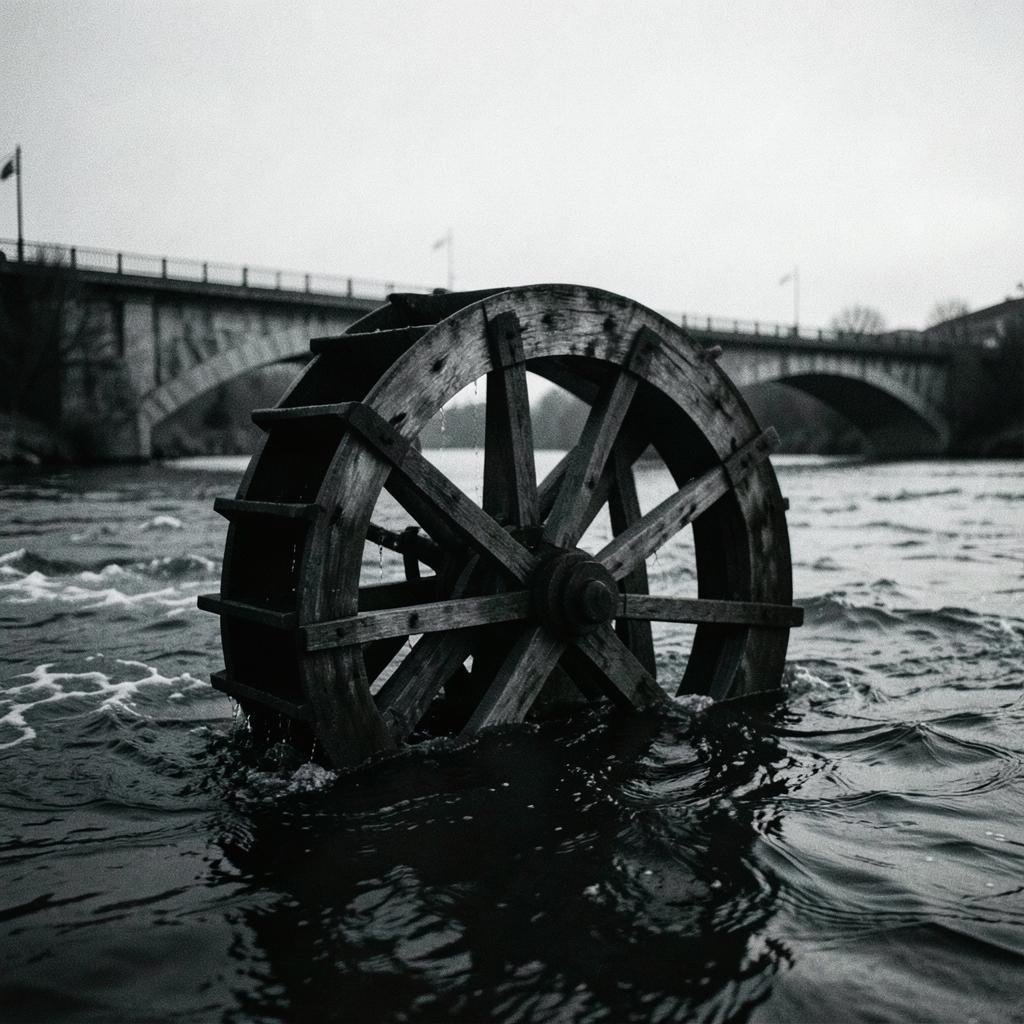
水车、拱桥与流动的歌词,走到最后的送别The complete film, Nine Rivers Rain, frames a wooden waterwheel in fast water with an arched bridge behind it. The monochrome image accompanies lyrics travelling from companionship to farewell. Selected lines from Qu Yuan alternate with contemporary refrains, ending with Dai Amei singing through the river rain—a present-day voice within an ancient imaginative world.
DAI AMEI
傣族阿妹Meet Dai Amei, Weiyang Sound's most extensive virtual-singer archive: 36 public works and thirty-one verified complete masters, now 31 / 31 playable in full. The newly opened Amei Sings Late Autumn retains all eight lines of Li Qingzhao's A Twig of Plum Blossom while separating its contemporary refrain and variation. Silver Bells to the Ganges keeps thirty contemporary positions, a hulusi / bansuri exchange, imagined-geography boundaries and the provider state of its triptych moon film visible. Frontier Moon, Lotus Picking at Southern Pond in Autumn, Clear Water River, Crossing the River for Lotus, Spring River under the Moon, One Moon over Chang’an and Hengtang Road continue the route through classical watersides, cross-cultural dialogue and urban homesickness, while all nine verified Nine Songs dossiers remain public.
More from this singer ↗Music becomes a vertical window.
Let the images follow the melody through the song's landscapes, characters and changing moods.
After this song, there is more than ‘next’.
A catalogue order can only point forward. This compass explains three different reasons to continue: follow a voice, stay with a cultural thread, or cross a language bridge. Every doorway opens a verified complete master.
Yunzhong Jun · Dai Amei
云中君·傣族阿妹DAI AMEI continues in a different work, so character continuity can be heard rather than merely asserted.
DAI AMEI · Qu Yuan · Yunzhong Jun from Nine Songs in full with a contemporary intro and refrains · Dai AmeiOpen the complete recording ↗
Baidi Light Boat · Dai Amei
白帝轻舟·傣族阿妹Stay inside Enter 100 Chinese Classical Poems, but let another complete work change the angle of entry.
DAI AMEI · Li Bai · Early Departure from Baidi City with contemporary refrains · Dai AmeiOpen the complete recording ↗
After the Storm
风暴过后Mandarin Chinese · traditional-character source captions gives way to English · source lyric captions. The shift is audible, and both cultural origins remain named.
CINEMATIC FEMALE · Cinematic Female · English end-credit ballad · orchestra and gradually entering choirOpen the complete recording ↗The song ends. Its cultural life continues.
One recording. Three natural ways to share it.
Choose the note that sounds most like you, add your own thought, or share the complete recording or film on another site.
听傣族阿妹《河伯》:一首《九歌》慢歌,配以完整歌词 MV。 @liwei 创作 · Suno 赋能。
A lotus canopy, paired dragons, Kunlun and a purple-shell palace turn companionship into an expanding mythic voyage. At dusk the song returns to a farewell on the southern bank; Dai Amei finds tenderness within the river's sweep.
Hear Dai Amei's Hebo: a Nine Songs ballad with a complete lyric film. by @liwei · made with Suno.