3:27
contemporary original · imagined hulusi / bansuri call-and-response · Dai Amei Native Trigger
Silver Bells to the Ganges
银铃到恒河‘The hulusi asks the bamboo grove; the bansuri answers deep in the night.’ Instead of melting two voices into vague exotic colour, the song lets them hear one another across distance and turns that distance into a complete quiet ballad.

Press play. Let it finish.
Hear Dai Amei’s Silver Bells to the Ganges in full: a 3:27 contemporary Mandarin original with complete MP3 and full vertical source-lyric film. All thirty performed positions are contemporary writing. Hulusi, bansuri, tabla and sitar remain cross-cultural generation directions—not claims of human performance, travel documentation, ethnography or community authorization.
Lyrics
[Intro]银铃响在竹楼外,月光一路到恒河。[Verse 1]南风吹过我的裙摆,也吹过远方的花开。你说山河隔着山河,我说歌声会渡过来。[Pre-Chorus]葫芦丝问着竹林,班苏里回答夜深。[Chorus]银铃到恒河,一路月色一路歌。我用很轻的声音,唱过万水千山的沉默。银铃到恒河,一颗心还为你热。你若听见阿妹唱,就让风把你带回我。[Instrumental Interlude][Verse 2]别让离别太辽阔,别让鼓声盖过我。我只想在慢慢的旋律里,把一生唱成一朵花。[Bridge]远方不是远方,只要你还记得我。[Final Chorus]银铃到恒河,一路月色一路歌。我用很轻的声音,唱过万水千山的沉默。银铃到恒河,一颗心还为你热。[Outro]月光回到竹楼,你也回到我心上。Hear the crossing without erasing either shore.
All thirty lines from bamboo house to Ganges are contemporary; place is imagined distance, not fabricated experience
从竹楼到恒河的三十行全是当代文字;地名是想象距离,不是假装亲历The public source prompt contains forty-seven lines, thirty-nine nonblank, 387 characters and 873 UTF-8 bytes, hashing to 5de60d6b88b4cc4e9942586c2ce691c71b9e9d28f34efb6fa8e530b7eee8b0b7. Removing structure labels and blanks leaves thirty performed lines, 272 characters and 758 UTF-8 bytes, hashing to 003543456a9d8e59c5d866082247b2b57dc7ad7efd147c5fef3c8347866d9906. No classical verse, traditional folk lyric or identifiable received text is borrowed. 银铃到恒河 occurs four times; 一路月色一路歌, 我用很轻的声音, 唱过万水千山的沉默 and 一颗心还为你热 each return twice to form the refrain. Bamboo house, Ganges, mountains, rivers and south wind create an imagined geography of distance. The page does not recast that geography as the writer’s travelled route, a documented transborder romance, pilgrimage testimony, Indian religious narrative or living Dai social history.
‘Hulusi asks, bansuri answers’ matters more than exotic stacking; dialogue preserves difference and generation limits
“葫芦丝问、班苏里答”比堆砌异域标签更重要;问答保留差异,也承认生成边界The 244-character source tag string frames ‘Dai folk meets gentle Bollywood slow ballad’ as an arrangement direction: delicate ethnic female vocal, hulusi and bansuri duet, soft tabla, sitar touches, warm strings, moonlit borderland love song and slow 6/8 sway, with no rap, EDM or big drums. It hashes to bdaac4eb77e2572a28beca86d70b805a61dfd3cac6a5f031c8cb95226a65e688. The creative move is not to claim that two traditions have become one sound, but to write ‘the hulusi asks the bamboo grove; the bansuri answers deep in the night’. The Metropolitan Museum’s instrument records help preserve basic categories: its collection includes a late-nineteenth-century Indian bamboo transverse flute, while its organology describes the sitar as a leading plucked instrument of North Indian Hindustani music. None of that proves that this recording contains physical instruments, human players or a specific lineage. The archive records generation cues only; it does not certify human hulusi / bansuri / tabla / sitar performance or let virtual Dai Amei speak for Dai, Indian, Ganges-basin or Bollywood practitioners.
The two-version catalogue family, public Dai Amei Persona and voice root bind exactly; absent parent and album relations stay absent
两版本曲库家族、公开傣族阿妹 Persona 与声线根精确绑定;没有的父本和专辑关系不补造The archive binds exact public Suno work e9888ccb-4c9c-48bb-adfd-b4fba4eb5523, source-titled 银铃到恒河 and created at 2026-08-17T20:47:05.235Z. The synchronized catalogue groups two registered versions inside Dai Amei Native Trigger, while the source albums array and parent_clip_id are empty. This doorway binds only the verified complete ID and invents neither a sibling ID, public album relationship nor parent. The source reports complete, public, chirp-fenix and v5.5. Metadata reports type=gen, task=vox, is_remix=false and video_is_stale=false; edited_clip_id is an all-zero placeholder. has_vocal=false conflicts with audible singing, task=vox, can_publish_with_vocal=true and the complete lyric film and remains a provider anomaly. The work embeds public Persona 傣族阿妹, c23ec7da-c90b-4d9b-893f-5685fedf9dca. Its public voice root 月下竹影, d4557de9-a8ae-4e66-b855-2c02710cfebd, itself reports as a public 2025 v4.5+ cover / remix. That proves vocal provenance only—not this work’s parent, lyric, melody or cultural authorization. This MP3 exposes no usable embedded creation time; audio CDN Last-Modified follows by about two minutes twelve seconds and the film by about one hour thirty-four minutes forty-nine seconds. These are source-file times, not composition, performance or formal-release moments.
Three minutes twenty-seven seconds travel from a bell outside the bamboo house back to the heart; triptych still life and source captions remain intact
三分二十七秒从竹楼外的银铃唱回心上;三格静物和来源字幕完整保留The archive decodes the complete 3:27, 4,713,600-byte 48 kHz stereo MP3 and a 207.210-second, 8,225,326-byte, 824x1464, 10 fps H.264 / AAC vertical film. Audio and video differ by about 0.110 seconds, and a -50 dB audit finds no silence lasting two seconds or longer. The 122,265-byte, 1024x1024 source artwork uses film_strip / brand_refresh: a silver-grey metal bell rests on bamboo lattice at left; a bamboo-coloured wind instrument that cannot be identified from the image alone lies among mossy stones and water at centre; a full moon reflects on dark water at right. It documents only source-generated imagery—not a real Dai silver bell, bansuri, hulusi, Ganges location, period object, shoot or ritual context. Frames at 0, 27, 54, 81, 108, 135, 162 and 189 seconds confirm the same triptych, title 银铃到恒河, by @liwei, Made with Suno and lyrics progressing to 你也回到我心上. [Verse 1], [Pre-Chorus], [Chorus], [Bridge] and [Outro] labels and caption fades remain in source state. This is a complete source-native lyric film—not human-proofed or accessibility captions, independent animation, travel footage, ethnography, live action or performer MV. The three media SHA-256 values are 07b4b0c5aa17087ceb82916965c3019bd166384113e6a61cbe5fb2ff9c460100, 96f77a58f3a24aa33322eb350769cc60ca370593ad691024553ad118dc0da1b5 and d0aff9b82a7eb5e0fae5fa3f32f696db3cb5d06c05fd305d04bd75ecf5dd1d26.
DAI AMEI
傣族阿妹Meet Dai Amei, Weiyang Sound's most extensive virtual-singer archive: 36 public works and thirty-one verified complete masters, now 31 / 31 playable in full. The newly opened Amei Sings Late Autumn retains all eight lines of Li Qingzhao's A Twig of Plum Blossom while separating its contemporary refrain and variation. Silver Bells to the Ganges keeps thirty contemporary positions, a hulusi / bansuri exchange, imagined-geography boundaries and the provider state of its triptych moon film visible. Frontier Moon, Lotus Picking at Southern Pond in Autumn, Clear Water River, Crossing the River for Lotus, Spring River under the Moon, One Moon over Chang’an and Hengtang Road continue the route through classical watersides, cross-cultural dialogue and urban homesickness, while all nine verified Nine Songs dossiers remain public.
More from this singer ↗After this song, there is more than ‘next’.
A catalogue order can only point forward. This compass explains three different reasons to continue: follow a voice, stay with a cultural thread, or cross a language bridge. Every doorway opens a verified complete master.

By the Peacock River
孔雀河边DAI AMEI continues in a different work, so character continuity can be heard rather than merely asserted.
DAI AMEI · A moonlit riverbank · Dai Amei’s quiet song of waitingOpen the complete recording ↗
Let the Moon Rest on Your Shoulder
让月亮落在你肩上Stay inside Enter World Music & Multilingual Crossroads, but let another complete work change the angle of entry.
BREATHY FEMALE · contemporary original · whisper Bollywood / Hindustani generation direction · Breathy Female Native TriggerOpen the complete recording ↗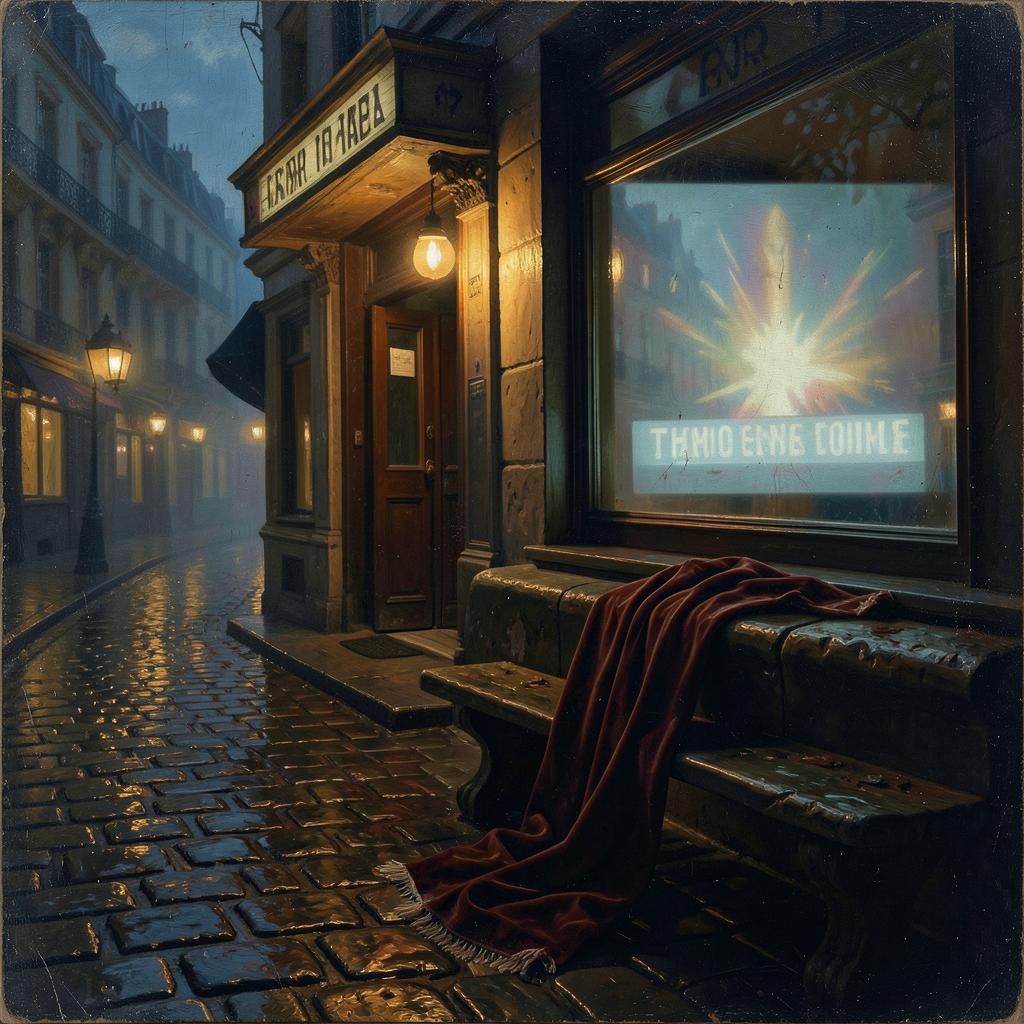
Don't Turn Out the Light
别把灯关Mandarin Chinese · contemporary writing and a Dai / South Asian sound collision gives way to Mandarin Chinese · one French phrase. The shift is audible, and both cultural origins remain named.
BREATHY FEMALE · Original song · old Paris cinema, rain and an unfinished farewellOpen the complete recording ↗The song ends. Its cultural life continues.
One recording. Three natural ways to share it.
Choose the note that sounds most like you, add your own thought, or share the complete recording on another site.
“葫芦丝问着竹林,班苏里回答夜深。”完整听傣族阿妹《银铃到恒河》:3 分 27 秒。三十行当代原创把银铃、竹楼、月光与恒河连成想象路径;完整 MP3 与全长竖屏歌词影片,不是 45 秒试听。
Silver Bells to the Ganges is a complete 3:27 Mandarin slow song by Dai Amei. All thirty performed lines are contemporary writing, with hulusi asking and bansuri answering inside the lyric. The exact Suno work, public Persona, voice root, 48 kHz MP3, full source-lyric film and media hashes are verified. The Ganges is imagined geography; instrument names are generation directions, not travel, ethnographic, religious, human-performance or living-tradition claims.
3:27 in full: Dai Amei sends a hulusi / bansuri dialogue across an imagined moonlit route.