2:48
Liu Yuxi · three verbatim lines and one altered line from the first of Two Bamboo-Branch Lyrics, with contemporary refrains · Dai Amei
Sun and Rain in a Bamboo-Branch Song
竹枝晴雨River water, willow, eastern sun and western rain turn weather into an emotional pun. This setting does not pretend to reproduce the poem verbatim: three source lines remain, 唱歌聲 becomes 踏歌聲 in the second, and nine contemporary lines carry the riverside waiting into a complete slow song.

Press play. Let it finish.
Hear Dai Amei's Sun and Rain in a Bamboo-Branch Song in full: a 2:48 Mandarin setting of Liu Yuxi with complete MP3 and full vertical source-lyric film. Three source lines remain verbatim, 唱歌聲 changes to 踏歌聲, and nine recomposed or contemporary lines are disclosed.
Lyrics
[Intro]楊柳青青江水平,聞郎江上踏歌聲。[原詩]楊柳青青江水平,聞郎江上踏歌聲。東邊日出西邊雨,道是無晴卻有晴。[Instrumental Interlude][Refrain]東邊日出,西邊雨,一聲山歌過江去。說是無晴,卻有晴,水也聽見我的心。江邊楊柳青青,船頭歌聲輕輕。你從雨裏走來,我在日光裏等。[Final Refrain]東邊日出,西邊雨,一聲山歌過江去。道是無晴卻有晴,阿妹唱到月兒明。Hear the crossing without erasing either shore.
The source label says ‘original poem,’ but its second line changes singing into footsteps
来源标签写“原诗”,但第二句已经从“唱歌声”变成“踏歌声”The public source prompt contains twenty-nine lines, 241 characters and 531 UTF-8 bytes, hashing to 15b21fdaef6c4edd6b5775197ca823c9230f8db88fd0778ad093b7f55e2b48eb. Removing structural labels and blank lines leaves eighteen performed lines, 160 characters and 446 UTF-8 bytes, hashing to 786ed682ee7e6a8ab5b0bffa780f4f3f1b67c5d1d77da14e889627cab7f0098a. Against the first of Liu Yuxi's Two Bamboo-Branch Lyrics as preserved by Chinese Wikisource, three of its four seven-character lines remain verbatim: 楊柳青青江水平, 東邊日出西邊雨 and 道是無晴卻有晴. Ignoring punctuation, they occur two, three and two times—seven exact source-line occurrences. The received second line reads 聞郎江上唱歌聲, but the master twice sings 聞郎江上踏歌聲. The source section label ‘original poem’ therefore does not make that alteration verbatim. Nine remaining lines are recomposed or contemporary, including a song crossing the river, water hearing the heart, a light boat-song, arrival through rain and waiting in sunlight. Traditional-character master, simplified source captions and the received text remain distinct.
A Tang poem can meet Dai Amei's voice; a generation brief cannot certify a living tradition
一首唐诗可以遇见傣族阿妹声线,但提示词不能替现实社群盖章The 260-character source tag brief says ‘Chinese bamboo-branch folk song meets Dai ethnic female voice’ and requests a southwest river village, delicate bright folk vocal, hulusi, bamboo flute, plucked strings, soft hand drum and a playful but tender Mandarin melody. It hashes to 3954f8f052e2bc0144a8daa2f2070fd76780c309547a8b95ec38e42efaa57fc6. The archive treats these phrases as William Lee's contemporary cross-cultural AI-music direction—not evidence of a Tang score, Liu Yuxi-era vocal practice, human instrumental performance, reconstructed Bayu folk song or living Dai tradition. Waterside imagery, bamboo-pipe colour and a clear virtual voice may meet, while their historical and community boundaries remain equally explicit.
Bamboo-Branch Sun and Rain is the site title; the public source is titled ‘Where There Seems No Sun, There Is Sun’
《竹枝晴雨》是本站编辑题,公开来源题为《道是无晴却有晴》The archive binds exact public Suno work 08f7e6ca-d95f-42c1-93bd-ea802624874f, created at 2026-08-18T17:57:07.011Z. The synchronized catalogue groups two registered versions as 竹枝晴雨 inside Dai Amei: Southwest Landscapes, while the public source title is 道是无晴却有晴. Both remain visible; an editorial archive title is not disguised as source metadata. The source reports complete, public, chirp-fenix and v5.5. Metadata reports type=gen, task=vox, is_remix=false, video_is_stale=true, an empty albums array and no parent field. has_vocal=false conflicts with audible singing and the complete lyric film and remains a provider anomaly. The work embeds public Persona 傣族阿妹, c23ec7da-c90b-4d9b-893f-5685fedf9dca, with voice root d4557de9-a8ae-4e66-b855-2c02710cfebd. That proves vocal provenance—not this work's parent, lyric, melody or cultural authorization. The MP3's embedded created value follows work creation by about 4.0 seconds, and its audio-CDN Last-Modified by about one minute fifty seconds; neither is presented as composition time.
Two minutes forty-eight seconds reach the moonlit close; the film is complete and its source-caption artifacts stay disclosed
两分四十八秒唱到月儿明;影片完整,来源字幕瑕疵也不藏The archive decodes the complete 2:48, 3,815,592-byte 48 kHz stereo MP3 and a 168.000-second, 6,334,609-byte, 824x1464, 10 fps H.264 / AAC vertical film. Audio and video differ by about 0.320 seconds, and a -50 dB audit finds no silence lasting two seconds or longer. The 161,661-byte, 1024x1024 source artwork renders a painted waterside with drooping branches, mist, warm light and an empty boat. It does not prove a real river, village, tree species, boat type, season, photographic process or human painter. Frames at 5, 35, 70, 105, 140 and 165 seconds confirm the same image, softened waterside field, source title, by @liwei, Made with Suno and captions reaching 道是無晴卻有晴 and 阿妹唱到月兒明. The five-second frame visibly retains the code-fence string ```text, while section labels, current, look-ahead and previously sung lines can share a frame. This is a complete source-native lyric card—not human-proofed or accessibility captions, an independent shoot, historical folk footage or a performer MV. The source also marks video_is_stale=true; the archive preserves that state instead of presenting the film as a newly approved caption master. The three media SHA-256 values are 82592abb2daadbb742b874697a764d33dba9a0ab7b8dd682d4c24fc8522a4a22, 6c77586ddab2f69a0acc7d5cd0aed138b86a3178895604edc17a6c6ff800e77b and 8d80deabf1716e8738fd8a02a4b75bdb7d13dda58efaf8685daa19da55ba1320.
DAI AMEI
傣族阿妹Meet Dai Amei, Weiyang Sound's most extensive virtual-singer archive: 36 public works and thirty-one verified complete masters, now 31 / 31 playable in full. The newly opened Amei Sings Late Autumn retains all eight lines of Li Qingzhao's A Twig of Plum Blossom while separating its contemporary refrain and variation. Silver Bells to the Ganges keeps thirty contemporary positions, a hulusi / bansuri exchange, imagined-geography boundaries and the provider state of its triptych moon film visible. Frontier Moon, Lotus Picking at Southern Pond in Autumn, Clear Water River, Crossing the River for Lotus, Spring River under the Moon, One Moon over Chang’an and Hengtang Road continue the route through classical watersides, cross-cultural dialogue and urban homesickness, while all nine verified Nine Songs dossiers remain public.
More from this singer ↗After this song, there is more than ‘next’.
A catalogue order can only point forward. This compass explains three different reasons to continue: follow a voice, stay with a cultural thread, or cross a language bridge. Every doorway opens a verified complete master.
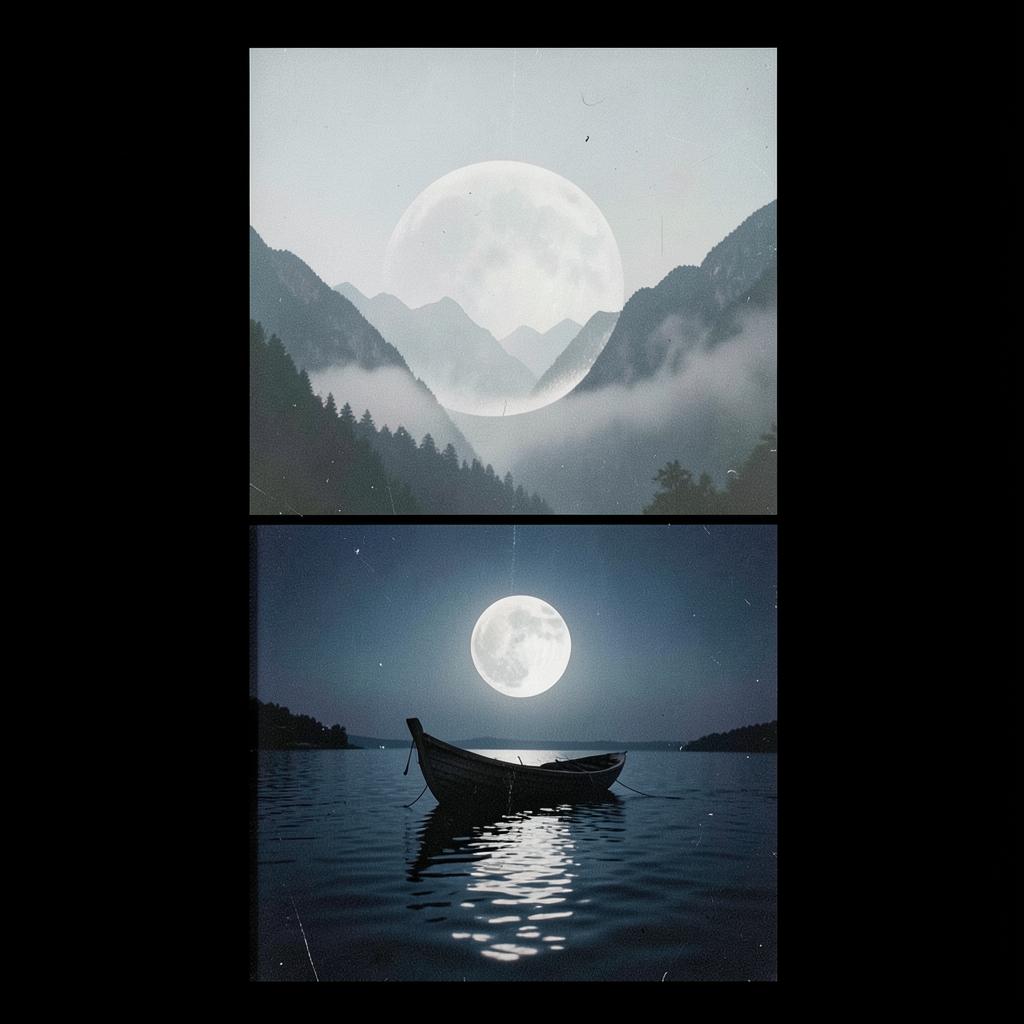
Moon over Mount Emei
峨眉山月DAI AMEI continues in a different work, so character continuity can be heard rather than merely asserted.
DAI AMEI · Li Bai · all four lines of Moon over Mount Emei retained with contemporary refrains · Dai AmeiOpen the complete recording ↗
Hengtang Road
横塘路Stay inside Enter 100 Chinese Classical Poems, but let another complete work change the angle of entry.
DAI AMEI · He Zhu · eight distinct verbatim source clauses, four altered source locations and contemporary refrains · Dai AmeiOpen the complete recording ↗
Crossing the River for Lotus
涉江采芙蓉Mandarin Chinese · traditional-character master / simplified source captions gives way to Mandarin Chinese · mixed traditional/simplified source-prompt captions. The shift is audible, and both cultural origins remain named.
DAI AMEI · Poem VI of the Nineteen Old Poems · disputed attribution · source verse, adaptation and a contemporary lotus refrainOpen the complete recording ↗The song ends. Its cultural life continues.
One recording. Three natural ways to share it.
Choose the note that sounds most like you, add your own thought, or share the complete recording on another site.
“东边日出西边雨,道是无晴却有晴。”完整听傣族阿妹《竹枝晴雨》:2 分 48 秒。刘禹锡原典三句逐字保留,第二句“唱歌声”改成“踏歌声”;九行重组/当代新增逐项公开。完整 MP3 与全长歌词影片,不是 45 秒试听。
Sun and Rain in a Bamboo-Branch Song is a complete 2:48 Mandarin setting with a 48 kHz stereo MP3 and full vertical source-lyric film. The dossier documents three verbatim lines from Liu Yuxi, 唱 changed to 踏 in the second line, nine recomposed or contemporary lines, the exact Suno work, public Dai Amei Persona and voice root. Hulusi, bamboo flute, southwest river village and Dai-voice language remain contemporary creation cues—not a Tang score, Bayu folk reconstruction, human performance or living Dai tradition.
3 Liu Yuxi lines stay verbatim; 唱 becomes 踏 in line 2—2:48 in full, plus 9 contemporary lines.