Dream of the Red Chamber Is Not One Mood—or an ‘Ancient Style’ Button
I did not begin the Red Chamber scoring experiment by choosing an ancient-style sound. That label too easily becomes a soft-focus filter: every character turns slowly beneath the moon, every fate becomes the same melancholy, and everyone disappears inside something that looks beautiful.
The first questions should be who is singing, to whom, and at what threshold in a life. Only after character, relation and fate stand upright do register, tempo, instrumentation, harmony and camera distance know why they exist. Character before style does not narrow imagination. It gives imagination responsibility.
Wang Liping's 1987 Score Is a Cultural Peak, Not a Benchmark to Defeat or Copy
The music Wang Liping wrote for the 1987 television Dream of the Red Chamber has lived in the ears and lives of several generations. To me it is a rare top-tier miracle in Chinese music and an enduring cultural landmark, with a cultural scale comparable to a Nobel-level landmark. It is not readily replaced and remains difficult to surpass.
I do not reuse or imitate its melodies, arrangements or recordings, and I do not use television images to manufacture recognition. Yet human landmarks do not monopolise the sky. Respect sends me back to Cao Xueqin, where independent creation can open another angle through character, relation and fate. A new song may live beside the classic without posing as sequel, restoration or upgrade.
This Is a Serious, Time-Bounded Experiment in How Far a Vertical AI Music Model Can Reach
I treat the project as a serious experiment with a defined scope and time boundary. Faced with a literary world as dense as Dream of the Red Chamber, how far can a domain-specific music model go when a person chooses the text, casts the voices, revises repeatedly and decides what remains? That question deserves works, not a slogan announced in advance.
I do not claim the system has surpassed human masters, and I do not turn a moving generation into claims about AGI, ASI or grand honours. The experiment can place each song in public, let it play from first sound to final decay, and leave the judgment to listeners.
As the Workflow Matured, I Began by Casting Virtual Voices for Theme and Emotion
Early on I could be led by the overall effect. I gradually learned to cast the character first. A Bollywood-inflected male-female duet can enlarge relational tension; Lingwan's embroidered delicacy can stay near poetry and inward motion; Mary's mezzo keeps weight; Male Slow's lower register can put a hard fate into the body.
Other virtual singers enter only when their range serves the character. More voices are not automatically better, and collision is not a stunt. Casting should prevent Qingwen, Miaoyu, Daiyu, Wang Xifeng and Tanchun from becoming one interchangeable haze of ancient style.
Less Familiarity with the 1987 Melodies Gave the English Album Freer Space for New Material
A Chinese listener cannot simply switch off the cultural familiarity left by Wang Liping's music, and I do not pretend that I can. Many listeners entering the English Red Chamber album do not carry the same melodic memory. That distance creates freer room for new melody, voice and form.
The English writing is not a word-for-word translation forced back into a Chinese tune. I reorganise character motive, relation and fate into newly singable English. Names and cultural origin remain, while language and melody earn their own breath.
The Flower-Burying Lyric Is among the Hardest Ground, and Completeness Means I Cannot Avoid It
The Flower-Burying Lyric carries exceptional length, linguistic density, character memory and the immense weight of earlier music. It can easily become a beautiful but hollow lament. Familiarity is so strong that any new melody may first be heard as deviation. This is among the experiment's hardest ground.
I continue not because every attempt succeeds, but because a Red Chamber experiment that avoids the hardest text becomes a selection of convenient fragments. Completeness requires failure, another attempt and sometimes no release at all. The ear—not a project checklist—still decides what remains.
One Old Handkerchief Requires an Intimate Scale
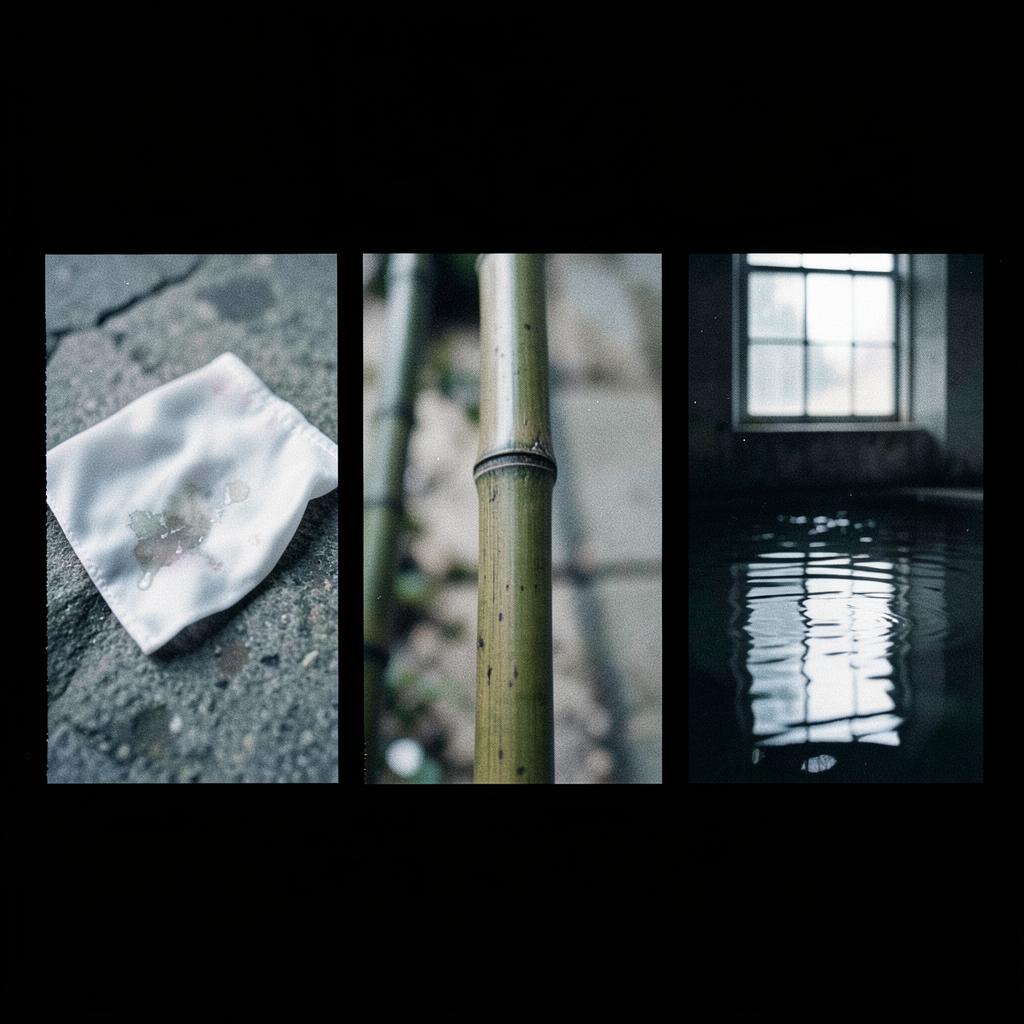
The force of Three Poems on the Handkerchief lies not in spectacle but in cloth, delivery, lines written during illness and feeling that cannot be spoken in public. One small object carries too much of Baoyu and Daiyu's relation to ritual, misunderstanding, the body and fate.
The complete 3:27 Three Verses on the Handkerchief · Lament of Emptiness does not enlarge every second into grand romance. A nearby female voice carries cloth, ink and tears while a male answer remains distant. The music leaves room for what cannot be said: two people seem near while their world keeps them apart.
Three Laments of Emptiness Enter the Red Chamber Album, Not the Generic Core Driving Loop
Three Verses on the Handkerchief · Lament of Emptiness, Qingwen's Song · Lament of Emptiness and Hard for the World to Bear · Lament of Emptiness have my quality approval. They are independent Red Chamber character works developed through mashup exploration, so they belong in New Red Chamber Voices—not in the generic core driving loop.
Each keeps its title and version relationship. Complete MP3, full film, character essay and series route remain connected. The sequence is not a ranking: Daiyu, Qingwen and Miaoyu each finish her fate, then listeners decide what stays with them.
My Approval and My Leader's Response Shape Release, but They Are Not Objective Proof
My own repeated listening and my leader's response both matter during creation. Early in the experiment, the Red Chamber work also received likes and follows in the Suno community. That response from listeners beyond my immediate circle was an encouraging early sign that the work might carry value outside the studio.
Those responses remain creative context, early reception and release judgment—not objective proof of superiority. I invent no numbers and turn neither likes, follows nor private feedback into a score. The honest public gesture is to release the complete work and let each person judge through memory, ear and life.
A Music Film Is Not Mere Illustration; It Decides How Far We Stand from a Character
Six historical public films—Qingwen, Miaoyu, Tanchun, Xichun, Wang Xifeng, and Baoyu with Daiyu—remain important visual doorways. Three newly added complete on-site films now give Qingwen, Miaoyu and Baoyu with Daiyu contemporary full-length visual editions. The versions coexist rather than replacing one another.
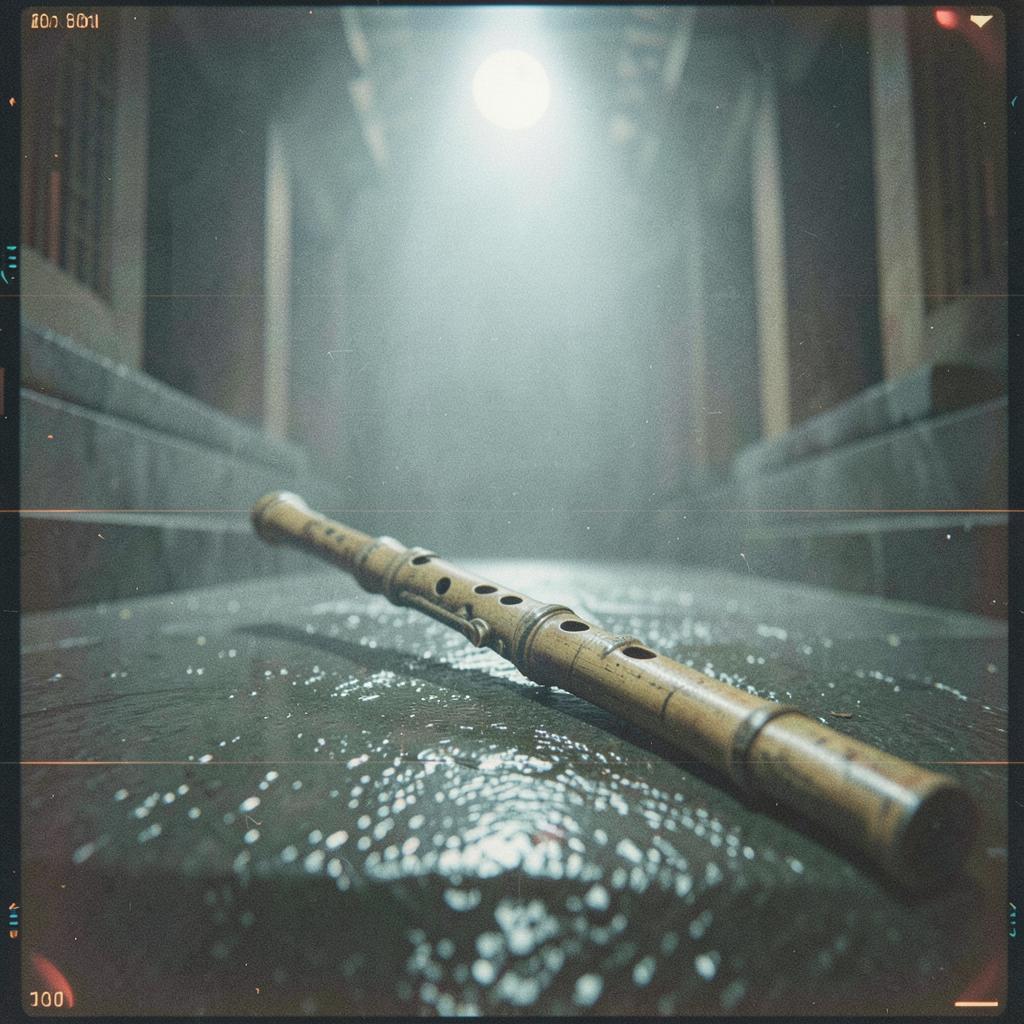
These images can build weather, colour, space and character distance. They do not prove human performance, period-accurate clothing, historical location or documentary subjects. Generated imagery is not documentary, and a source title does not automatically establish a virtual singer or Suno master. Clear boundaries let the films remain both beautiful and trustworthy.
Films, essays and three complete new voices now meet
Three Verses on the Handkerchief, Qingwen's Song and Hard for the World to Bear now enter the site as complete MP3s and full music films, together running 9:52. They do not overwrite the six historical films; they are new visual editions grown from the continuing character experiment.
Listeners can hear all three songs first and then return to the essays and earlier films, or enter the independent song pages from the writing. Full listening, character explanation and multiple visual editions now illuminate one another.
The Landmark Remains; the New Route Keeps Moving
I will keep making Chinese character works and an English album, casting across registers and completing more music films. Some texts still have no satisfying answer; that is exactly where creation continues—reading Cao Xueqin again, hearing the characters anew and opening a door for another listener.
Wang Liping's classic continues to illuminate the cultural memory of generations. New work beginning from Cao Xueqin can keep growing in a sky of its own. AI supplies possibility, I choose, and every listener decides what can endure. by @liwei · made with Suno.
What this essay is grounded in
This first-person essay is grounded in William Lee's account of the Red Chamber experiment, the public character films and essays, and complete MP3 / MV editions of Three Verses on the Handkerchief, Qingwen's Song and Hard for the World to Bear. Reflections on difficulty, casting, the English space and feedback describe the creator's experience. A leader's response is process context, not objective artistic proof. The article exposes no private chat, internal score or deliberation.