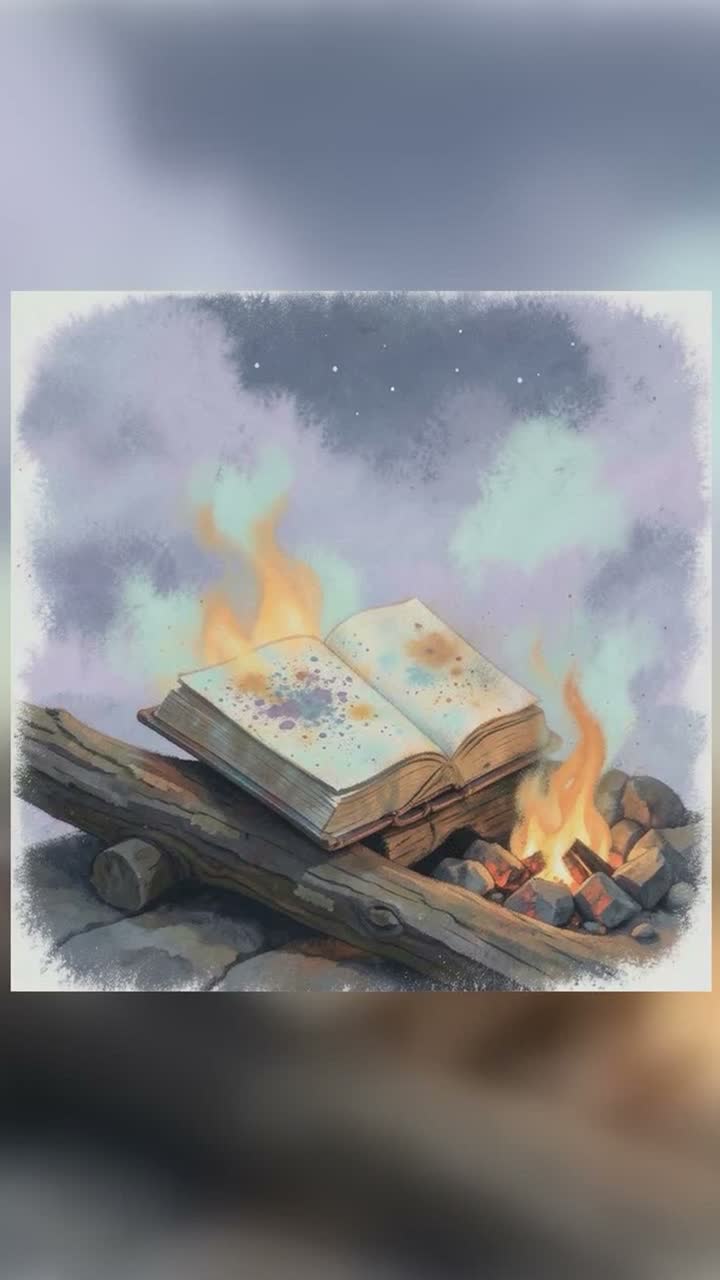
The Real Collision Is Not between Two Languages but between Two Clocks
The phrase Mandarin–English catches the eye first, but language is only the outer door. What gives this film its charge is the radically different structure of time behind each song. Qixi belongs to cyclical waiting: the river of stars separates two people, and the story draws force from the promise of meeting again. When You Are Old imagines a later life looking back across youth, love, recognition and what cannot be recovered.
One clock moves toward the next reunion; the other casts light backward from the far end of life. They do not explain each other, yet together they sharpen the same question: when distance lengthens, faces change and the festival passes, what remains worthy of the name love? The mashup matters because it lets waiting and recollection remain audible at once instead of forcing them into one answer.
Qixi Cannot Be Reduced to a Galaxy, Magpies and One Promise of Forever
A festival song can easily inherit a ready-made image set: Milky Way, Magpie Bridge, lantern light and an embrace at last. Those images belong to Qixi, but when a song merely arranges them attractively, the festival becomes an annual poster. The legend stays alive through conditions ordinary people know: a message that does not arrive, a road that feels too long, and the decision to walk one more step toward someone even when the meeting will be brief.
Qixi provides a bridge at mythic height; listeners carry their daily lives onto it. Some live far apart, some arrive too late, some finally go home, and some know there will be no next reunion. When those realities enter the melody, tradition is not borrowed for atmosphere. It continues asking a present-tense question inside new lives.
When You Are Old Gives Love to the Future Self for Judgment
Yeats's poem refuses to remain inside the brightest moment of youth. It asks someone to sit in old age, look again at those who once loved her, and distinguish admiration of beauty from love of a changing, less visible inner self. A musical setting that receives this backward gaze cannot remain merely tender nostalgia. It carries delayed recognition, irreversible time and the weight of what may have been missed.
Weiyang Sound already presents a complete 4:39 English-language setting from its first line to its final decay. The mashup does not replace that full work. It places it inside another relation: the standalone recording lets the poem unfold on its own, while the new film reveals a different edge beside Qixi's wish for reunion. One work can gain another listening doorway without surrendering its identity.
Editing Is Not Gluing Two Songs Together; It Composes the Space between Them
A mashup does not succeed automatically because both songs are beautiful. The point of transition, the order of question and response, whether a feeling rises, breaks or suddenly moves closer—all of these decisions change the work. Montage becomes a third composer. It owns neither song, but it determines how the listener crosses the doorway between them.
Five minutes fifty-one is long enough for that relationship to become real and long enough for a weak join to reveal itself. A few seconds can create surprise; a complete film must carry structure after surprise. Where does the encounter travel? Does a return now mean something different? Can both songs still stand when the film ends? Circulation may begin with a moment, but the work must turn the moment into a journey.
A Meeting Is Not a Common Origin, and Beauty Is Not a Finished Translation
Qixi and an Irish poem can illuminate one another through love, time and distance. That does not prove a shared source, nor does the Cowherd and Weaver Girl need to be rewritten as characters inside Yeats. The laziest cultural crossing finds one similar word and declares that humanity is all the same. A more interesting crossing admits that resemblance only opens the door; history, language and imagination remain distinct on the other side.
This essay therefore does not invent a singer for the Mandarin passages or guess which Suno work belongs to each section. The public title supports the Qixi and When You Are Old mashup relation; it does not establish section-level mappings. Leaving that space open does not reduce cultural atmosphere. It makes the meeting that is supported more trustworthy.
A Bridge Is Built by Ordinary Listeners Walking across It, Not by Labels
East–West cultural fusion can become an oversized promotional phrase. In lived listening, it may be much smaller: someone hears the English passage at night and remembers whom they once waited for; someone unfamiliar with Qixi follows a melody and searches for Magpie Bridge for the first time. Culture is not completed inside a slogan. It happens in the modest act of curiosity that follows a feeling.
A music site must therefore do more than display a player. It should offer a way forward: watch the complete mashup, return to the complete When You Are Old, read the Yeats music note, enter another Qixi long film, or continue into the World Music and multilingual series. Every doorway should lead deeper rather than closing at forty-five seconds.
AI Accelerates the Collision; Human Choice Decides Whether It Becomes a Work
It is now faster than ever to turn two languages, two melodies and two moving-image worlds into an audible proposal. Speed brings discovery and a dangerous illusion: that cultural fusion is complete as soon as several elements appear together. Generation only places materials on the table. Which passages remain, how they are ordered, whether character holds, and whether difference has been consumed still require a human ear.
William Lee's creative practice has never depended on the miracle of one generation. It depends on repeated listening, comparison, rejection and the decision to connect a worthy version to a world that keeps growing. Virtual singers, album series, poetry, music films and essays begin to answer one another. AI is the instrument; human judgment is why this mashup deserves a public life.
Let Waiting Move Forward and Recollection Keep Lighting the Way behind Us
Qixi does not end with one reunion, and a poem does not stop after one musical setting. Both endure because later listeners place their own time inside them. A young listener may hear promise first and loss years later. A Western listener may arrive through Yeats and continue toward a Chinese festival. A Mandarin listener may follow familiar Qixi imagery and, for the first time, hear an English poem sung all the way through.
I do not want this film to leave behind the conclusion that two cultures have now been successfully fused. Its more grounded hope is that works from different origins can sit at the same table without rushing to replace one another. Qixi keeps waiting; Yeats keeps looking back; listeners recognise part of their own lives between those two motions. Cultural crossing then stops being a campaign line and becomes one song heard by another person to the end.
What the essay is grounded in
This essay is grounded in liwei999's public 5:51 YouTube film ZoKV-XWWsXk, published on 27 August 2026; the public title's explicit Qixi + When You Are Old Mandarin–English mashup relation; and Weiyang Sound's verified complete 4:39 When You Are Old master and recording page. The discussion of two temporal structures, montage and listener experience is William Lee's creative reflection and editorial interpretation. It does not claim shared cultural origin, translation identity, a named singer for the Mandarin passages, section-level Suno mapping, human performance or documentary filming.