The original Suno source remains available alongside the listening options here.
The book closes; memory stays open.
Esperanto chamber-ballad direction · deep mezzo · piano and cello
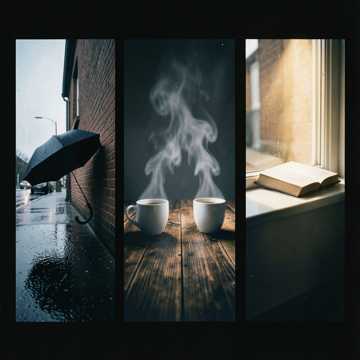
Rain has stopped, but a shadow remains beside the street. Goodbye becomes a lesson in remembering: the book is closed without locking memory away. The second verse walks home without anger; the ending keeps someone in a song without promising reunion.
The Esperanto words take a French chamber-breakup direction, with the Lin Juyi deep-mezzo voice concept, piano, cello, nylon guitar and restrained accordion. Begin with the contrast between the two cups, then attend to space at the ends of phrases. Voice and instrumentation refer to the public creative brief.
Read the lyrics
[Intro]
La pluvo ĉesis ĉe la strato,
sed via ombro restis tie apud mi.
[Verse 1]
Du tasoj staras sur la tablo,
unu malvarmas sen respondo.
Mi fermis nian lastan libron,
sed ne la pordon de memoro.
[Pre-Chorus]
Mi diris: iru, estu libera,
sed mia voĉo restis tenera.
[Chorus]
Post la lasta adiaŭo,
restas spuro en la pluvo.
Mi ne vokos vin reveni,
mi nur lernas plu memori.
Post la lasta adiaŭo,
estas lumo en la vundo.
Kio iam estis nia,
restos bela, restos viva.
[[Instrumental Interlude: piano, cello, nylon guitar and restrained accordion]]
[Verse 2]
La urbo jam ekdormas lante,
mi iras hejmen sen kolero.
La vento portas vian nomon,
kaj metas ĝin en malproksimon.
[Final Chorus]
Post la lasta adiaŭo,
restas spuro en la pluvo.
Mi ne vokos vin reveni,
mi nur lernas plu memori.
[Outro]
La pluvo ĉesis ĉe la strato,
mi lasas vin en mia kanto.