The Song Had Just Become Beautiful When It Stopped: Not the End of a Preview, but a Break in Trust
An early version of the site placed a forty-five-second audio file inside its player. I had treated ‘let people hear something now’ as a practical way to launch, while forgetting that the listener had already entrusted time to a song. The introduction had opened the door, the character had barely appeared and the feeling had just begun to move inward when the player declared the experience over. The most accurate review was not a technical error code. It was disappointment.
The failure mattered because it happened exactly where hearing needs continuity. The page promised a song more than three minutes long while the control delivered forty-five seconds. The work offered a world; the site provided a crack in the door. I learned that the first duty of a music site is not layout. It is the trust created after someone presses play.
A Short Clip Can Create the Encounter; It Cannot Pretend That the Song Has Been Delivered
Fifteen, thirty or forty-five seconds can travel brilliantly. A refrain, one image or a moment that stops a scrolling thumb may bring a stranger to a work. I am not opposed to short content. The only requirement is that an entrance knows it is an entrance. It should lead toward the complete recording, complete film, work dossier and real source—not close at the most attractive moment while calling itself the song player.
Weiyang Sound now separates trailers from works. Social media may be short. Anything playable on site must carry a verified complete MP3 or film; when reliable media is absent, the page keeps the source link and evidence boundary instead. One fewer handsome button is better than dressing another forty-five-second file as a complete edition.
An Ending Is Not Leftover Time; It Decides What the Beginning Meant
A song's ending is more than its final chorus. It may let a promise land, move a character from hesitation into responsibility, return a bright melody to ordinary life, or deliberately leave a question unresolved. Remove the ending and the listener loses more than several seconds. The final key to the entire work has gone missing.
Slow songs make this especially clear. Their force may arrive through the added weight of a returning chorus, the bridge's change of direction or the quiet after one last sustained note. A system looking only for high-energy moments can find hooks while missing fate. Complete playback returns judgment to time—and to the listener.
These Six Songs Are Not Samples but Six Answers to Why the Ending Matters
The six complete works below run for 23:52. They are not a ranking or a claim to represent the whole archive. A Mandarin original, a Song-dynasty lyric reimagined, English poetry, French, Mandarin with Esperanto and Cyber's tenor in rock share one queue. The question is not which culture is more important, but how different languages, characters and structures require different ways to finish.
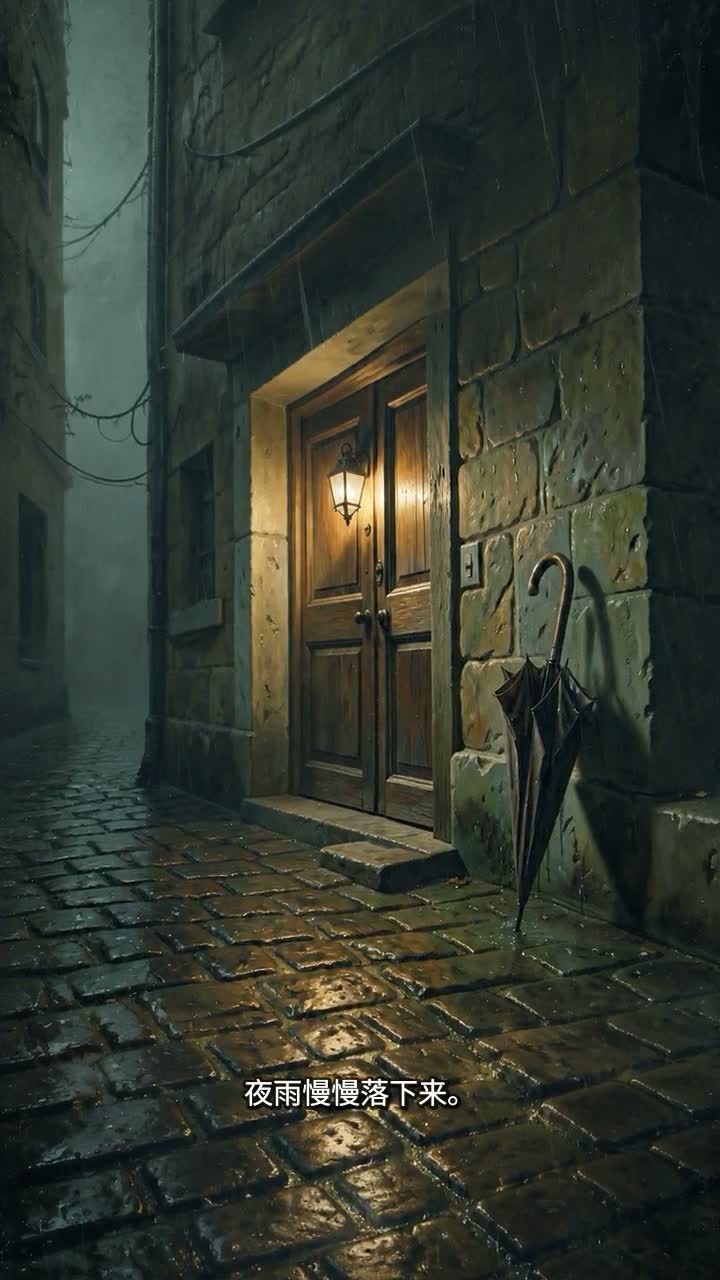
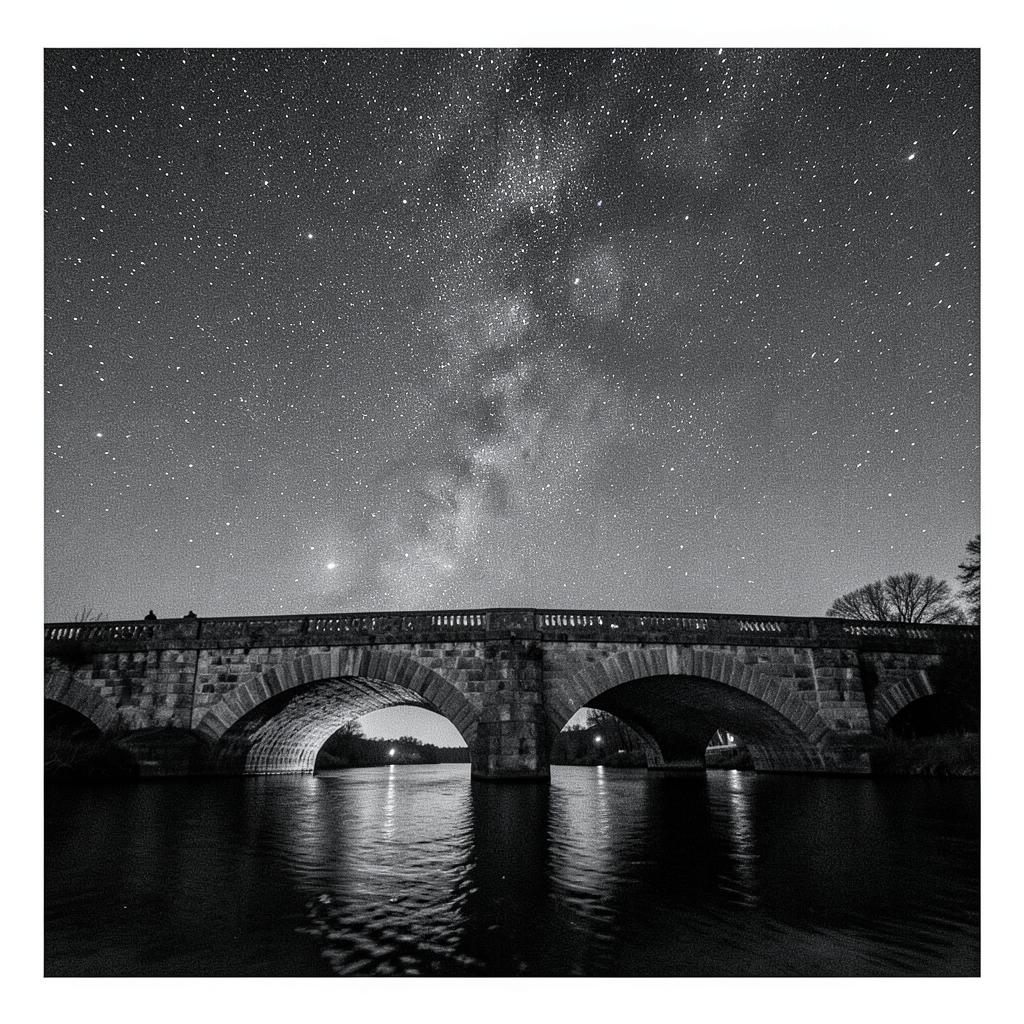
A Return in the Night Rain gives the road home to quiet. Lotus in the Wind lets one classical verb continue into afterglow. When You Are Old lets time complete its backward gaze. Le Vent Nous Ramène gives another language room to return. The Stars Are Near lets two languages cross the entire bridge. The Sun Rises over the Sea needs its final arena lift before the arc is truly lit.
A Chinese Slow Song Does Not Need a Lesson in Patience; It Needs Time That Is Not Interrupted
I do not make Chinese slow songs by demanding that every listener first learn to value slowness. A good song should earn attention itself. The site must at least avoid pulling the plug while that work has barely begun. An introduction builds space, a verse brings the character close, a chorus rises, and its return carries what has already happened. These are requirements of real duration, not a creator asking for special treatment.
People also do not feel at a standard speed. They listen while driving, cooking, working a night shift, lying awake or travelling home. A whole song lets attention wander and return. It lets a sentence become clear later and the outro join the sounds of real life around it. That respects ordinary attention as something living rather than a metric capable only of instant stimulation.
Once Classical Chinese or English Poetry Becomes Song, It Must Accept the Consequences of Complete Form
Setting Zhou Bangyan or Yeats does not mean finding one line suited to a short video and attaching a beautiful climax. The original has its own time, turn and silence; every contemporary addition must show how it approaches that inheritance. A complete setting lets listeners hear how text enters melody, what remains intact, what answers it and what belongs to the new structure.
This is also a minimum standard for cultural circulation. The more quickly a classical image travels, the more easily it becomes one Eastern or Western atmosphere card. A complete page returns poet, language, virtual singer, source and adaptation boundary to the work. Music invites people closer; the archive keeps that approach from depending on misunderstanding.
Another Language Is Not Chorus Decoration; It Needs Time to Change the Breath
When French or Esperanto appears, unfamiliarity itself is easy to promote: several syllables, an unusual title, a claim that AI can sing it. Real multilingual writing is not completed by that surprise. Stress, vowels, sentence length and character distance change melody. A language needs time to carry sections, not merely leave a label inside forty-five seconds.
Weiyang Sound publishes language-review boundaries too. Complete media proves that the song exists from beginning to end; it does not prove that every foreign-language word has independent human certification. Keeping ‘available in full’ and ‘still awaiting language review’ on the same page is a more reliable form of international circulation than hiding uncertainty. Complete does not mean perfect. It first means not pretending.
A Character Cannot Live Only in the Climax; Virtual Singers Need the Whole Song
Lingwan, Mary, Lin Juyi, Cyber and the other headline virtual singers should not be understood as a row of interchangeable timbre buttons. Character takes shape in how a verse speaks, how a bridge carries pressure and how a voice leaves a song. A brilliant excerpt may reveal colour while telling us almost nothing about whether that voice can sustain a person.
Cyber is a concrete example. He is a clear-tenor virtual singer; rock is a style he can enter. If we hear only an arena chorus, singer and arrangement easily collapse into one label again. The finale lets us judge how the tenor's light passes through guitars, choir and the last lift. Complete structure lets the singer become a character and the style remain a style.
A Complete Music Film Is Not Simply Artwork Looped Long Enough; It Honestly Delivers the Full Time
Many current Weiyang Sound films are source-native vertical Suno lyric films: square artwork, generated captions, structural labels and platform attribution continue through the piece. They are not independently shot and do not impersonate human performance. Complete means that audio and image decode from opening to outro while the production state of image and captions remains visible.
That modest standard prevents common substitutions: calling an attractive opening a music video, a chorus a full edition, or an imagined generated location a documentary record. The films can grow into stronger second creations and future shoots. Until then, the existing work should first be delivered whole and traceable.
From One Failure to 368 Masters, the Site Makes Complete a Checkable Rule
Weiyang Sound now publishes 368 distinct verified complete masters. Each retains a duration, audio, film and artwork manifest, and every on-site player points into that verified set. The number will grow, but the count will not loosen for promotion. One version cannot impersonate several songs, one source link does not automatically become an on-site master, and a trailer cannot fill a gap in the complete library.
The rule has another side: correct mistakes and leave space where evidence is missing. Complete media makes no automatic conclusion about rights, language, cultural representation or human identity. Those questions require their own evidence. The site should let listeners know what they are hearing, how far it runs, where it came from and which claims remain editorial judgments rather than measurements.
Grounded Promotion Makes Entry Easy and Gives the Work Somewhere Real to Stand
After forty-five seconds is a useful hook because many people know the disappointment of being cut off just as they begin to listen. Its value is not an attack on short video. It connects short entry to complete work: the clip creates the encounter, the landing page fulfils it, the essay explains why, and recording and source pages make facts reviewable.
A music site built for circulation must still survive the second minute, the third and the next essay after the click. Traffic is not the enemy; an empty façade is. Memorable titles, shareable pages and usable players can live beside complete songs, cultural origins and honest boundaries. That is the long relationship Weiyang Sound wants to build.
After Forty-Five Seconds, the Work Begins to Prove Itself—and So Does the Site
Forty-five seconds can prove that a song contains an attractive moment. It cannot prove that the work deserves to remain. After that point the melody must continue to answer for its choices, the lyric must survive return, the character must cross the bridge and the ending must answer the beginning. The listener moves from receiving a highlight to deciding whether to accompany the song all the way.
The same is true of a website. A beautiful home page is only its first forty-five seconds. The rest is the continuing work of organising hundreds of Suno songs, more than a hundred films, albums, virtual singers and creative history. This essay does not turn one failure into legend. It preserves one promise that can be checked repeatedly: if a button says play, let the music reach its ending; if the work is not ready, say so plainly.
What this essay is grounded in
This essay is grounded in the original forty-five-second player failure at Weiyang Sound, the current 368 verified distinct complete masters, and the media manifests and recording dossiers for the six featured works. Descriptions of endings, character distance, melodic function and circulation are William Lee's creative reflection and editorial judgment—not acoustic measurement, platform-performance data or a universal listener finding. Complete media proves that a file plays from first sound to final decay; it does not automatically establish human language review, human performance, live-action filming, cultural representation or a rights conclusion. Those boundaries remain stated on each recording page.