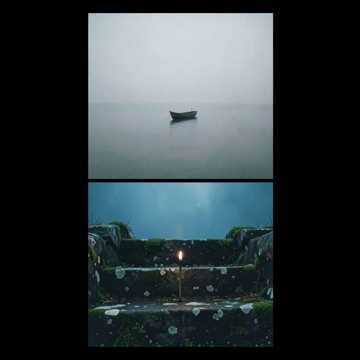
A boat leaves, a mother turns her lamp toward empty water, a harbor changes its name. Eight narrative verses leave waiting unresolved and give the last answer to the tide.
The lyric states that this story has no chorus. Lamp wick, salt moss and marks on a door accumulate without a recurring section to relieve their weight. Forty winters and 107 lines are images of time in the text, not a historical chronology to reconstruct.
Rumors about the boat disagree, and the mother does not choose between them. At the end she looks at the questioner’s hand like an unfinished letter. The tide’s answer leaves space; it declares neither a return nor a sinking.
The public direction brings free-rhythm seán-nós ornamentation to Mandarin narrative lament: a plain alto intention, sparse fiddle and guitar passages, a low drone only late in the song and one bodhrán heartbeat at the close. Listen for breath carrying a story without a fixed pulse.
Some waiting has no answer, yet someone still trims the wick so the wind cannot borrow its flame. The Mandarin lyrics of The Tide Knows the Answer let a lamp and the sea accompany years of waiting. Its public Suno brief draws on sean-nós-style rubato narration, imagining alto, ornamented long notes and stone-room resonance. Nacre-like marquetry, layered lithographic shorelines and a coral-glass lantern give a quiet story luminous materials. The complete introduction, interlude and trailing notes remain; after the story, the sea is still there.