Open the song on Suno to listen to this edition.
Let the cranes fly; leave the heart some space. Creative direction: classical-text song · three-beat motion and open repliesWhat do these music words mean? ↓
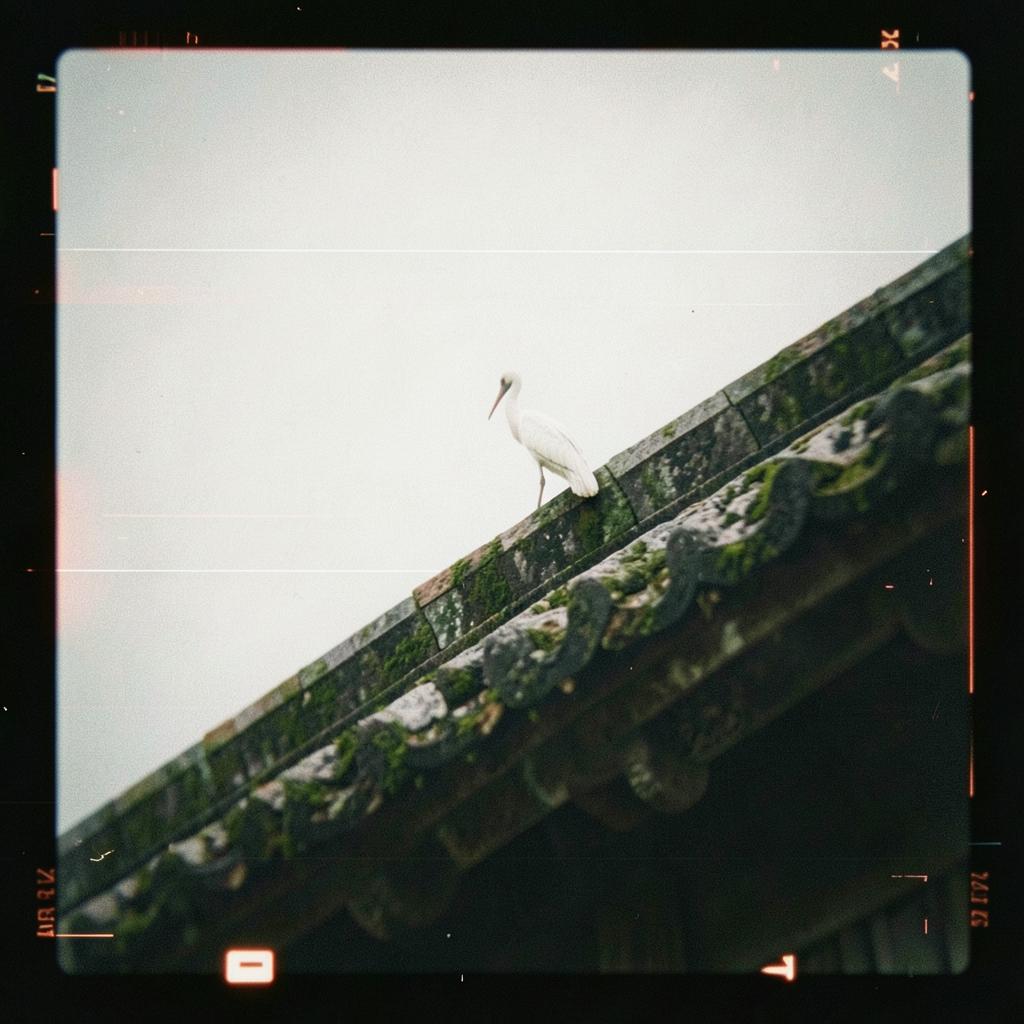
A half-flooded doorway opens into changing trees, snow, moonlight and weather. Flight does not erase ordinary companionship: the cranes return, and people meet at the pavilion. Hold freedom of movement beside the evening homecoming rather than reducing the passage to escape.
The brief proposes a light three-beat grouping, sparse guqin and answering dizi. Three beats do not mean three syllables per line: follow a steady pulse beneath changing sentence lengths. The requested 90 BPM is not a measurement of this recording.
Follow departure and return, then seek a small musical idea returning. A motif is a recognisable fragment, not a whole chorus; this is a listening question, not a finding.
Motif · a small, recognisable musical fragment · a little more A motif is a short, distinctive musical fragment, recognisable through pitch shape or rhythm and usable as material for development. It is not a psychological motive or a whole chorus. A motif requested in a brief is not a motif already identified in the recording.
Try listening: Remember a small shape or rhythm. Does it return, change voice or develop? Not every repetition needs that label.
The Open University · Understanding musical scores, New textures ↗ Tempo / BPM · how quickly the beat moves · a little more Tempo is musical speed; BPM means beats per minute. Counting the same beat unit, 60 BPM gives one beat per second and 120 gives two, not a count of sung words. Speed differs from loudness, pitch and rhythmic pattern. A number in a Suno brief is a request, not a measured tempo for this recording.
Try listening: Tap a steady beat, then notice how voice or accompaniment moves around it. If no clear beat emerges, follow sustained sounds and their decay instead of forcing a count or treating the prompt number as an answer.
Yamaha · Playing With Tempo ↗ Read the lyrics 熙寧十年秋,彭城大水。
雲龍山人張君之草堂,水及其半扉。
明年春,水落,遷於故居之東、東山之麓。
升高而望,得異境焉,作亭於其上。
彭城之山,岡嶺四合,隱然如大環,獨缺其西一面,而山人之亭,適當其缺。
春夏之交,草木際天,秋冬雪月,千里一色,風雨晦明之間,俯仰百變。
山人有二鶴,甚馴而善飛,旦則望西山之缺而放焉,縱其所如,或立於陂田,或翔於雲表,暮則傃東山而歸,故名之曰「放鶴亭」。
郡守蘇軾,時從賓佐僚吏往見山人,飲酒於斯亭而樂之。
挹山人而告之,曰:「子知隱居之樂乎?
雖南面之君,未可與易也。
《易》曰:『鳴鶴在陰,其子和之。』
《詩》曰:『鶴鳴於九皋,聲聞於天。』
蓋其爲物清遠閑放,超然於塵埃之外,故《易》、《詩》人以比賢人君子。