Open the song on Suno to listen to this edition.
A river opens out from a single seat. Creative direction: river-text song · a three-note motif in four-beat motionWhat do these music words mean? ↓
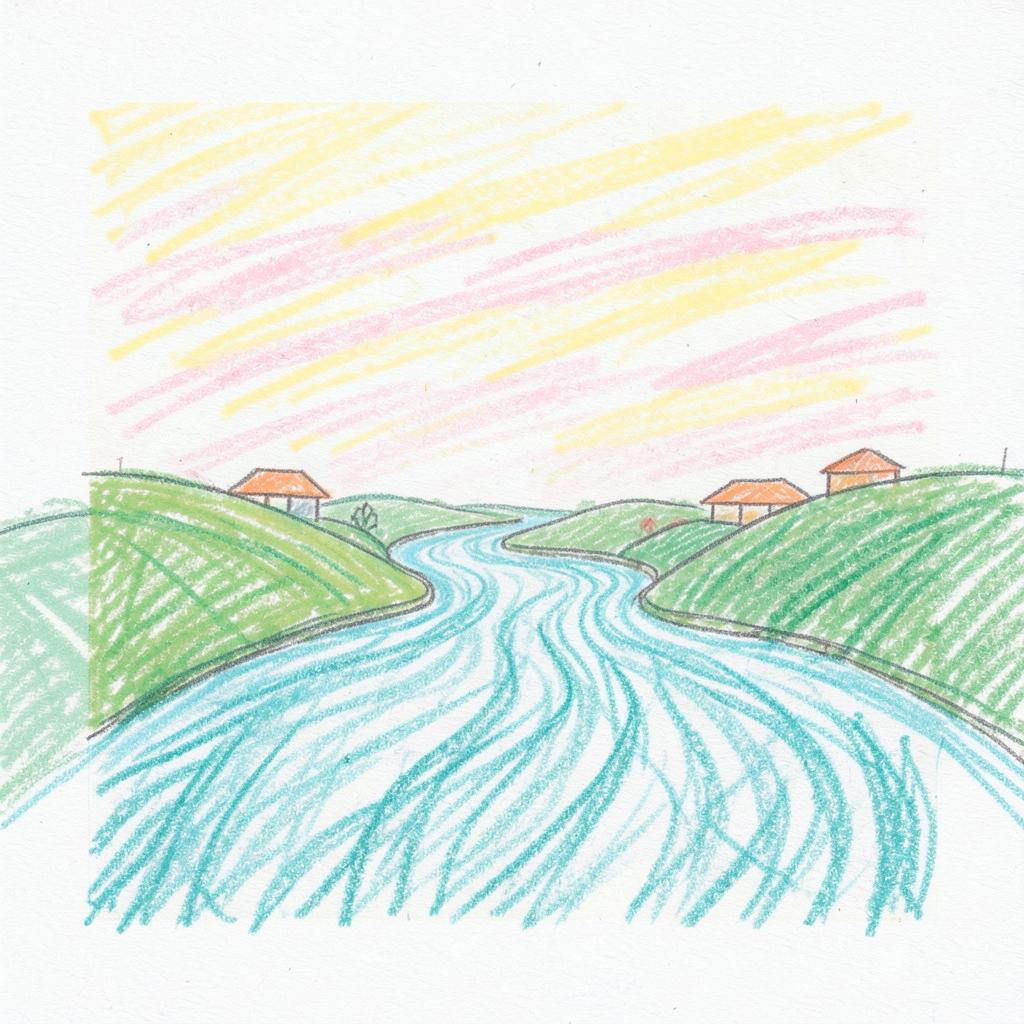
Tributaries enlarge the river before the passage brings the view within reach of a pavilion seat. Day, night, distance and old traces keep changing places. Follow the turn from a view too overwhelming to hold toward one available at a glance.
The brief proposes a rising three-note motif and replies between guqin and xiao. Three notes do not mean three beats: this edition requests four-beat motion. Remember a contour and seek its return or change without claiming it has already been identified.
Three notes and three beats count different things: a possible motif and a grouping of pulses. Follow a small tune, then separately seek a steady beat.
Motif · a small, recognisable musical fragment · a little more A motif is a short, distinctive musical fragment, recognisable through pitch shape or rhythm and usable as material for development. It is not a psychological motive or a whole chorus. A motif requested in a brief is not a motif already identified in the recording.
Try listening: Remember a small shape or rhythm. Does it return, change voice or develop? Not every repetition needs that label.
The Open University · Understanding musical scores, New textures ↗ Tempo / BPM · how quickly the beat moves · a little more Tempo is musical speed; BPM means beats per minute. Counting the same beat unit, 60 BPM gives one beat per second and 120 gives two, not a count of sung words. Speed differs from loudness, pitch and rhythmic pattern. A number in a Suno brief is a request, not a measured tempo for this recording.
Try listening: Tap a steady beat, then notice how voice or accompaniment moves around it. If no clear beat emerges, follow sustained sounds and their decay instead of forcing a count or treating the prompt number as an answer.
Yamaha · Playing With Tempo ↗ Read the lyrics 江出西陵,始得平地,其流奔放肆大;南合湘、沅,北合漢、沔,其勢益張;至於赤壁之下,波流浸灌,與海相若。
清河張君夢得,謫居齊安,卽其廬之西南為亭,以覽觀江流之勝;而余兄子瞻,名之曰快哉。
葢亭之所見,南北百里,東西一舍。
濤瀾洶湧,風雲開闔。
晝則舟楫出沒於其前,夜則魚龍悲嘯於其下。
變化倏忽,動心駭目,不可久視。
今乃得玩之几席之上,舉目而足。
西望武昌諸山,岡陵起伏,草木行列,煙消日出,漁夫樵父之舍,皆可指數,此其之所以為快哉者也。
至於長洲之濱,故城之墟,曹孟德、孫仲謀之所睥睨,周瑜、陸遜之所騁騖,其流風遺跡,亦足以稱快世俗。